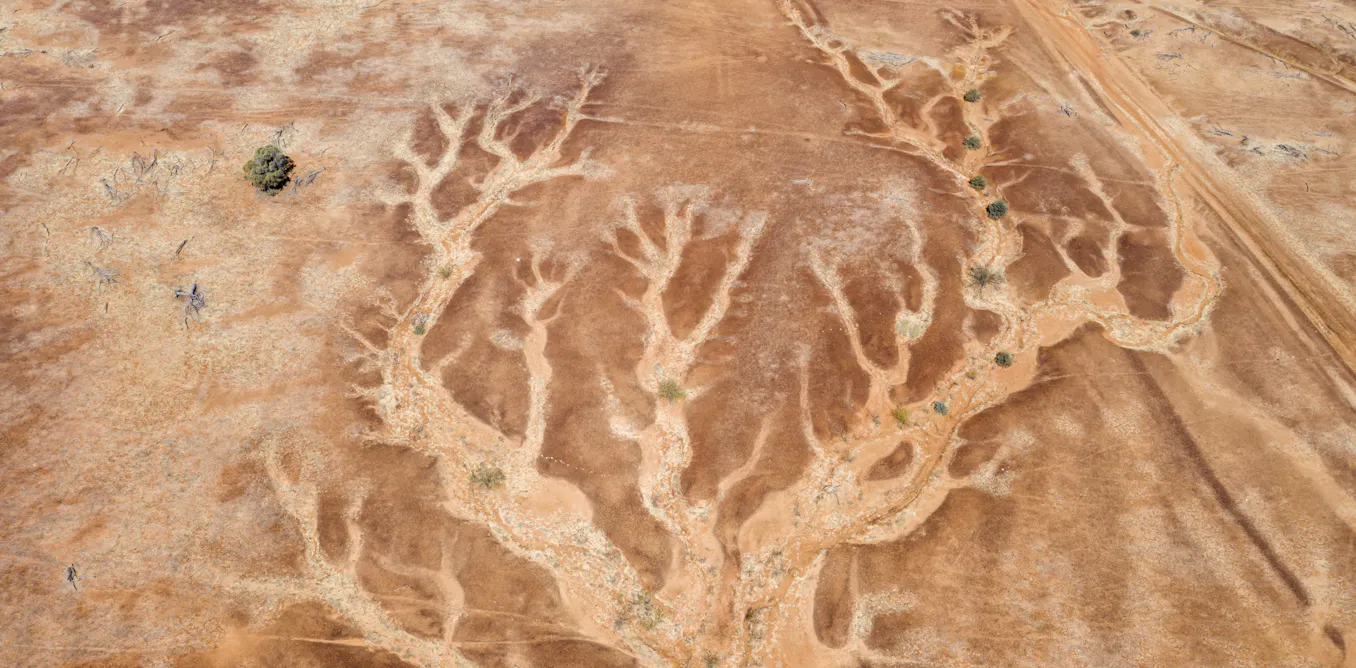
Researchers have identified a new drought phenomenon that accelerates wildfire risk across landscapes far faster than traditional dry periods. Flash droughts develop rapidly, sometimes within weeks, extracting moisture from soil and vegetation at alarming rates and creating ideal conditions for large wildfires.
Unlike conventional droughts that develop gradually over months or seasons, flash droughts intensify quickly through a combination of high temperatures, low precipitation, and strong winds that increase evaporation. This sudden shift depletes soil moisture before ecosystems can adapt, leaving vegetation exceptionally dry and flammable.
A study examining flash drought patterns found they significantly amplify fire danger compared to slower-developing dry conditions. The research documents how these rapid transitions spike evaporative demand, the rate at which water leaves soil and plants, overwhelming the landscape's capacity to retain moisture. Wildfires ignited during flash drought conditions spread faster and burn larger areas than those occurring during standard droughts.
Climate change is intensifying flash drought frequency and severity. Warmer temperatures increase atmospheric evaporative demand, while shifting precipitation patterns create longer gaps between rainfall events. Western North America has experienced multiple flash droughts in recent years, each preceding major wildfire seasons.
The implications reshape how land and water managers approach fire preparedness. Seasonal drought forecasts cannot capture flash drought development, leaving communities with inadequate warning time. Fire management agencies must now monitor rapid moisture changes alongside traditional drought indicators. Early warning systems tracking soil moisture data and temperature anomalies can provide critical advance notice.
Water managers face competing demands as flash droughts accelerate. Agricultural irrigation systems deplete stored water faster, while wildfire suppression requires substantial water resources. Some regions lack infrastructure to respond quickly enough to prevent large fires once flash droughts begin.
Ecosystems themselves offer limited resilience to flash droughts. Plants cannot acclimatize to rapid moisture loss, resulting in widespread tree mortality that increases fuel loads. This creates a