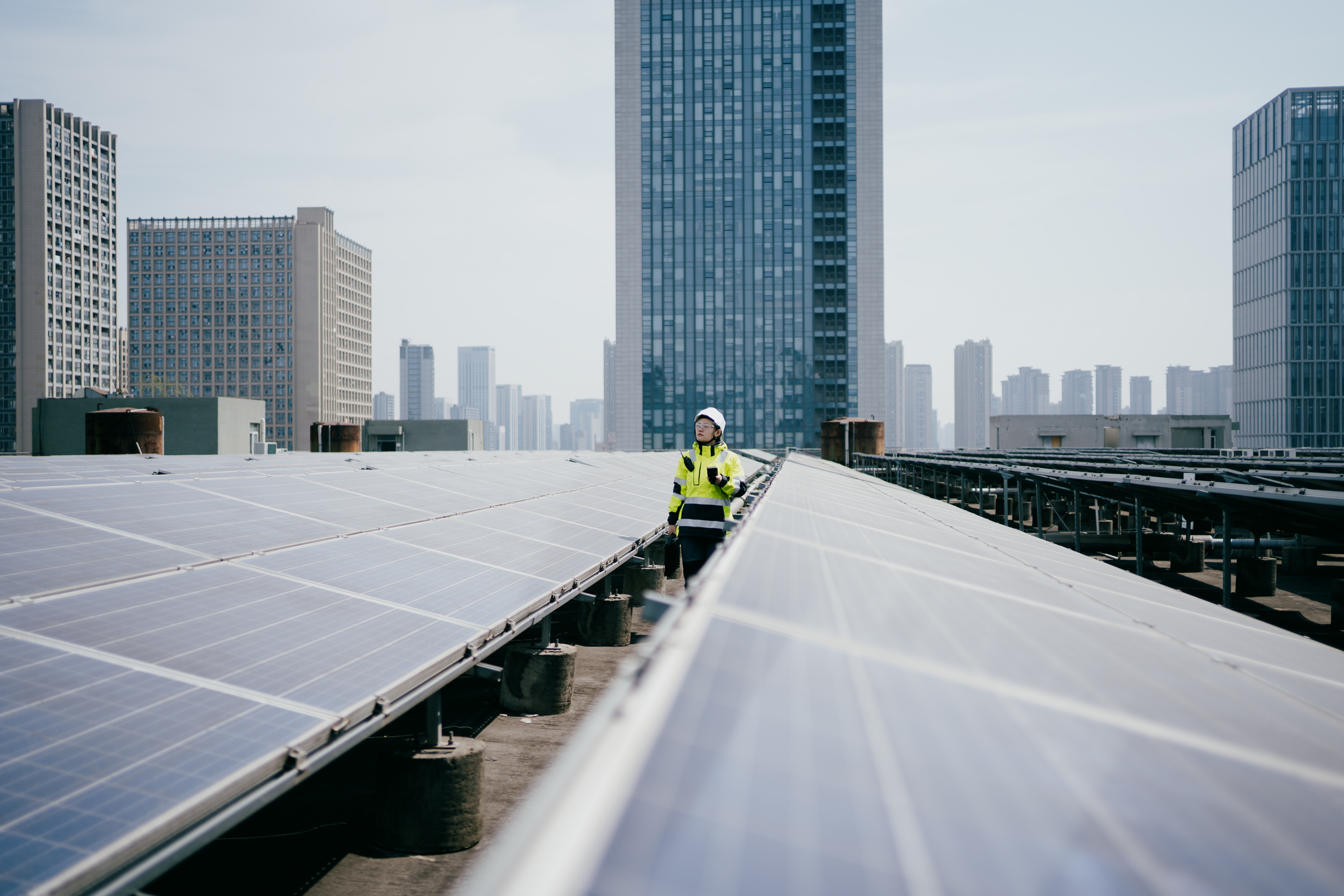
China's solar manufacturers face severe financial strain as relentless price competition has driven panel costs to historic lows. Major producers report operating losses despite surging production volumes, yet the industry continues expanding capacity rather than contracting.
The price collapse stems from overcapacity in China's manufacturing sector. Companies racing to capture market share have driven wholesale solar panel prices down roughly 90 percent over the past decade. This benefits consumers and accelerates global renewable energy adoption, but leaves manufacturers with razor-thin margins that fail to cover production costs.
Chinese firms dominate global solar manufacturing, controlling approximately 80 percent of worldwide panel production and 60 percent of polysilicon refining capacity. The price war has consolidated power among the largest players while smaller competitors exit the market. Leading companies like LONGi and JinkoSolar continue investing in new factories and upgrading equipment despite current losses.
The strategy reflects China's energy transition priorities. Beijing has set targets for 1,200 gigawatts of solar and wind capacity by 2030, requiring massive manufacturing capacity. Government support through subsidized loans, tax incentives, and direct investment enables companies to absorb losses in pursuit of long-term market dominance and technological advancement.
International manufacturers struggle to compete. Western producers face cost disadvantages and tariff barriers that protect Chinese competitors. The price collapse has eliminated solar's price premium over fossil fuels in most markets, accelerating grid deployment but threatening panel manufacturers globally.
Industry analysts debate sustainability. Some argue consolidation will eventually stabilize the market as weaker competitors disappear. Others warn that prolonged losses could trigger supply chain disruptions if key producers face insolvency. The race to lowest cost creates pressure to cut corners on quality control and worker protections.
For consumers and utilities, the outcome remains favorable. Solar electricity costs have fallen below coal and natural gas in most regions, expanding clean energy's economic competitiveness.