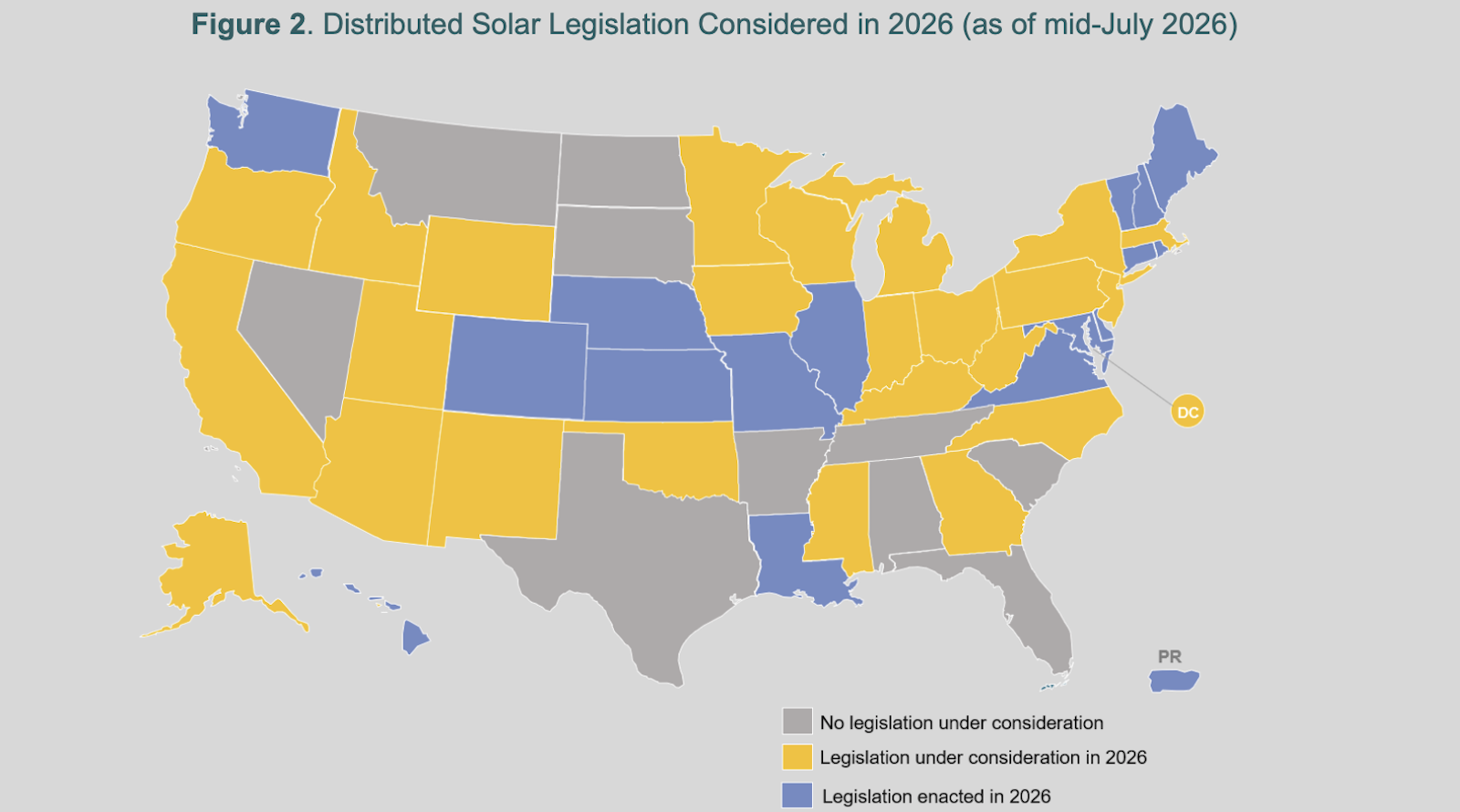
Forty-five states, Washington D.C., and Puerto Rico pursued distributed solar policy changes in the second quarter of 2026, according to the latest "50 States of Solar" report. Net metering policies received the most attention, with 53 policy actions addressing how utilities compensate solar customers for excess electricity fed back to the grid. Community solar policies followed closely with 48 actions, reflecting growing state interest in expanding solar access beyond homeowners to renters and apartment dwellers.
The report tracks quarterly shifts in state-level solar regulations across the nation. Net metering remains the fulcrum of solar policy debates. States continue reforming how they value rooftop solar generation, with some reducing compensation rates and others maintaining existing frameworks. These revisions directly affect residential solar adoption rates and the economics of home solar installation.
Community solar policies address a structural gap in the residential solar market. Traditional rooftop solar excludes roughly half of U.S. households who rent, live in multifamily buildings, or have unsuitable roofs. Shared solar facilities allow these customers to subscribe to off-site solar arrays and receive credits on their electricity bills. The high number of Q2 2026 actions suggests states recognize this barrier and are moving to develop regulatory frameworks.
The breadth of state activity indicates solar policy continues evolving rapidly across the country. Some states are streamlining interconnection procedures that allow solar systems to connect to the grid. Others address financing mechanisms, property tax treatment, or permitting timelines. This patchwork approach creates complexity for the solar industry while reflecting diverse regional priorities and utility business models.
The continued policy momentum around net metering and community solar reflects two competing impulses. Policymakers want to accelerate solar deployment to meet climate and clean energy goals. Utility companies resist policies they argue shift grid maintenance costs to non-solar customers. States navigate this tension through rate design reforms,