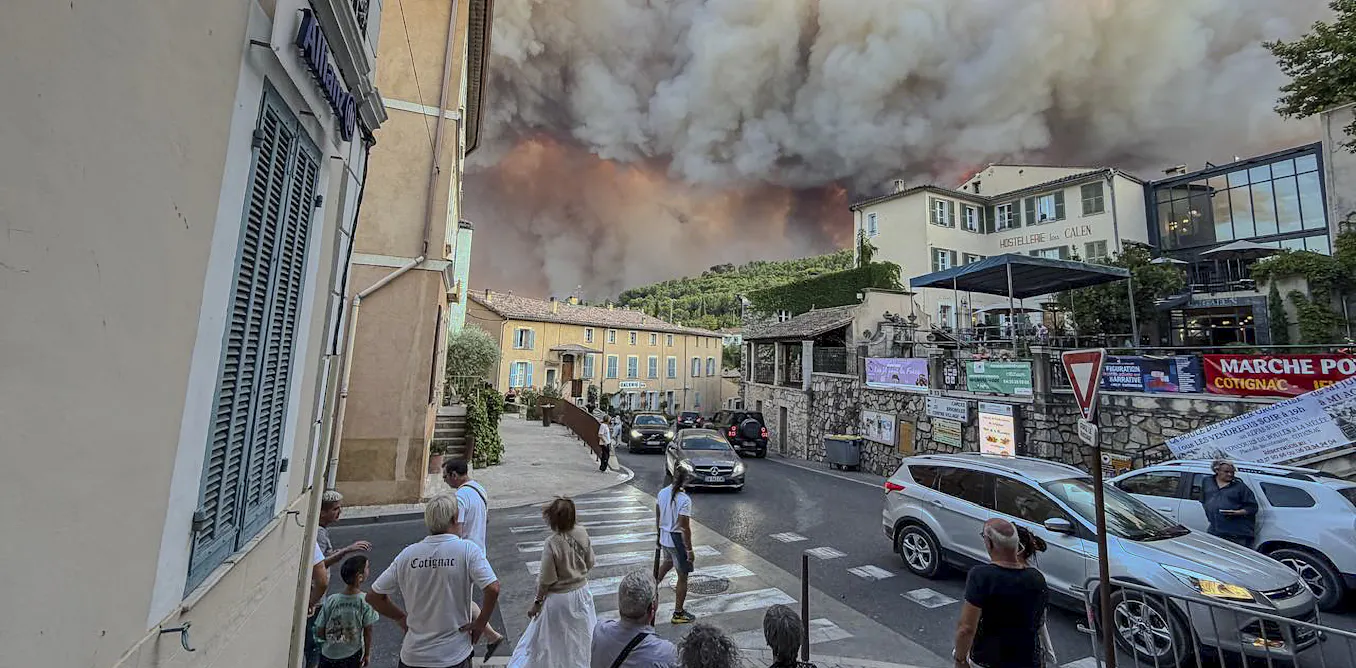
Wildfires across France and Spain have intensified beyond historical norms, driven by record heat waves and prolonged drought conditions that fundamentally alter fire behavior. Firefighters in both nations now battle flames that spread faster, burn hotter, and regenerate more aggressively than in previous decades.
Spain experienced its worst wildfire season on record in 2022, with fires consuming over 500,000 hectares. The 2023 season continued this trend, as temperatures routinely exceeded 40 degrees Celsius across southern Europe. France faced similar pressures, with wildfires in Provence and the Côte d'Azur forcing tens of thousands of evacuations.
The intensity stems from a confluence of climatic factors. Extended droughts deplete soil moisture, reducing fuel moisture content to critically low levels. This allows flames to spread through vegetation at speeds that overwhelm traditional firefighting tactics. High temperatures accelerate evaporation from plant material, creating drier conditions faster than suppression efforts can manage.
Research from the European Commission's Copernicus Emergency Management Service documents that recent fires exhibit fire behavior previously seen only in Mediterranean climates with centuries of data. Contemporary fires now generate pyrocumulus clouds, towering structures that create their own weather systems and spark secondary fires miles away from the initial ignition point.
Climate change amplifies these dynamics. Each decade of warming increases the duration of fire season and expands the geographic range where extreme fire conditions occur. Models project that Mediterranean Europe will experience fire seasons 40 percent longer by 2100 under current emissions trajectories.
Firefighting resources strain under demand. Spain and France have mobilized reinforcements from neighboring countries, including Canadian wildfire specialists and equipment. Water scarcity compounds problems, as drought conditions limit the water available for aerial drops and ground suppression. Some regions implemented water rationing that prevented adequate firefighting response.
Officials