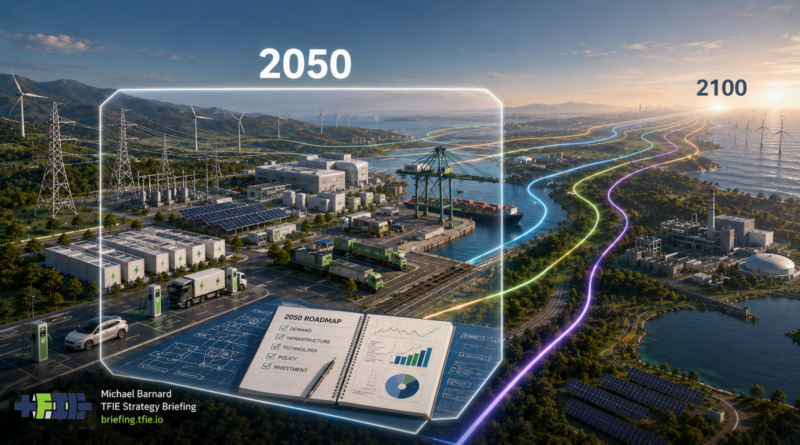
Climate planners face a critical gap between 2050 net-zero targets and the physical realities of industrial infrastructure that must operate for decades beyond.
Most decarbonization scenarios stop at 2050 because governments set policy targets there. But steel mills, aircraft fleets, ports, electricity grids and industrial supply chains operate on longer timelines. A pathway can show net-zero emissions in 2050 spreadsheets while building an energy system that proves expensive, physically implausible or dependent on technologies that never materialize at scale.
Consultants now work backward from 2100 projections to build credible 2050 roadmaps. The shift reflects client demand for strategies that actually work in real industrial systems, not just policy calendars.
The problem runs deep. Heavy industry requires decades to transition. A coal power plant built today operates 40-50 years. A steel mill lasts even longer. Retrofitting or replacing this infrastructure takes time and capital that most 2050 plans leave undefined. Aircraft manufacturers cannot simply flip a switch to sustainable aviation fuels or hydrogen propulsion. Port infrastructure designed for current shipping patterns cannot adapt overnight.
Consultants face pressure to show concrete pathways for 2050 targets while ensuring the underlying systems remain viable through 2100. This means specifying which technologies must scale, when, and at what cost. It means identifying which infrastructure retires when and what replaces it. Generic carbon-reduction percentages do not cut it.
The gap between policy ambition and technical feasibility has always existed. But planning firms now build models that acknowledge it. They map out intermediate milestones. They flag where current policy falls short of requirements. They identify which technologies lack deployment timelines or cost trajectories.
This approach transfers accountability. A 2050 net-zero target becomes less about hitting a number in a spreadsheet and more about maintaining