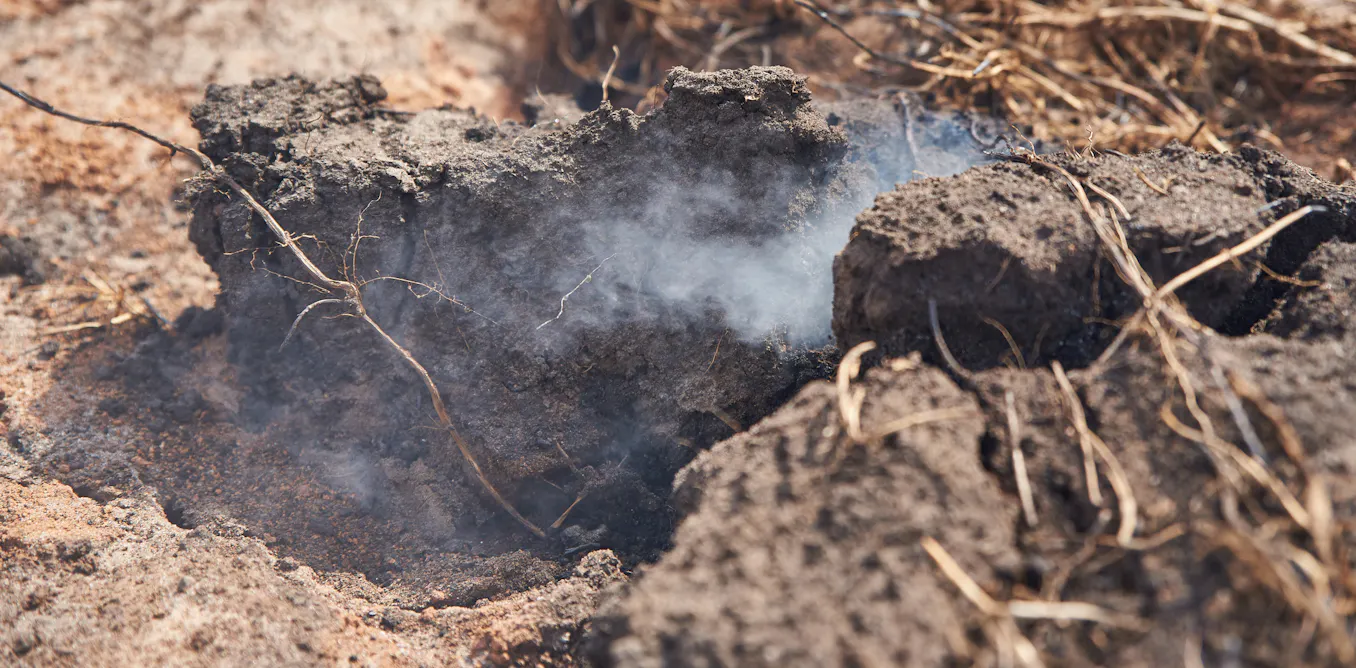
Peatlands across Australia contain millennia of accumulated organic matter, storing more carbon per hectare than forests. These wetlands support specialized plant and animal communities found nowhere else on Earth. Yet a counterintuitive reality now shapes their management: controlled fire can protect them better than fire suppression.
Australian peatlands occupy roughly 3 million hectares, predominantly in Tasmania, Victoria, and Queensland. They sequester vast quantities of carbon in waterlogged soils where decomposition moves slowly. When peatlands burn uncontrollably, oxidation releases stored carbon to the atmosphere. The 2019-2020 Black Summer fires destroyed thousands of hectares, converting carbon sinks into carbon sources.
However, strategic low-intensity burns prevent catastrophic wildfires that would cause far greater damage. Controlled burning removes surface vegetation and accumulated dead matter that fuel intense, uncontrollable fires. By reducing fuel loads, land managers can keep future fires cooler and less destructive to the underlying peat layers.
This approach requires precision. Practitioners must time burns during wet seasons when soil moisture remains high, preventing fire from penetrating deep into peat deposits. The goal remains clear: protect the carbon-rich core while managing vegetation. Indigenous fire management practices, refined over tens of thousands of years, inform modern strategies in some regions.
Australia's peatland conservation faces mounting pressure. Climate change extends fire seasons and intensifies drought conditions. Drainage for agricultural development historically destroyed peatlands, degrading their carbon storage capacity. Scientists now advocate for rewetting drained peatlands and implementing strategic burning regimes that recognize fire's dual nature.
Conservation agencies including the Department of Climate Change, Energy, Environment and Water work with researchers to develop regional burn protocols. Each peatland ecosystem responds differently based on hydrology, vegetation composition, and climate patterns. Victoria's Ramsar-listed peatlands receive particular attention given their