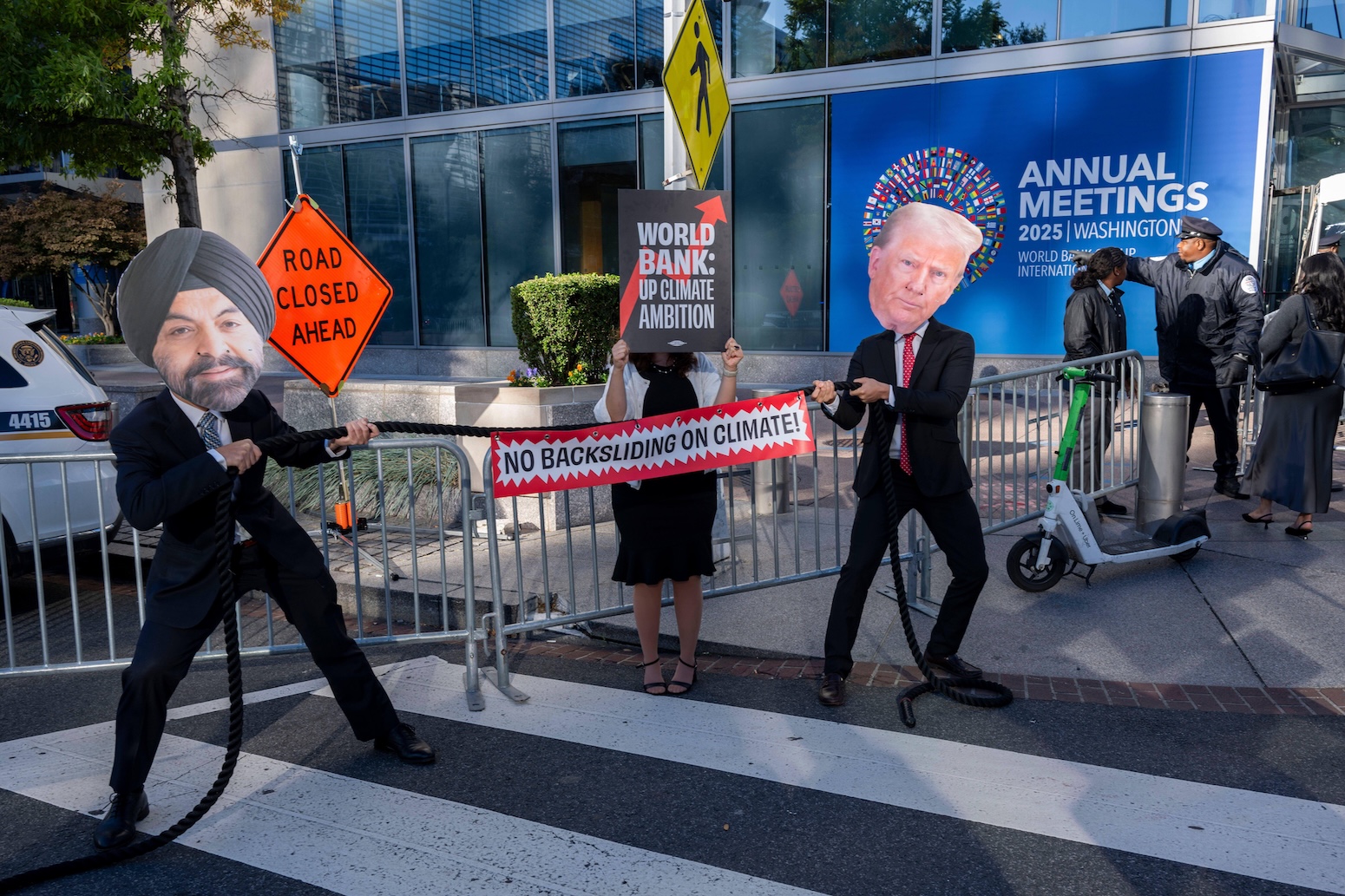
The World Bank has scrapped its 2025 target requiring 45% of financing to developing countries serve climate purposes, a retreat that threatens funding for emissions reductions and climate adaptation in nations least responsible for global warming.
The bank originally committed to directing climate finance toward mitigation and adaptation projects. The abandoned benchmark removes accountability for directing resources toward countries facing the worst climate impacts despite minimal historical emissions contributions. Developing nations depend on multilateral development banks for capital to transition away from fossil fuels and protect infrastructure from climate hazards.
The timing matters. Global emissions continue rising. The International Energy Agency reports developing economies need roughly $2 trillion annually for clean energy transition alone. Without binding targets, the World Bank can allocate funds based on traditional lending criteria rather than climate necessity. This creates a gap between stated climate commitments and actual resource flows.
The decision also signals wavering institutional commitment at a moment when climate finance gaps are widening. Developing countries have repeatedly called for increased climate finance at United Nations climate conferences. The Paris Agreement framework depends partly on mobilizing funds through institutions like the World Bank.
Dropping the 45% target gives the bank flexibility operationally but weakens the mechanism meant to steer capital toward decarbonization. Other multilateral banks operate under similar climate finance targets. The World Bank's retreat may embolden others to lower their climate spending commitments.
The move reflects broader tension within development finance. The bank must balance climate goals against its mandate to reduce poverty and fund infrastructure. However, climate impacts increasingly threaten poverty reduction gains. Floods, droughts, and temperature shifts disproportionately harm low-income populations in developing countries.
Without clear targets, measuring progress becomes difficult. Institutions can redefine what counts as climate finance, inflating figures without increasing actual climate-focused spending. Transparency requirements weaken when numerical goals disappear.
The abandonment occurs as developing nations negotiate new