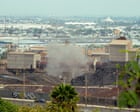
Mexico's government announced sweeping enforcement actions against industrial pollution after Guardian and Quinto Elemento Lab investigations documented heavy-metal contamination near Zinc Nacional, a factory in Monterrey processing US hazardous waste.
The Mexican authorities levied $4.8 million in fines against the facility and committed to deploying a new industrial air-monitoring system across the country. The investigations revealed elevated levels of toxic metals in neighborhoods surrounding the plant, exposing gaps in environmental enforcement along the US-Mexico border.
Zinc Nacional receives hazardous waste from the United States for processing, a practice that generates significant emissions affecting surrounding communities. The Guardian's reporting documented contamination patterns in the Monterrey area where the facility operates, prompting federal response from Mexican environmental agencies.
The government's response combines financial penalties with infrastructure upgrades. The new air-monitoring system represents a shift toward continuous emissions tracking rather than spot inspections. This move addresses longstanding concerns about industrial facilities operating with minimal oversight in Mexican border regions.
The investigation highlights how cross-border waste management creates environmental justice issues. US companies legally export hazardous materials to Mexico for processing, where regulatory enforcement has historically lagged enforcement north of the border. Residents in Monterrey neighborhoods face exposure to toxic dust and air pollution without equivalent protection standards applied in the United States.
Mexico's announcement signals pressure to strengthen environmental governance. The $4.8 million penalty suggests federal regulators are prioritizing enforcement after public exposure of contamination data. However, a single fine and monitoring system deployment do not address systemic challenges in border environmental regulation.
The case reflects broader patterns of transnational pollution affecting low-income communities near industrial zones. Mexican journalists and international media collaboration proved essential to forcing accountability. Future enforcement will depend on consistent monitoring implementation and whether penalties deter similar contamination patterns at other facilities processing imported waste.