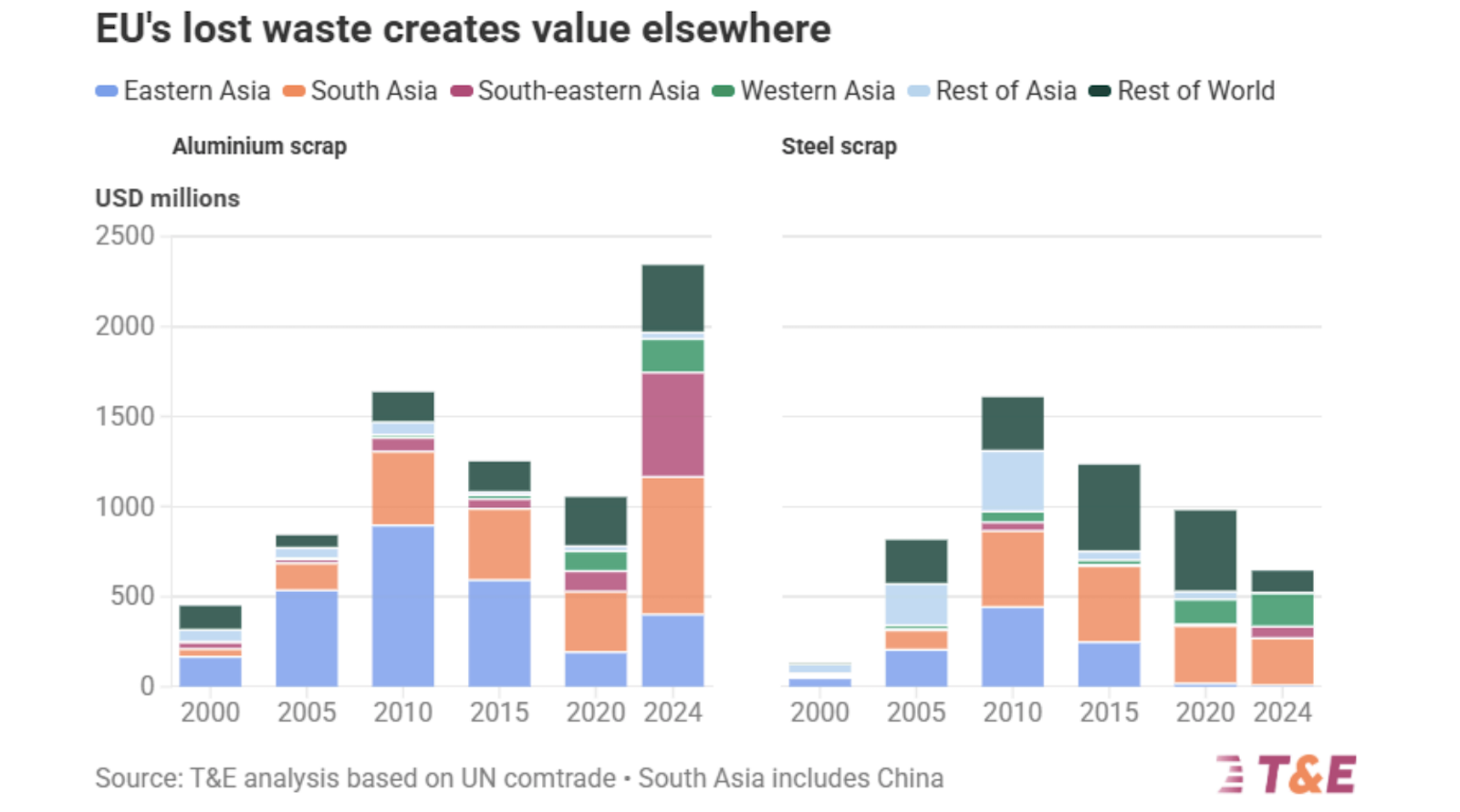
Europe's new Circular Economy Act provides regulatory pathways to expand domestic recycling capacity and recover critical minerals from discarded products. The legislation targets end-of-life materials from electric vehicles, batteries, and consumer electronics, reducing Europe's dependence on foreign mineral imports.
The recycling sector currently underperforms relative to available feedstock. Europe generates substantial quantities of materials—lithium, cobalt, nickel, and rare earths—locked in spent batteries and automotive waste. Recovery rates remain low across many mineral streams. The Circular Economy Act establishes mandatory collection, sorting, and processing standards that incentivize investment in recycling infrastructure.
Scaling domestic recovery addresses two strategic vulnerabilities. First, Europe relies heavily on mineral imports from geopolitically unstable regions and single-source suppliers. Recycled minerals reduce this exposure. Second, battery production for the continent's electric vehicle transition requires steady mineral supplies. Recovering materials from discarded batteries creates a secondary supply loop.
The legislation sets specific targets for material recovery from automotive and battery waste. Manufacturers must design products for disassembly and recyclability. Extended producer responsibility clauses hold companies accountable for end-of-life management. These requirements create demand for advanced recycling technologies and skilled workforce development across member states.
Recycling rates for some minerals remain substantially below potential. European recycling operations currently recover only a fraction of cobalt and nickel from spent batteries. Industrial-scale recovery infrastructure requires capital investment and consistent policy support. The Circular Economy Act removes regulatory barriers that previously made European recycling economically uncompetitive against virgin material extraction.
Industry analysts estimate that scaling European battery recycling could supply 25-30 percent of the continent's mineral demand by 2040. This reduces import volumes and strengthens supply chain resilience. Regional recycling centers create employment while lowering transportation emissions compared to long-distance mineral shipping.
The framework's effectiveness