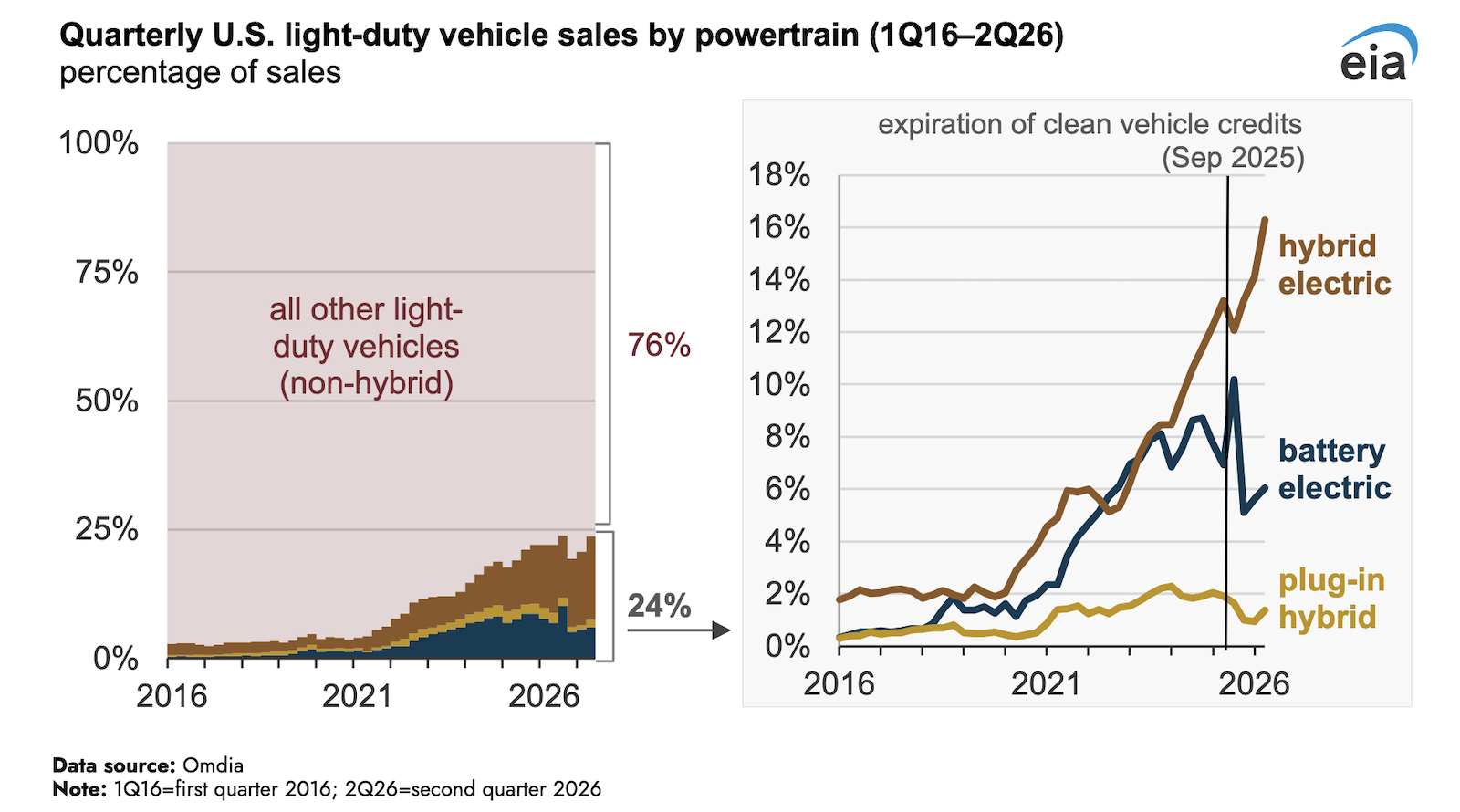
Hybrid electric vehicles captured 16% of the U.S. light-duty vehicle market in the second quarter of 2026, reaching a record high. Combined electrified vehicle sales hit 24% of new vehicles, up from 22% in the same quarter the previous year. This growth masks a divergence in the electrified market: battery electric vehicles fell in sales following the expiration of federal tax credits, while hybrids filled the gap.
The data reflects shifting consumer behavior as purchase incentives changed. Battery electric vehicles, which had benefited from the federal tax credit, lost momentum once that incentive ended. Buyers shifted toward hybrid options, which offer electric capability without the range anxiety or charging infrastructure concerns that deter some consumers from full battery electric adoption.
This pattern exposes a structural problem in the transition to electrified transportation. Tax credits shaped purchasing decisions, but their removal revealed the price sensitivity of the market. Without subsidy support, battery electric vehicles face headwind from higher upfront costs, despite lower operating expenses over vehicle lifetime.
Hybrids present a commercially attractive middle ground. They deliver fuel savings and emissions reductions without requiring extensive charging networks or long-term battery investments from consumers. Manufacturers have invested heavily in hybrid technology, and supply chains are established. Hybrids also avoid the mineral mining controversies surrounding large-scale battery production.
The quarterly shift raises questions about long-term decarbonization strategy. While hybrids reduce emissions compared to conventional gasoline vehicles, they do not eliminate tailpipe emissions entirely. Meeting climate targets requires eventual transition to zero-emission vehicles. Reliance on hybrids as a primary market driver slows that transition, particularly if battery electric adoption stalls without tax incentive support.
Policymakers face a choice. Sustained tax credits could prop up battery electric sales and accelerate infrastructure buildout. Alternatively, allowing market forces