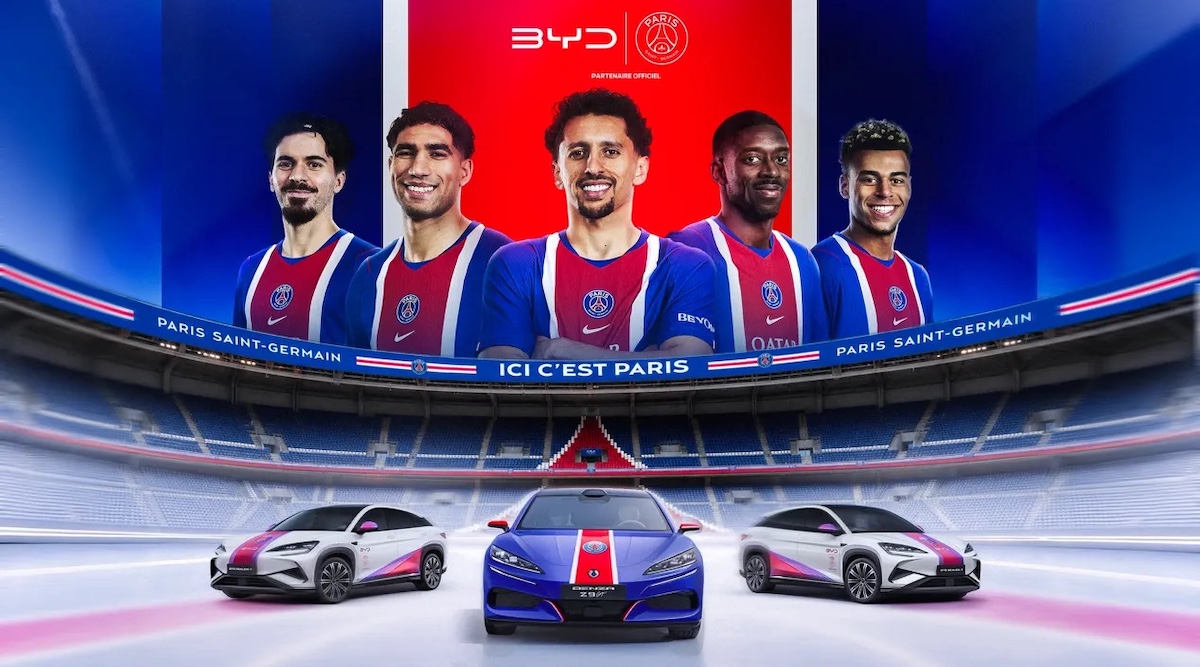
BYD, the world's largest EV manufacturer by volume, has deepened its European market expansion through a partnership with Paris Saint-Germain Football Club. The Chinese automaker is using high-profile sports sponsorships as a strategy to build brand recognition and consumer trust in markets where it remains relatively unknown.
The deal follows BYD's sponsorship of UEFA Euro 2024, the continent's premier soccer competition. BYD has identified European football as a direct channel to reach consumers in key automotive markets where brand perception shapes purchasing decisions for premium vehicles like electric cars.
The PSG partnership places BYD's branding in front of millions of European fans across televised matches, merchandise, and stadium visibility. For a company attempting to compete with Tesla and traditional European automakers in their home markets, the sports investment offers exposure that traditional advertising struggles to achieve.
BYD sold 1.57 million new energy vehicles globally in 2023, commanding roughly 18 percent of the worldwide EV market. However, its European presence remains minimal compared to legacy manufacturers pivoting to electric vehicles and established EV makers. The company's Atto 3 and Yuan Plus models have entered select European markets but lack the dealer networks and consumer awareness of competitors.
Sports sponsorships represent a calculated marketing gamble. Football partnerships bypass skepticism by associating BYD with trusted local institutions and national pride. PSG's global fanbase extends the reach beyond France into markets including Germany, Spain, and the United Kingdom.
BYD's European strategy also includes manufacturing expansion. The company operates battery plants across the continent and has announced vehicle assembly facilities to reduce tariff exposure and production costs. The company competes against both EV specialists and traditional carmakers investing heavily in electrification, all fighting for limited market share in Europe's gradually growing EV segment.
Whether sports sponsorships alone shift consumer perception remains uncertain