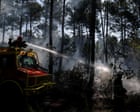
Nearly 4,000 people have been evacuated from campsites, holiday villages, and tourist accommodations near Lacanau, west of Bordeaux, as wildfires spread across southwestern France and Spain. The precautionary measure reflects escalating danger as meteorological conditions worsen firefighting efforts.
Returning winds and extreme heat have complicated containment operations across both nations. French President Emmanuel Macron characterized the wildfire emergency as the "toughest" crisis France has faced since World War II, underscoring the scale of the current disaster.
The evacuations target the Atlantic coast region, a major tourist destination. Authorities issued the precautionary order to protect civilians as fire behavior becomes increasingly unpredictable. Wind patterns drive flames toward populated areas, while high temperatures accelerate fuel drying and fire spread.
Southwestern France experiences recurring summer wildfires, but climate conditions this year have intensified fire activity. Heat waves across Europe create optimal conditions for rapid fire propagation. Spain simultaneously battles its own blazes, indicating a regional heat emergency stretching across the Iberian Peninsula and into France.
Firefighting resources face mounting pressure as multiple fires burn simultaneously across the region. Adverse weather forecasts suggest conditions will deteriorate further, complicating evacuation timelines and suppression operations. Authorities maintain vigilance for fire behavior shifts as atmospheric conditions change.
The evacuation represents a precautionary approach prioritizing civilian safety over assuming fires remain contained. Tourism infrastructure faces temporary closure, though economic impacts remain secondary to life safety. Regional authorities coordinate cross-border response efforts with Spanish counterparts managing fires on their side of the border.
Climate change research consistently links European heat waves to atmospheric patterns that persist longer than historical norms, extending fire seasons and intensifying burning conditions. The "toughest" characterization by France's president reflects both immediate danger and broader recognition that wildfire risks have fundamentally