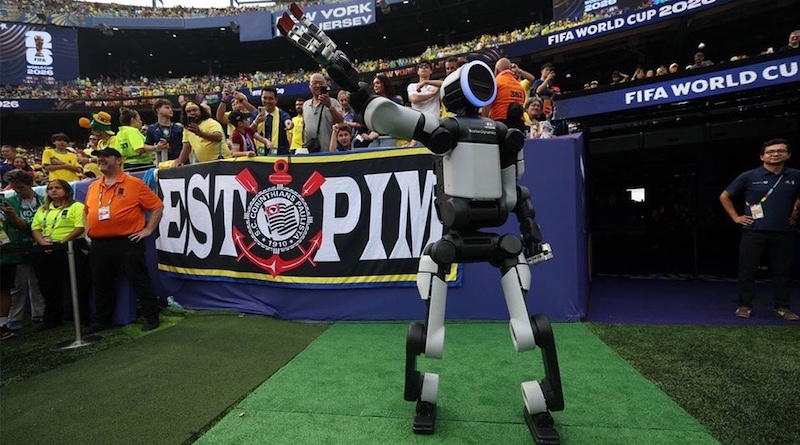
Hyundai Motor Group Executive Chair Euisun Chung announced the company's shift toward "Physical AI" at the San Francisco AI Summit, positioning the automotive manufacturer as a solutions provider beyond traditional vehicle production. Chung stated that Hyundai is evolving to become a "Physical AI solution company," marking a strategic pivot toward artificial intelligence applications in physical systems and robotics.
The announcement included a roadmap for realizing this vision and outlined collaboration strategies with global technology leaders. Physical AI refers to artificial intelligence systems that interact with and control physical environments and machinery, an area where automotive expertise translates to competitive advantage. Hyundai's pivot reflects broader industry trends as automakers invest in autonomous systems, robotics, and AI-driven manufacturing.
The company's strategy targets multiple sectors beyond automobiles. Robots, autonomous delivery systems, and industrial automation represent growth opportunities where AI capabilities address real-world operational challenges. Hyundai's existing manufacturing infrastructure and supply chain expertise position it to develop integrated hardware-software solutions that competitors lack.
This announcement signals Hyundai's recognition that traditional automotive margins compress as electric vehicles commoditize. Software and AI services generate higher-margin revenue streams. The company joins other automotive firms diversifying into robotics and autonomous systems, though few have articulated such explicit rebranding.
Environmental implications remain unclear from the announcement. If Hyundai's Physical AI focus accelerates electric vehicle adoption through autonomous fleets or optimizes manufacturing efficiency, climate benefits follow. Conversely, if AI development consumes significant computing resources without emission reduction ties, the environmental calculus becomes negative. The company's electric vehicle ambitions and battery manufacturing expansion offer parallel pathways to decarbonization.
Hyundai's collaboration strategy with global tech firms suggests partnerships with artificial intelligence specialists, potentially including OpenAI, Google, or regional AI companies. Such alliances could accelerate capability development but also