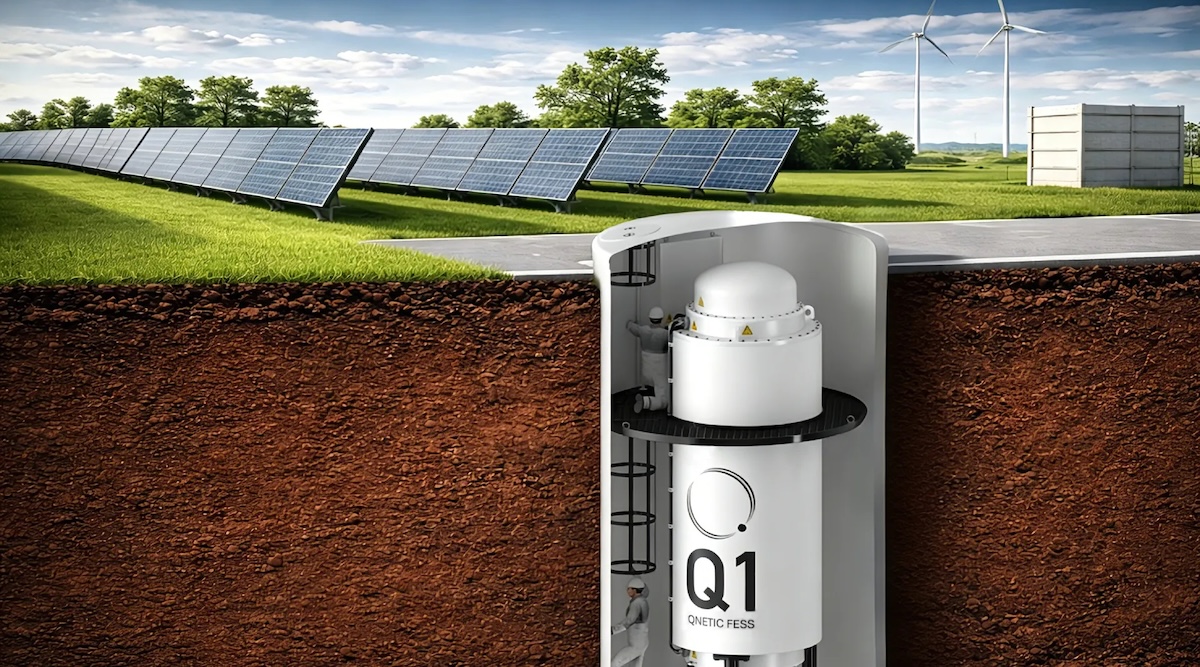
Flywheel energy storage systems are moving underground, offering renewable energy operators a way to store power from wind and solar installations with reduced visual impact and potentially lower costs.
These mechanical systems store energy by spinning a rotor at high speeds, then release that energy by gradually slowing the rotor down. Unlike lithium-ion batteries, flywheels avoid reliance on minerals sourced through overseas supply chains. The underground placement solves a persistent problem for wind and solar developers. Surface-mounted energy storage facilities face community opposition and zoning restrictions that delay projects. Burying flywheels eliminates these barriers.
The systems provide what the industry calls "longer duration" storage, meaning they can discharge power over extended periods. This addresses a core limitation of batteries, which excel at quick bursts but degrade over many charge cycles. Flywheels handle frequent cycling without degradation, making them well-suited for daily renewable energy smoothing.
Cost projections favor the technology. Underground construction, while requiring excavation, avoids expensive above-ground real estate and permitting delays. Manufacturing domestic flywheels reduces dependency on imported battery components and supply chain vulnerabilities exposed by recent semiconductor shortages.
The technology remains in scaling phase. Most commercial flywheel installations currently serve niche applications like grid frequency regulation. Deploying them at scale for renewable integration requires proving the economics at utility scale and demonstrating reliability across multiple climate zones.
Environmental advantages extend beyond supply chain resilience. Flywheels contain no toxic electrolytes that require disposal. They operate efficiently in temperature extremes, performing better than lithium batteries in cold climates where wind resources concentrate.
The emergence of underground flywheel systems reflects broader storage innovation. As wind and solar capacity expands rapidly across North America, the grid needs diverse storage options. Flywheels cannot replace all battery applications, but they fill specific niches where duration,