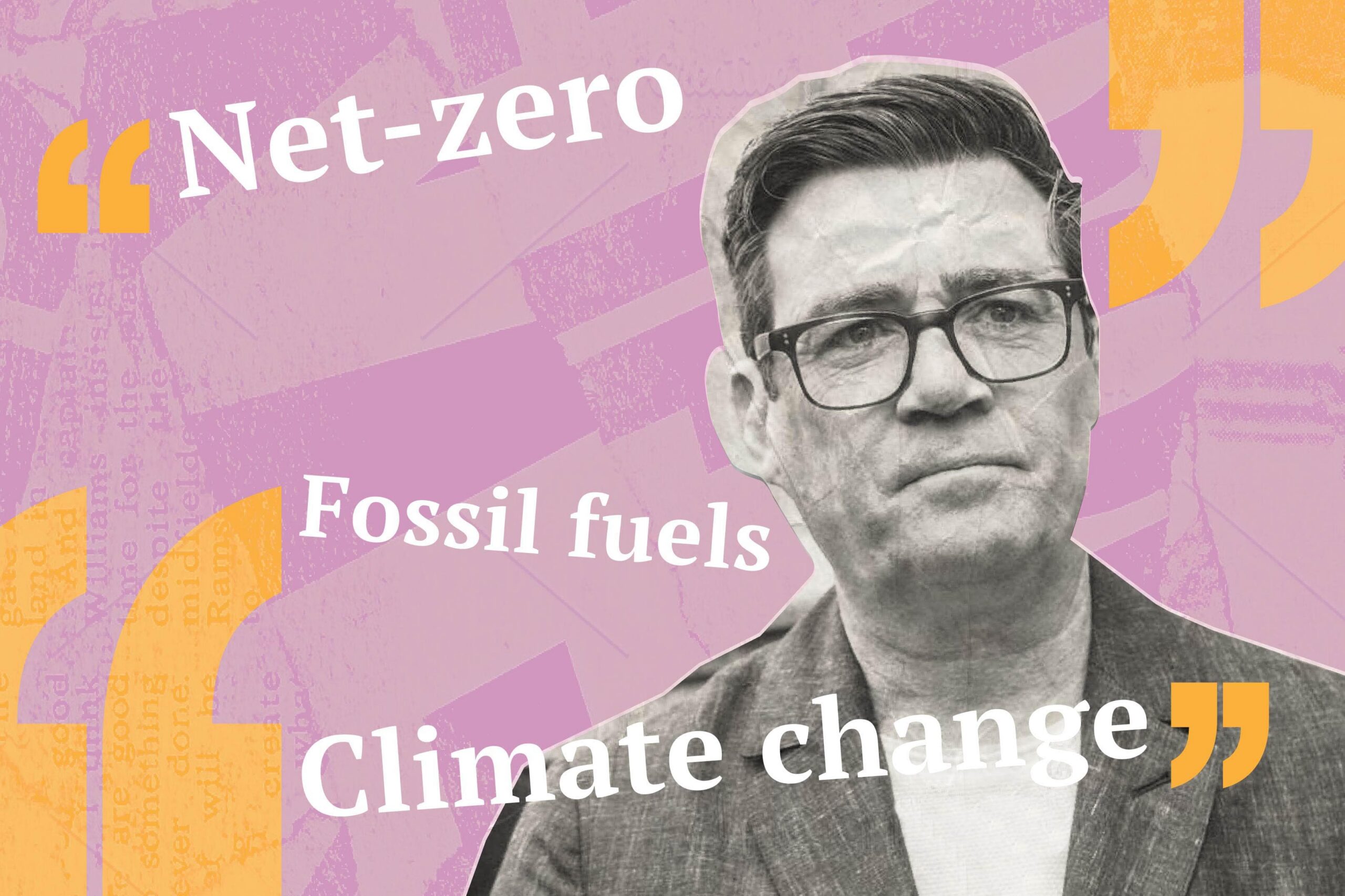
Andy Burnham has taken office as UK prime minister with a climate record that remains largely opaque to public scrutiny. During his leadership campaign, Burnham avoided detailed public statements on climate policy, net-zero targets, and fossil fuel positions, raising questions about his environmental agenda at a critical moment for British climate action.
Carbon Brief compiled 28 statements from Burnham spanning his time as mayor of Greater Manchester and his political career to construct a profile of his climate stance. The compilation reveals a politician who has made selective environmental commitments while keeping broader climate philosophy unclear. Burnham has supported some renewable energy projects and urban sustainability initiatives in Manchester, yet his positions on accelerating the UK's net-zero transition, coal phase-out timelines, and investment in fossil fuel infrastructure remain ambiguous.
His reticence on climate matters contrasts with the urgency of Britain's legally binding carbon budgets under the Climate Change Act 2008. The UK committed to reaching net-zero emissions by 2050 and must reduce emissions by 81 percent by 2035 compared to 1990 levels, according to the Climate Change Committee. These targets require substantial policy shifts across energy, transport, and industry.
Burnham's previous role as Greater Manchester mayor gave him authority over regional transport and planning decisions affecting emissions, yet his public climate statements during that tenure remained measured. His 28 recorded quotes show sporadic engagement with climate rhetoric rather than comprehensive policy frameworks.
The new prime minister now faces immediate pressure from environmental groups and backbench MPs demanding clarity on his government's climate commitments. Key decisions loom on North Sea oil licensing, onshore wind acceleration, and hydrogen strategy. Burnham's reluctance to articulate explicit climate positions during his campaign suggests potential tensions ahead between vocal climate activists within Labour and any political calculation favoring economic pragmatism on fossil fuels. His actual policy choices in office will determine