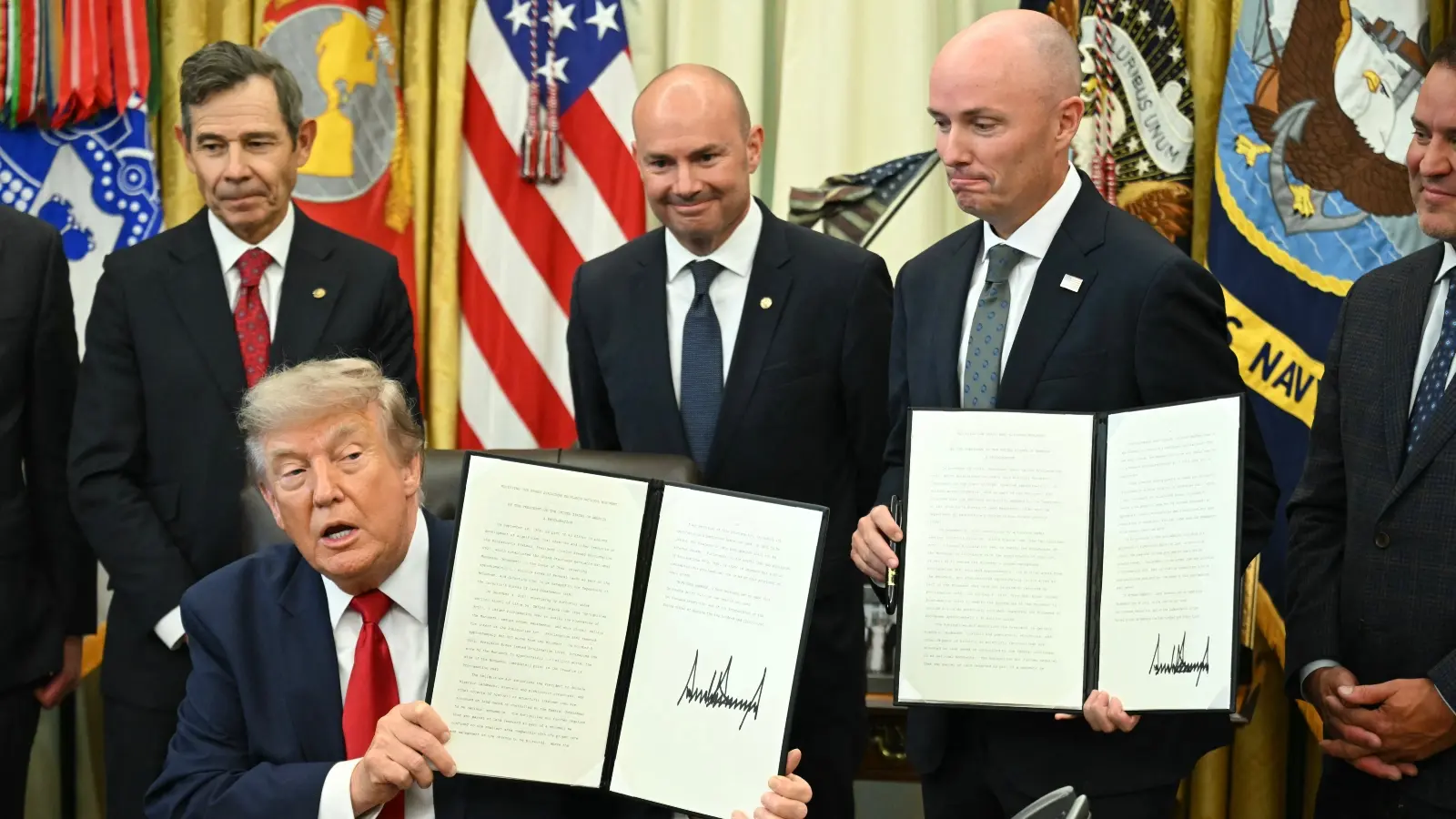
President Trump signed two executive orders Monday that reduced the boundaries of Utah's Bears Ears and Grand Staircase-Escalante national monuments. The orders restore acreage to lands available for grazing, mining, and drilling.
Trump's actions reverse protections put in place by the Biden administration. In 2021, Biden expanded Bears Ears by roughly 13 percent and Grand Staircase-Escalante by 20 percent, restoring lands that Trump had previously shrunk during his first term. Monday's orders undo those expansions and cut additional protected areas.
Bears Ears encompasses archaeological sites sacred to tribes including the Navajo, Ute, Hopi, and Pueblo nations. The monument contains thousands of cliff dwellings, petroglyphs, and burial sites. Grand Staircase-Escalante protects 1.7 million acres of Utah desert, including canyons and geological formations spanning hundreds of millions of years.
Tribal leaders and conservation organizations oppose the reductions. The tribes say they lose ancestral lands and ability to protect cultural resources from looting and damage. Wilderness advocates warn that opening these lands to extraction accelerates climate pollution and destroys habitat for endangered species like Utah prairie dogs and California condors.
The orders reflect Trump's stated priority to prioritize resource extraction on public lands. Industry groups representing ranchers, mining companies, and oil and gas operators pushed for expanded access, arguing that restrictions limit economic activity in rural Utah counties.
Federal law gives presidents broad authority to modify national monument boundaries through executive action. Monument designations and their revision depend entirely on presidential discretion. This volatility has transformed public lands policy into a political pendulum swinging with each administration.
The Antiquities Act of 1906 authorized presidents to protect federal lands as national monuments without congressional approval. Since then, every president except George H.W. Bush