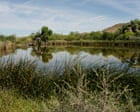
Quitobaquito Springs in southwestern Arizona faces destruction from border wall construction, according to environmental groups and indigenous advocates. The site, located in Organ Pipe Cactus National Monument along the US-Mexico border, harbors rare endemic fish and turtle species found nowhere else on Earth. The O'odham people, whose ancestral lands encompass the region, consider the springs sacred and call them A'al Vaipia.
Water emerges from an aquifer at the site's base, flows through a concrete channel, and collects in a pond that sustains the isolated ecosystem. The springs represent one of the desert's few reliable freshwater sources, creating a biological hotspot in the arid Sonoran landscape. Environmental groups have documented multiple species dependent on this habitat, including the Quitobaquito pupfish and Sonoran mud turtle, both of conservation concern.
Construction of border barriers threatens the aquifer's integrity and the delicate hydrology supporting the springs. The proposed work would require infrastructure installation in proximity to the water source, risking contamination and disruption of groundwater flow. Environmental organizations have filed legal challenges and formal complaints with federal agencies overseeing the monument and species protection under the Endangered Species Act.
The O'odham Nation has opposed the project on cultural and environmental grounds, asserting treaty rights and spiritual connections to the landscape. The springs represent both a biodiversity asset and a cultural resource whose loss would be irreplaceable. Federal land management agencies face conflicting mandates between border security priorities and conservation obligations under the National Monument designation and environmental law.
The controversy underscores tensions between infrastructure expansion and ecological protection in sensitive ecosystems. Quitobaquito Springs exemplifies how development projects in arid regions can threaten isolated biological communities and indigenous heritage simultaneously. Resolution requires balancing these competing interests through careful environmental review and consultation with affected communities.