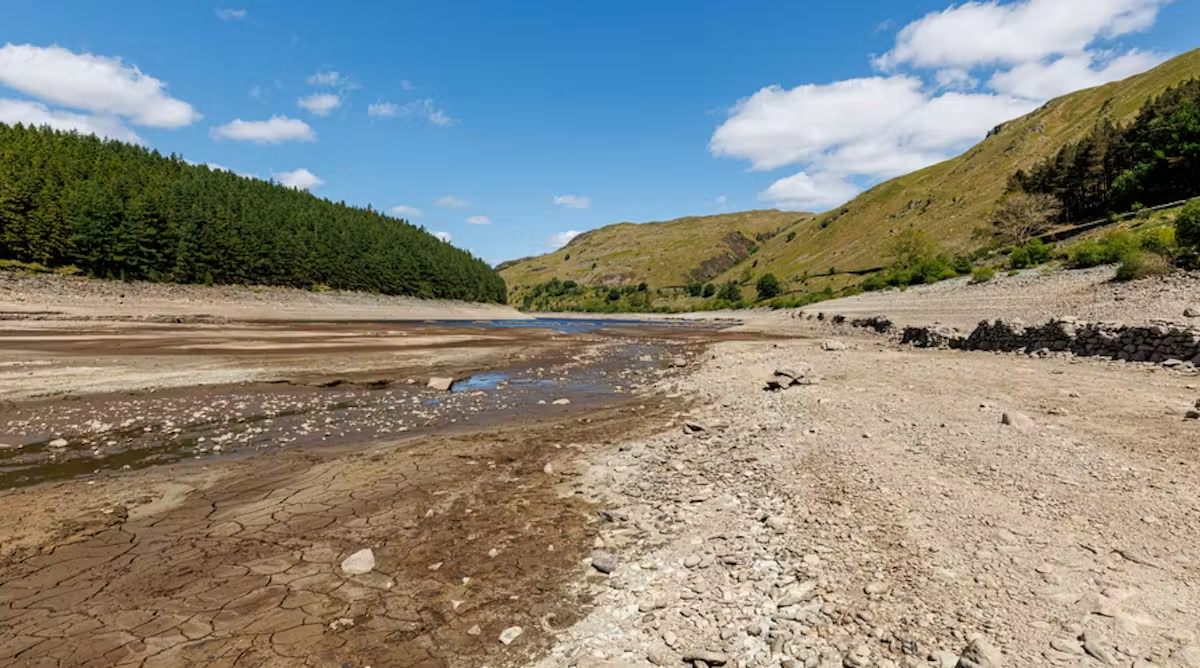
England and Wales experienced a winter drought that could worsen water shortages next summer. Below average rainfall and low river and groundwater levels persisted into early October 2026, with the driest February in 30 years recorded across England earlier in the decade.
Winter droughts historically precede severe summer water crises in Britain. The summer drought of 1976 followed an exceptionally dry winter. The dry winter of 2021/22 led to the severe summer drought of 2022, particularly in chalk aquifers. A dry early 2023 winter, including the driest February in 30 years, prevented south-west England reservoirs from refilling and extended hosepipe bans for an entire year.
Winter is when low evaporation and dormant vegetation allow rainfall to replenish underground aquifers and reservoirs. Water takes months or even years to percolate through soil and porous rock, meaning a winter rainfall shortage can impact river flows and groundwater levels the following summer. This delay is especially pronounced in regions reliant on groundwater, such as chalk catchments of east and south-east England and sandstones of the Midlands.
Seasonal rainfall forecasts for the rest of winter indicate recovery for much of England and Wales, but a heightened chance for drought to persist in the south, east and northeast. Some parts of England could already be accumulating a hidden water deficit for next summer.
By 2070, UK winters are projected to become up to 20% wetter, and summers significantly drier, according to future climate projections. However, wetter winters will not eliminate winter droughts, as year-to-year atmospheric variability means dry winters will still occur. Early winter rain will increasingly be absorbed simply re-wetting dry soils, shortening the seasonal window to replenish groundwater levels.
Summer droughts in England and Wales are disrupting agriculture through irrigation restrictions, imposing domestic hosepipe bans, hampering river navigation, damaging freshwater ecosystems, and curtailing electricity generation from power stations reliant on river cooling water. Water planners need to track how winter rains top up the water system alongside summer demand. Society must shift from responding to summer water shortages to enhancing year-round water storage through building more reservoirs on farms, actively pumping excess winter floodwater into underground aquifers, and restoring wetlands to slow runoff.