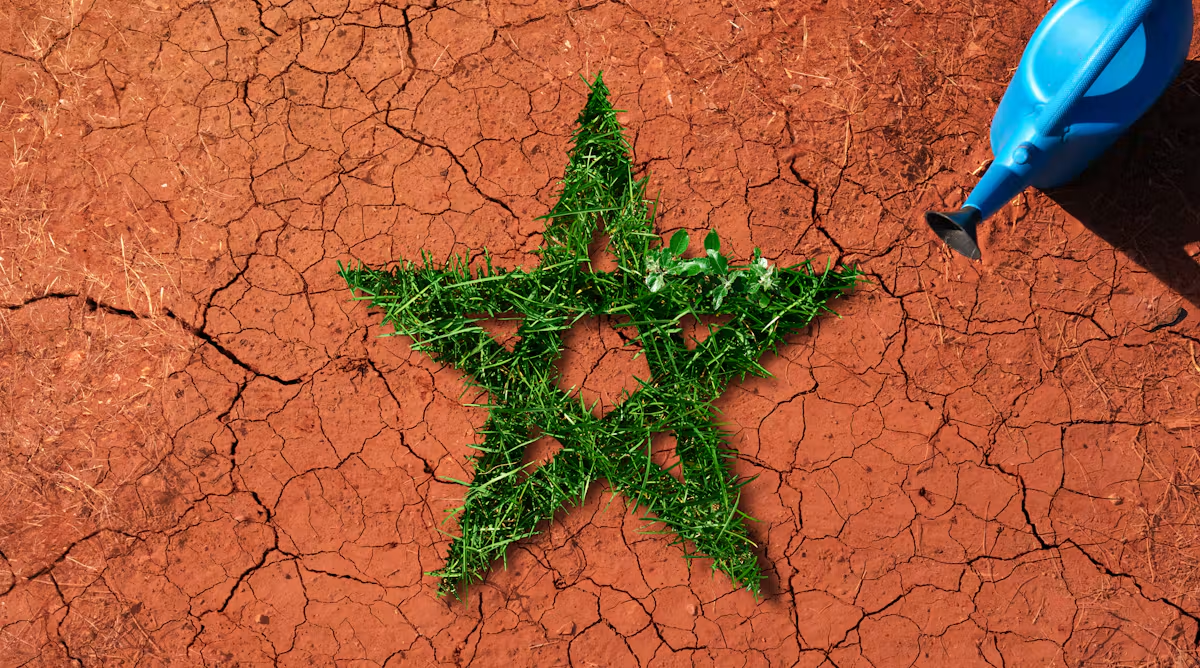
A new study warns that large-scale green hydrogen production in North Africa could deplete water supplies and damage marine ecosystems, even as the region positions itself as a primary exporter to Europe.
Researchers at Eastern Mediterranean University modeled a 10-hectare, 1-gigawatt hydrogen plant in a hot, dry climate. They found that producing green hydrogen requires far more water than the industry typically claims. The industry states that hydrogen production needs about nine litres of water per kilogram of hydrogen produced. The model found plants may actually draw between 35 and 170 litres of water per kilogram once cooling systems, water purification, and evaporation losses are included.
Morocco, Algeria and Egypt have signed agreements and pledged land for green hydrogen projects. Egypt has signed $40 billion in agreements to build green hydrogen and ammonia hubs in the Suez Canal Economic Zone. Morocco plans to set aside one million hectares for developers. Algeria proposes to pipe green hydrogen directly to Europe via the SoutH2 Corridor. The European Union aims to import 10 million tonnes of renewable hydrogen annually by 2030, with most large-scale commercial production scheduled between 2027 and 2035.
The study identified particular risks in North Africa, where regional groundwater is already severely depleted. Desalinating seawater to supply freshwater for hydrogen production would generate large amounts of chemical-laden brine, which when dumped into semi-enclosed coastal waters like lagoons settles on the seafloor and suffocates marine life, the researchers found.
The authors recommend that international rules for certifying hydrogen as "green" require projects to measure effects on local water supplies and ecosystems. They proposed a Water Sustainability Index to assess whether water use is sustainable and a score assessing how salty wastewater could harm marine life. Projects should not qualify as green if they use more water than the local environment can safely spare, they stated.