Ships docked at European ports generate €2.5 billion annually in health and environmental costs, according to research by Transport & Environment (T&E). A single commercial vessel emits as much toxic sulphur at port in a year as 19,300 cars.
Thousands of ships run diesel generators continuously while berthed instead of plugging into electrical grids, releasing harmful pollution into port and coastal communities. The 100 largest European ports show Rotterdam faces the highest costs at €350 million yearly, followed by Antwerp at €220 million, Marseille at €120 million, Hamburg at €120 million, and Genoa at €110 million.
Under the EU's Alternative Fuels Infrastructure Regulation (AFIR), only large container ships, ferries, and cruise ships must connect to dockside electricity. Oil and gas tankers, bulk carriers, car carriers, and other cargo ships remain exempt. T&E estimates removing these loopholes would save Europe €1.56 billion in health and climate costs.
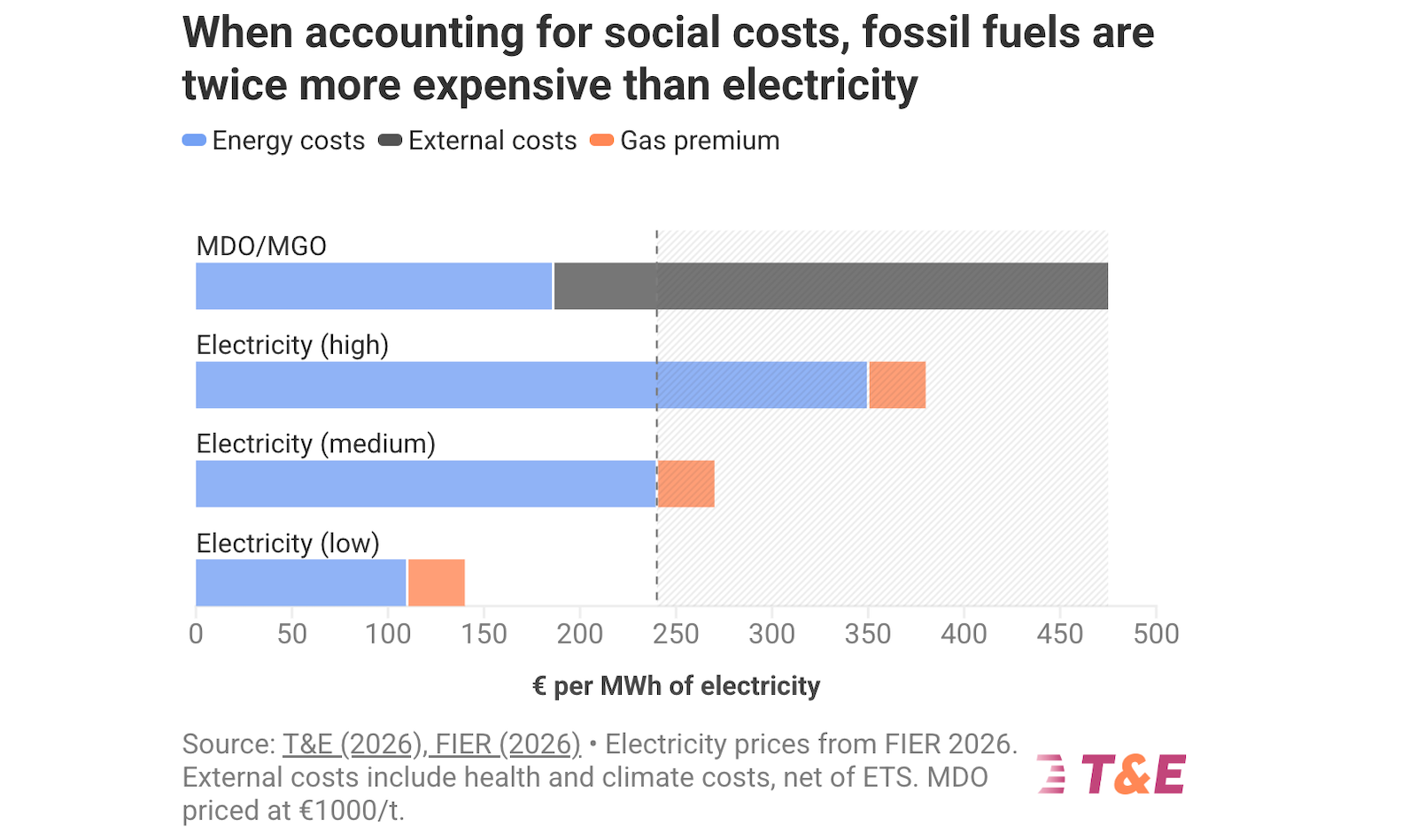
Planned EU port rules will cut at-berth damages by 40 percent by 2030. T&E notes that fossil fuel generation at dock costs twice as much as shore electricity once health and environmental burdens are factored in. The regulation gap creates planning uncertainty for port authorities and electricity grid operators, discouraging long-term investments in green infrastructure.
Eloi Nordé, shipping policy officer at T&E, stated: "Port communities are paying the price for ships running their engines 24/7 at port." The EU reviews the regulation at year's end. T&E and the Clean Port Cities coalition, which includes DFDS and Green Transition Denmark, urge policymakers to extend shore power requirements to all vessel types and establish national port electrification roadmaps before 2032.