Coastal water levels along California will reach record or near-record heights this week, but not primarily because of extreme rainfall or storms, according to climatologist Daniel Swain of UC Agriculture and Natural Resources.
The flooding stems instead from an overlap of king tides, naturally occurring high tides caused by gravitational forces of the sun and moon, and extreme thermal expansion from a record-strength El Niño event. The El Niño has warmed coastal ocean temperatures 10 to 15 degrees Fahrenheit above normal, raising water levels off California's coast by at least one foot and in some cases nearly two feet. This thermal expansion alone has kept coastal water levels 12 to 20 inches above usual levels across multiple high-tide cycles.
The upper several hundred feet of the ocean are as much as 10 to 15 degrees warmer than normal, with below-surface waters about 5 to 6 degrees warmer, Swain explained. "The water molecules are literally taking up more volume and therefore more space."
Humboldt Bay, 260 miles north of San Francisco, faces the highest risk. Swain predicted record ocean levels there when a storm arrives Tuesday, as storm surge, thermal expansion, king tides and heavy rain stack together. The Bay Area will see much less impact, with flood risk concentrated along the coast rather than inland areas above three to four feet elevation.
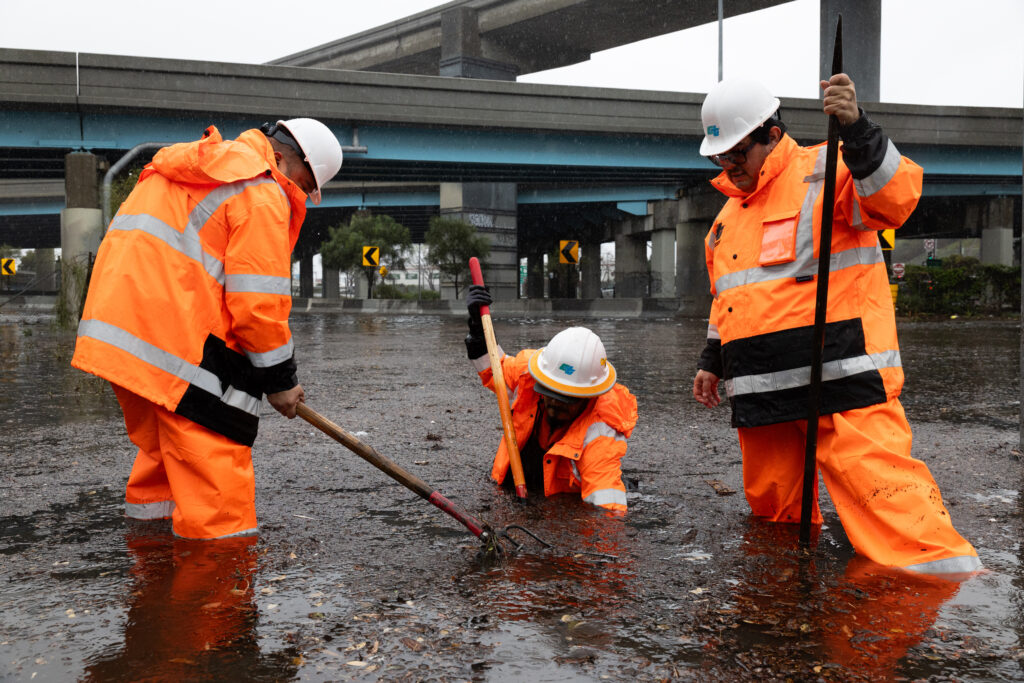
San Francisco authorities are preparing storm drain clearance, debris removal and flood barriers along the Embarcadero waterfront. San Francisco Airport and Oakland International have deployed sandbags, portable barriers and activated pump stations. By Tuesday morning, floodwaters had already inundated the Embarcadero pier and shut several roads in Marin County.
Researchers including Emma Lasky, a Ph.D. candidate at UC Berkeley, are concerned about how floodwaters could move toxic chemicals from contaminated low-lying areas around the Bay. King tides will grow potentially more problematic in December and January, Swain said, as even incremental increases could produce record-breaking coastal water levels given the already-elevated baseline.
Swain stated that human-caused global warming is making the difference between floods that break records and those that do not. Sea level rise, warmer El Niño conditions, and record-breaking coastal ocean temperatures all relate to warming effects.