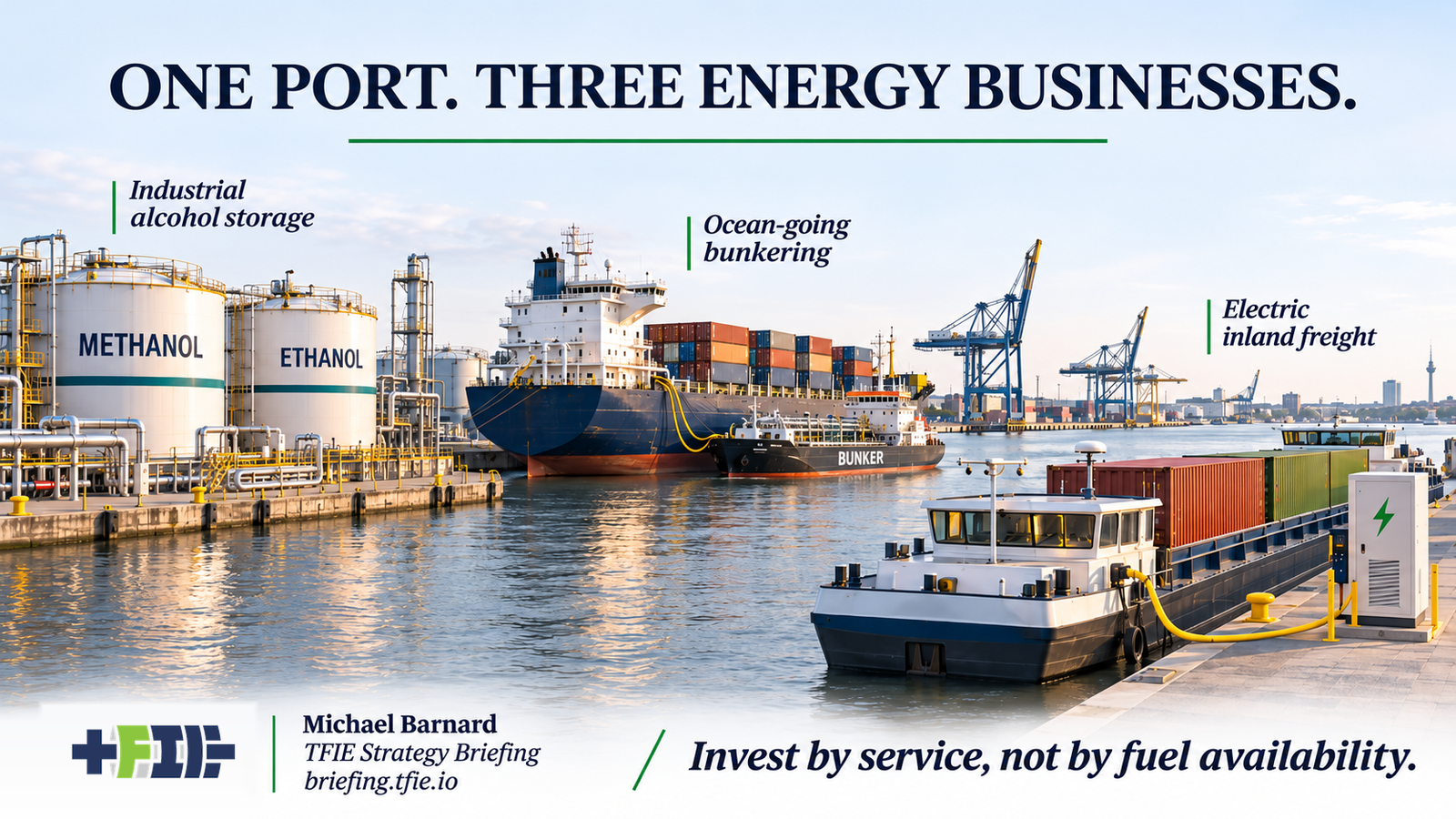
Rotterdam is expanding methanol and ethanol storage and bunkering capacity for ocean-going ships and industrial customers, but this strategy should not substitute for electrification of its inland freight fleet, according to an analysis in CleanTechnica.
In May 2026, Tankmatch's inland bunker vessel MTS Experience delivered certified biomethanol and second-generation ethanol to X-Press Feeders' ocean-going Eco Levant, marking Rotterdam's first ethanol bunkering of a seagoing vessel. The fuels were blended aboard the receiving ship into 90% methanol and 10% ethanol.
Rotterdam announced an expansion of Evos's Europoort terminal with five storage tanks totaling 67,500 cubic meters planned for methanol and ethanol. An inland-shipping berth with shore power is scheduled for completion in early 2028. Rotterdam's biomethanol bunkering grew from about 3,900 tons to almost 12,000 tons in 2025, according to the port authority.
The analysis distinguishes between three separate energy businesses. Ocean-going ships with different engines and fuel contracts require multiple bunker fuels at international ports. Inland shipping operates on predictable, repeating freight routes between a limited number of ports and terminals, making it suited for a dedicated electric network.
Modeled inland freight routes show wide variation in energy requirements. A local port-canal shuttle requires 1.8 megawatt-hours, while a long industrial corridor requires 36.8 megawatt-hours. The analysis recommends different battery sizes, exchange frequencies and charging arrangements within a common electric propulsion system.
The Dutch Zero Emission Services model operates five charging stations and two vessels in service with battery-container ownership separated from vessel ownership. Port authorities should develop distinct investment cases for industrial alcohol storage, marine bunkering and inland electric propulsion rather than conflating them.