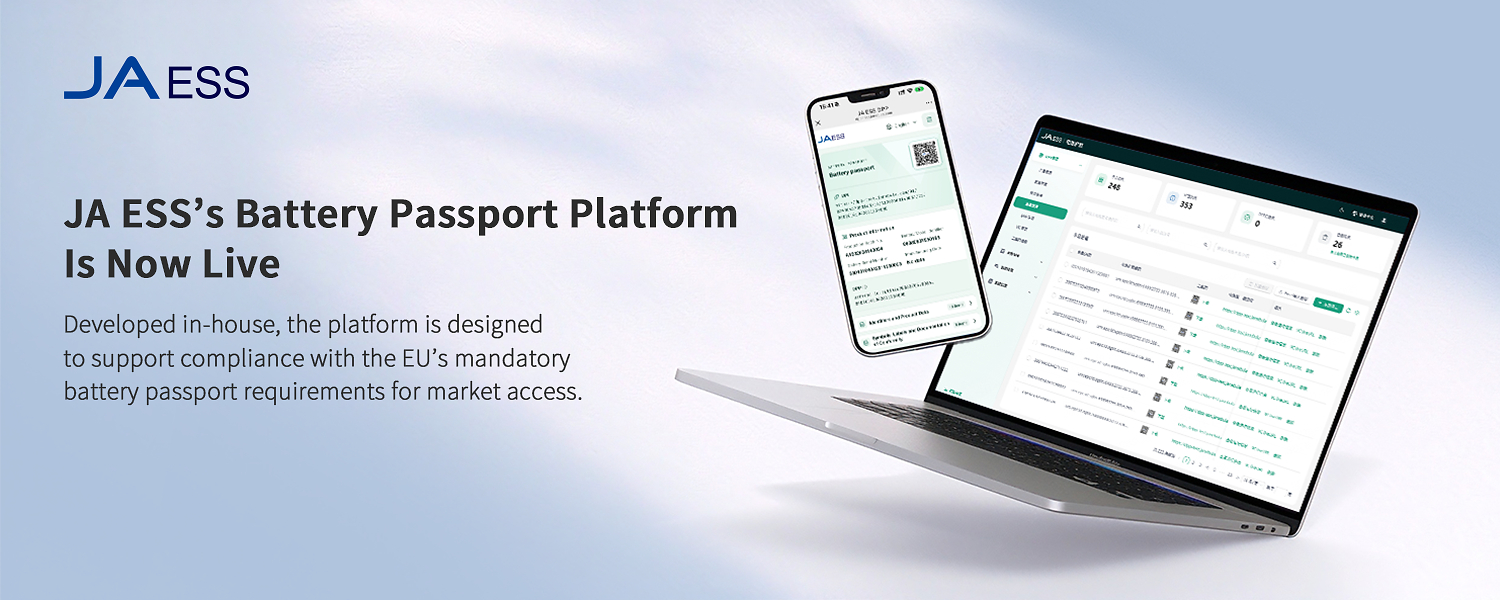
JA ESS launched an internal battery passport platform to help companies manage lifecycle data and comply with EU Battery Regulation requirements. The platform runs on JA ESS's own cloud infrastructure, giving the company direct control over data policies, access permissions, and updates.
Starting February 18, 2027, battery passports become mandatory for batteries in light vehicles, electric vehicles, and industrial batteries exceeding 2 kWh capacity placed on the market or put into service in the EU. The passport is a digital record linked to a single physical battery via QR code and unique identifier based on ISO/IEC 15459 series standards.
Battery passports must contain traceable, current information including product identity, material composition, CO₂ footprint, recycled content, performance and durability data, condition, supply chain due diligence, and end-of-life disposal information. The data must remain accessible throughout the product lifecycle while protecting sensitive information and complying with regulations on cross-border data transfers and trade secrets.
Manufacturers face the challenge of ensuring data traceability, accuracy, and regulatory compliance across multiple markets. Third-party platforms constrain companies by limiting functionality, data field access, and interoperability based on the provider's configuration. JA ESS built its platform internally to retain control over these elements and allow the system to adapt as regulations evolve.