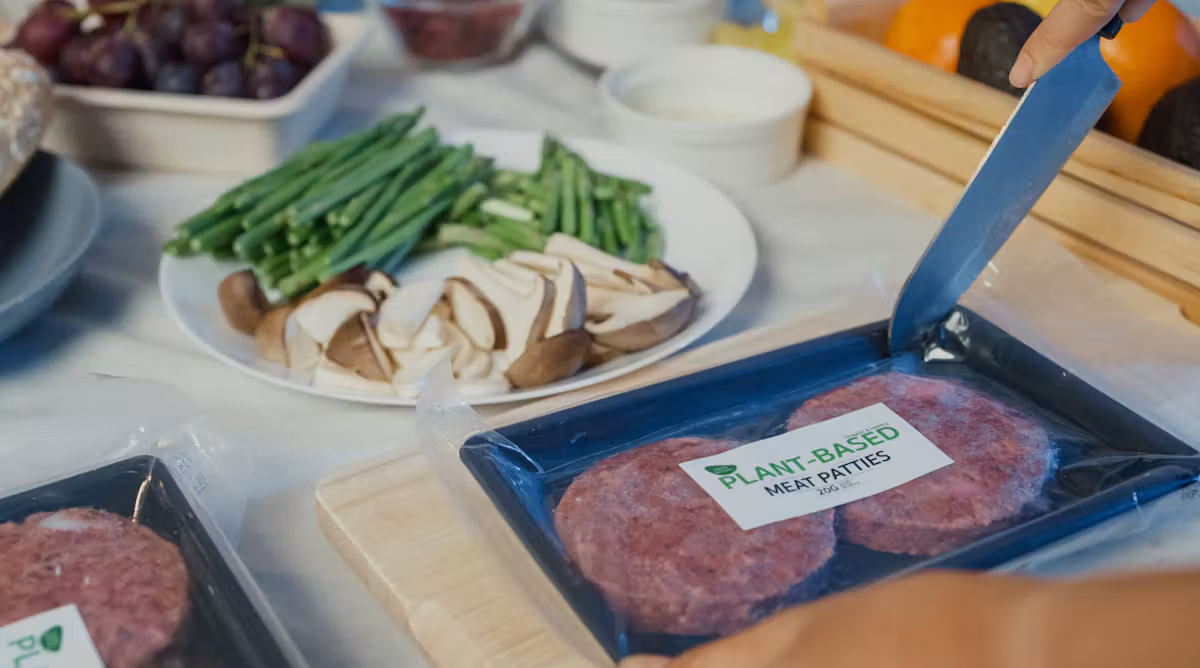
Plant-based meat alternatives use protein extracted from peas, soybeans, wheat, lentils, and other legumes to mimic the texture and taste of conventional meat. One life-cycle assessment found that plant-based patties had a 77% lower climate impact than Brazilian beef patties, though results varied depending on production systems and environmental measures considered.
Food scientists face a core challenge: plant proteins behave differently from animal muscle proteins and do not automatically form meatlike fibers when mixed with water. Meat texture comes from the arrangement of muscle fibers, connective tissue, water, and fat. Plant proteins require processing methods to organize them into fibrous structures that resemble muscle.
Extrusion is a widely used manufacturing method. Protein-rich ingredients mixed with water are pushed through a machine that applies heat and pressure. These forces unfold the proteins and help them interact. As the mixture cools, proteins form aligned, fibrous structures. High-moisture extrusion uses more water during processing to produce more meatlike textures.
The final structure depends on protein source, moisture content, temperature, and processing conditions. Manufacturers add fats, starches, and flavorings to improve eating experience. Small changes in formulation or processing affect firmness, chewiness, and moisture retention.
An emerging approach is 3D food printing. A food printer builds an object layer by layer by depositing edible materials according to a digital design. Researchers are developing protein-based food inks that flow through a printer nozzle and hold their shape once deposited. This method could allow control over how ingredients are arranged to create different structures and textures. A printed product must still deliver expected texture, flavor, and eating experience to succeed.