The 2026 closure of the Strait of Hormuz removed roughly a quarter of seaborne oil and a similar share of globally traded liquefied natural gas from their usual routes. Africa felt the shock in four distinct ways, according to a working paper drawing on data from the US Energy Information Administration, the International Energy Agency, the World Bank and market sources.
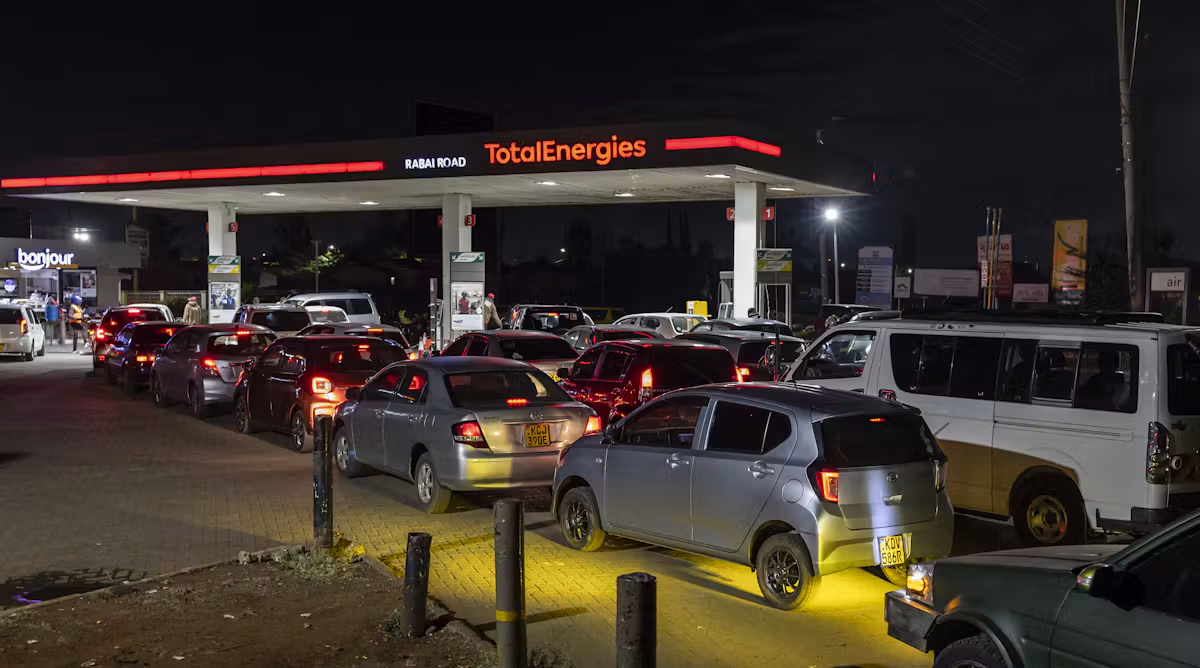
First, refined fuel prices rose. Africa imports about 61% of its refined-oil needs, and its refining capacity has fallen by roughly one-fifth since 2000, to about 2% of world output. Eritrea and Madagascar source about 90% of their oil from the Middle East, Kenya about 77%. In the first months of the conflict, pump prices rose by about half in Ethiopia and roughly 30% in Tanzania. Kenyan filling stations ran about one-fifth short of supply.
Second, freight and insurance costs climbed steeply. War-risk insurance premiums for Hormuz transits reached 7.5% to 10% in July, up from about 0.25% of a ship's value before the war. Insurance costs on Gulf-China cargoes reached about four times their five-year average. Kenya's flower growers estimated losses of about US$5.6 million in two months from delays and spoilage, as air freight rates climbed 70% to 110%.
Third, fertiliser costs spiked. Urea prices rose from about US$480 to US$700 a tonne soon after the war began. The closure interrupted a large share of global nitrogen and sulphur trade.
Fourth, external accounts weakened. The World Bank projected a 24% rise in energy prices and a 31% rise in fertiliser prices in 2026. Bloomberg Economics estimates that a US$20 rise in the oil price would worsen the current account of the Democratic Republic of Congo by more than 3% of GDP, and those of Ethiopia, Kenya, Uganda and Tanzania by close to 1% each.
Africa's underlying vulnerability stems from a structural mismatch. The continent exports two-thirds of the crude it produces while importing roughly three-fifths of the refined fuels it burns. It also depends on nitrogen and sulphur that transit the same chokepoint as Gulf oil.
Policy responses should focus on regional refining and fuel storage. Nigeria's Dangote refinery near Lagos, Africa's largest at 650,000 barrels a day, is necessary but not sufficient if it runs on imported crude and sells mainly into Atlantic markets. Governments should steer it toward African crude and African customers through long-term supply contracts with fuel importers in east and southern Africa. Trade between African countries is only about 14% of the continent's total, against 58% within the European Union, partly due to slow border procedures, duplicated inspections and roadblocks. UN estimates put the gains to Africa from removing these non-tariff barriers at about US$20 billion a year. No African country meets the International Energy Agency's 90-day emergency oil-stock benchmark.