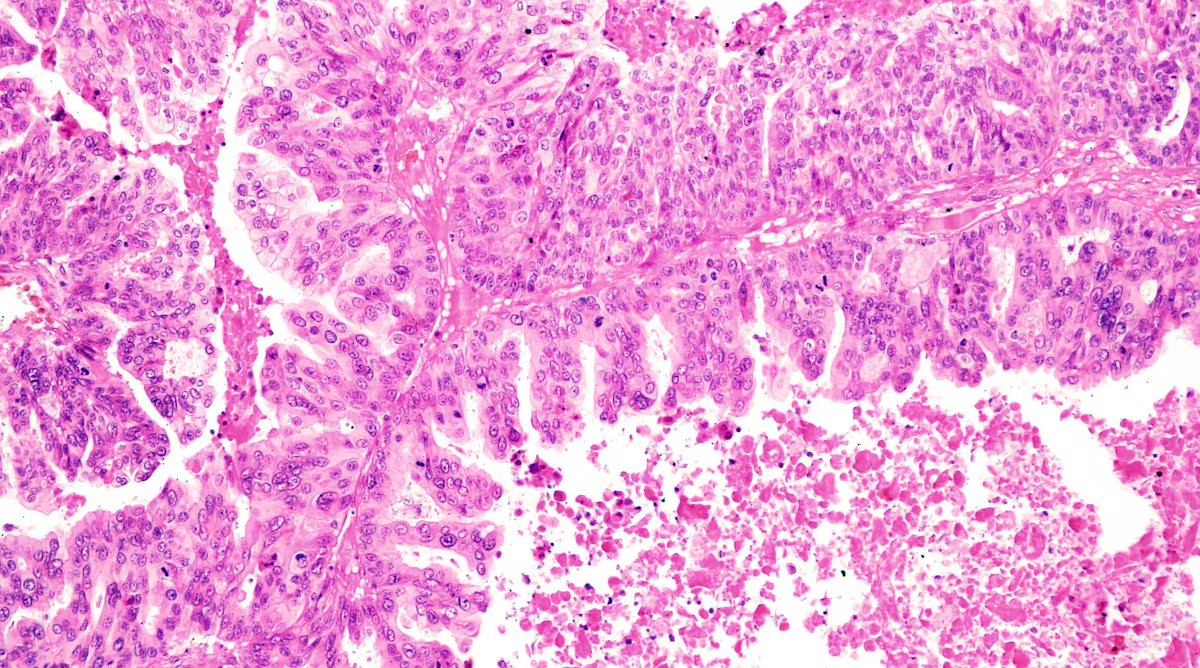
A new study found higher levels of a blood molecule called Tu-stroma in people with early high-grade serous ovarian cancer and in those with serous tubal intraepithelial carcinoma (Stic), a patch of abnormal cells in the fallopian tube lining that can lead to this cancer type.
Researchers analysed blood samples from 506 people. The test detected Stic in about 92% of those who had it and showed no signs of Stic in about 98% of the healthy comparison group. Tu-stroma performed better than CA125, a protein currently used in blood tests for ovarian cancer, at distinguishing people with Stic from healthy people or those with non-cancerous growths.
Tu-stroma is a type of RNA that ovarian cancer cells can release in tiny packages called extracellular vesicles. Researchers measured how much Tu-stroma these parcels were carrying in blood.
The results come with a significant limitation. The researchers worked with samples from people whose diagnoses were already known, and only a small number had Stic. If the test were offered widely to people without symptoms, very few would likely have these abnormal cell patches. Even a small proportion of false alarms could send many people for unnecessary tests or surgery.
The next steps require researchers to follow people over time to find out when the Tu-stroma signal first appears, and to determine how often these abnormal cells progress to cancer. They also need to work out what action to take if the blood test flags a problem but a scan shows nothing. A screening trial would ultimately need to answer whether acting on a positive result saves lives.
The UK has no routine screening programme for ovarian cancer in people without symptoms. The National Institute for Health and Care Excellence advises that specialist teams can consider regular CA125 testing for some people at high inherited risk from harmful changes in BRCA1 or BRCA2 genes.