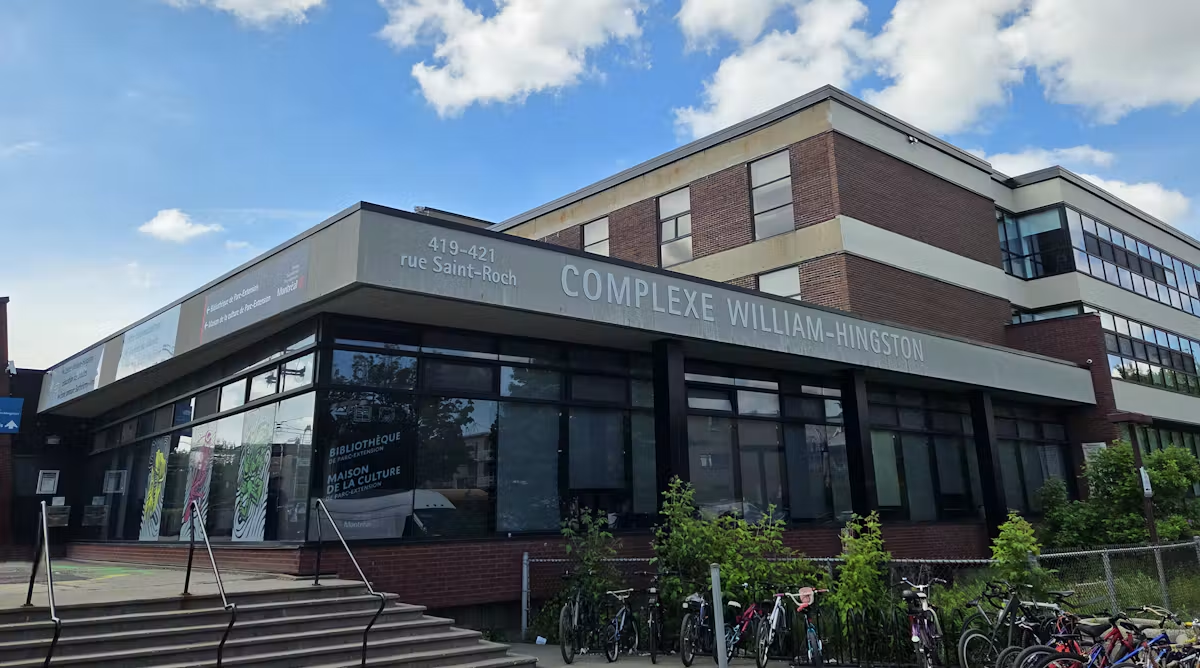
The Centre de services scolaire de Montréal (CSSDM) has evicted 15 community groups from the William-Hingston Centre in Parc-Extension, requiring them to relocate by June 2025. The CSSDM cited plans for major renovations. The groups included Afrique au Féminin, which offered women's support; the Comité d'action de Parc-Extension, which provided housing assistance; and the Parc-Extension Youth Organization, which ran youth programming. About 14,000 people in the neighbourhood rely on local organizations each month.
Only seven groups managed to remain in Parc-Extension, divided between public-sector facilities and privately operated spaces. Five groups were forced to leave the neighbourhood entirely. The Parc-Extension Youth Organization lost its low-cost cafeteria following the eviction, serving its final meal in March 2024 after 22 years in the community.
Parc-Extension is home to 69 per cent of residents who speak a mother tongue other than French or English, and 39 per cent of the population lives in low income, compared with 21 per cent for the city of Montréal as a whole. The neighbourhood has faced rapid land speculation and rising evictions in recent years.
Rose Ndjel, director of Afrique au Féminin, emphasized the importance of keeping community groups together in a central, shared location. The co-location was particularly vital for newly arrived immigrant families, who could access housing support, women's programs, library services, French-language courses and food assistance in one building.
The eviction of community groups from CSSDM-owned sites is becoming a recurring trend in Montréal. In Hochelaga-Maisonneuve, 11 community groups were evicted by the CSSDM. In Ahuntsic, 13 community groups faced eviction in 2024. The CSSDM has announced plans to sell some of its buildings in Rosemont, Ahuntsic, Saint-Michel and Plateau-Mont-Royal.
Most of these changes have happened since 2020, when the Montréal school commissioners was abolished and replaced by the CSSDM. Previously, elected representatives offered a more accessible point of contact. Today, decisions are made more directly by the ministry of education, making it harder for neighbourhood concerns to be heard and addressed.