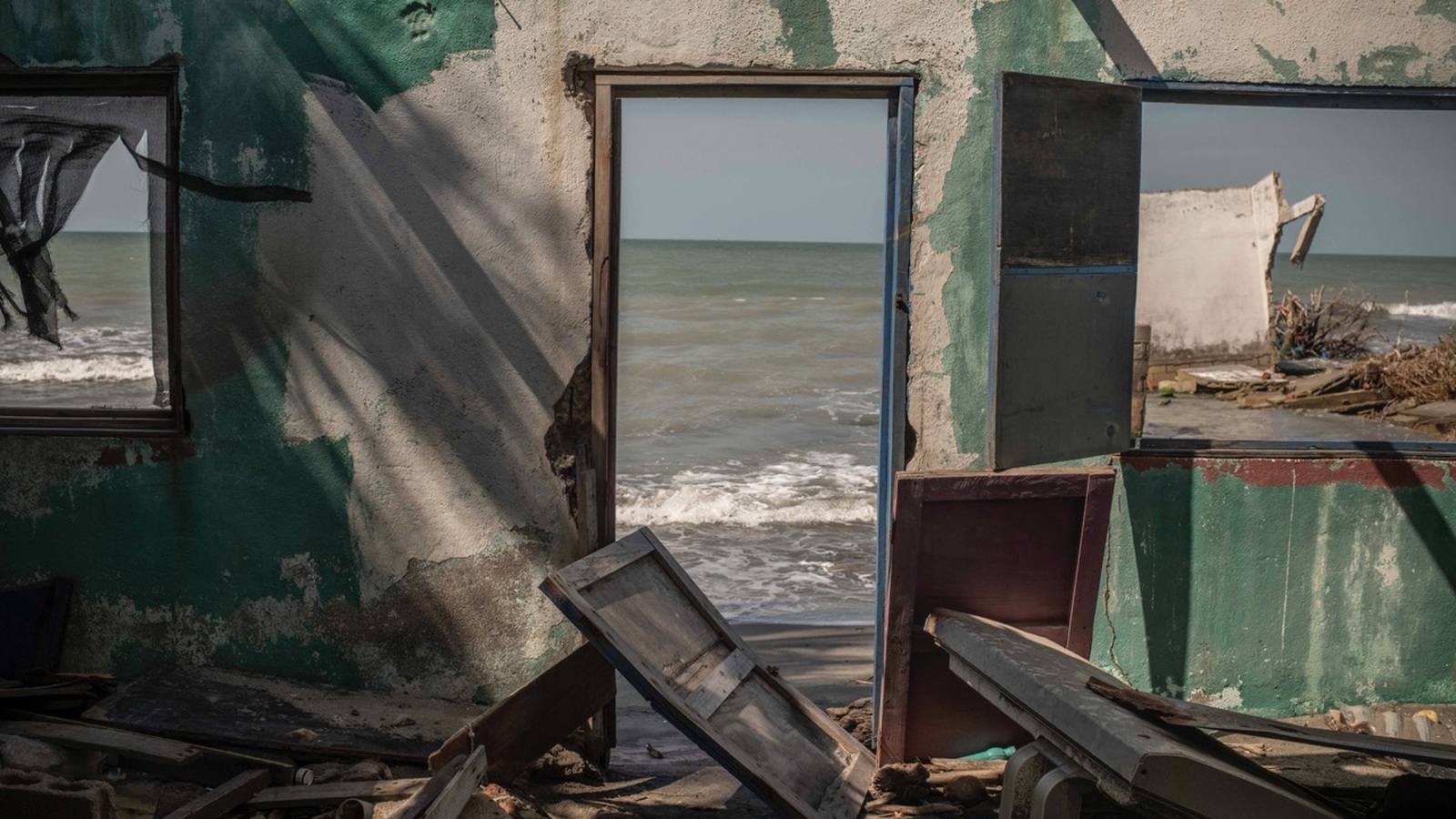
El Bosque, a fishing community in Tabasco, Mexico, became the first community in Mexico recognized as displaced by climate change in 2023. Coastal erosion and flooding from storm surge had damaged or destroyed more than half of roughly one hundred homes. In November 2024, President Andrés Manuel López Obrador relocated fifty-one families 7.5 miles inland to a new neighborhood called Nuevo Bosque on the outskirts of Frontera.
Two years after the relocation, residents report struggling with economic, social, and cultural losses. Viviana Velázquez, 38, was rehoused but says she cannot sleep, cries constantly, and has gained 29 pounds from stress. "We are grateful, but I am still grieving," she said. "I miss everything about El Bosque: the cool breeze, my friends, our whole life."
Before relocation, garrulear, work helping fishermen unload night catches, provided income, food, and community bonding for women. The cost of traveling back to El Bosque, 240 pesos (about $14) by taxi, limits return visits to once a week. Lilia Gama, an ecologist specializing in coastal erosion at Juarez Autonomous University of Tabasco, said the river and sea in El Bosque will likely join within a decade, submerging the entire community. Climate change has accelerated what would have been a slower natural process.
Velázquez's family fled El Bosque in stages. Their home flooded in February 2022, then again in November 2022, forcing evacuation to Frontera. They finally left for good on New Year's Eve 2024, a month after receiving keys to their new house in Nuevo Bosque.
Nuevo Bosque opened without running water or a primary school. The identical houses have small yards unsuitable for raising the chickens and ducks many residents kept in El Bosque.
Rising sea level, driven by melting ice caps and expanding warm ocean water, has accelerated globally. The rate has more than doubled over the past three decades. The Intergovernmental Panel on Climate Change projects sea level will rise 15 to 30 centimeters by 2050, endangering close to a billion people in low-lying coastal areas. Climate Central modeling suggests up to half of Tabasco, home to about 2.5 million people, could be uninhabitable or highly vulnerable by the end of the century.
Residents excluded from the relocation remain uncertain why they were not included.