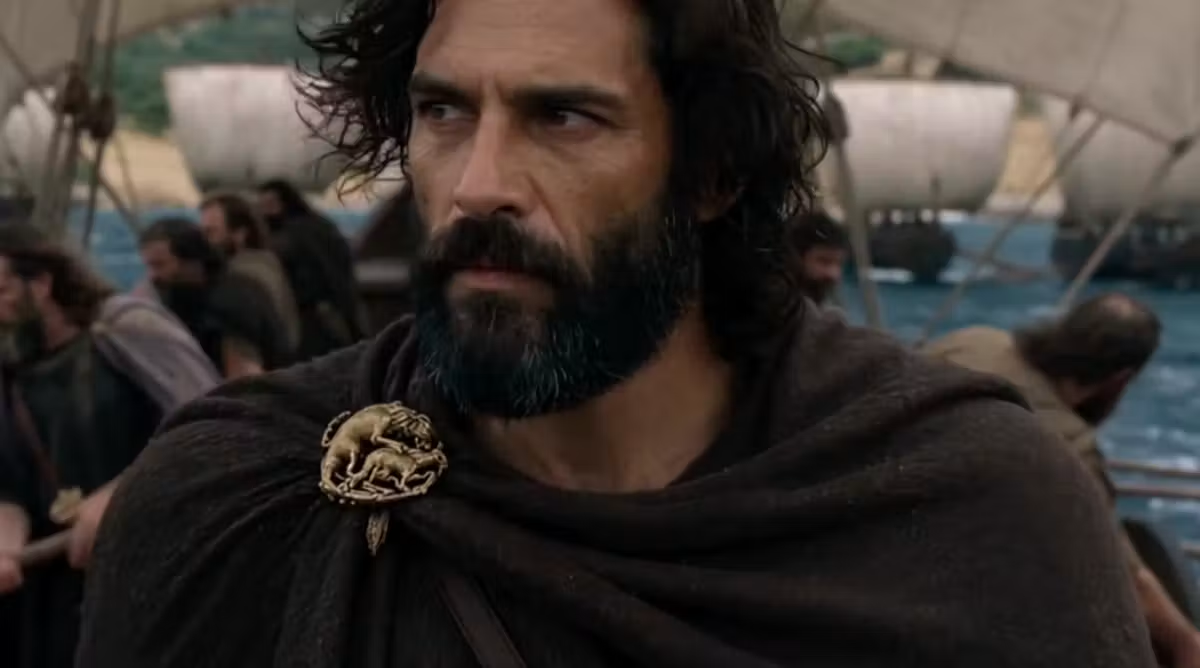
Elon Musk used his AI platform Grok Imagine to create a seven-minute film adaptation of Homer's Odyssey, claiming it would deliver a story "historically accurate and true to the art of Homer" at a fraction of traditional production costs. The film was posted on October 23.
Two archaeologists from the University of Tübingen argue the project fails at historical accuracy before production begins. The core problem: any complete visual narrative requires AI to invent details that the archaeological record does not provide.
Archaeology works with fragmentary evidence. At Troy, excavations have recovered spindle whorls and loom weights, but the textiles themselves are gone. Everyone at Troy wore cloth, yet the cloth does not survive. All gaps in the record must be filled through hypothesis and interpretation, never certainty.
Generative AI is designed to produce complete images even when evidence is missing. It fills gaps by drawing on existing media like film sets, games, and paintings. This produces plausible, convincing results that look accurate but are not.
The authors acknowledge potential value in AI for archaeology. A system spanning excavation reports and object databases might reveal patterns in ceramic styles or trade routes that individual scholars cannot hold in mind. But such patterns would exist in the record itself, not in pictures of the past.
A genuinely archaeological AI would operate differently. It would show multiple reconstructions where evidence permits several options. Where only fragments survive, it would show fragments. Where evidence ends, it would say so explicitly. This approach aligns with the London Charter (2009) and Seville Principles (2011), international guidelines for virtual heritage reconstruction that demand transparency.
The authors note that the Odyssey itself poses accuracy problems. The poem was shaped centuries after the palaces it describes fell and is a mix of Mycenaean memory and Iron Age worldview, not a historical snapshot. Troy spans multiple phases centuries apart. There is no single "Bronze Age" to reconstruct.
Historical accuracy means showing where gaps exist, not filling them.