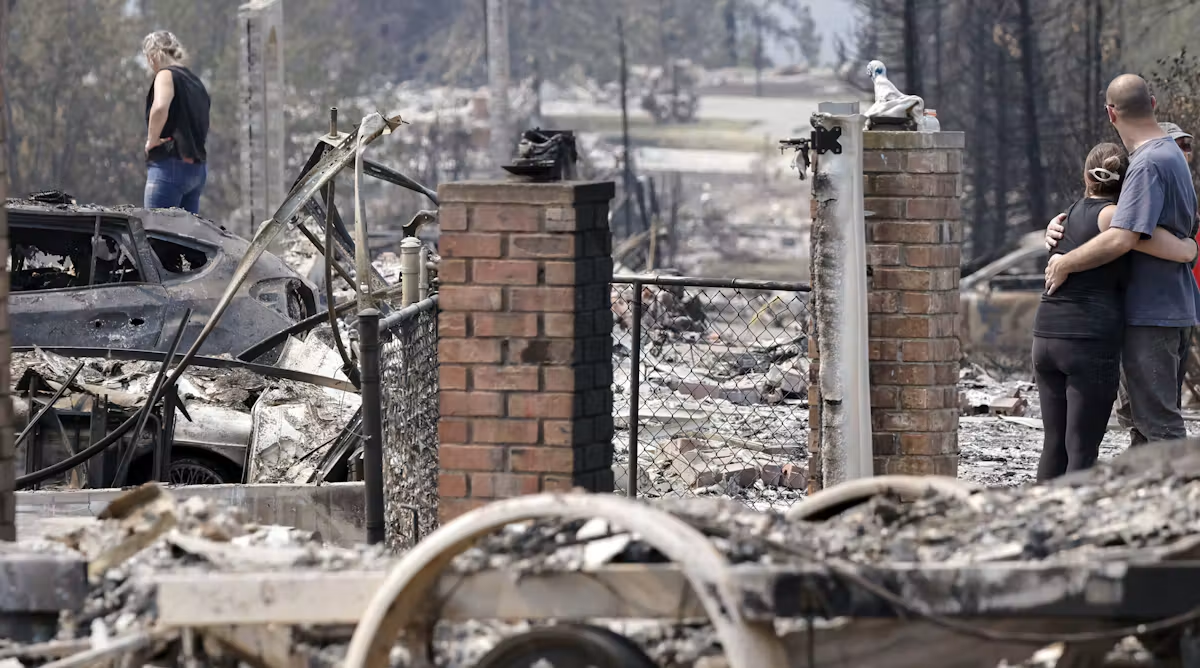
A study published by researchers at the University of Colorado Boulder projects that structures damaged or destroyed by wildfires across the U.S. could nearly triple by mid-century, potentially reaching 449,000 structures lost between 2026 and 2060 without further action to reduce wildfire risk.
The researchers used historical data on development patterns, wildfire area and fire effects to reconstruct past fire risk, then modeled future scenarios by incorporating weather, climate and housing-density projections.
The 2026 wildfire season demonstrated current pressures. Colorado's Aspen Acres Fire destroyed hundreds of structures in June. Four firefighters died from injuries suffered when the Knowles Fire overtook them near the Colorado-Utah border in July. Wind-driven fires in Spokane, Washington damaged more than 800 homes in August. By late October, Colorado fires had burned more than 318,000 acres, nearly twice the annual average since 2000. The U.S. spent 48 consecutive days at Preparedness Level 5, the highest national firefighting alert level, compared with a 10-year average of 25 days annually.
Rising temperatures caused by human activities such as burning fossil fuels have increased atmospheric moisture loss from land, drying soils and vegetation. Researchers estimate this drying nearly doubled the area burned in western U.S. forests between 1984 and 2015 compared with scenarios without human-caused climate change.
In a 2024 study, the researchers defined "fast fires" as those burning more than 4,000 acres in a single day. These fires represented just 2.7% of fires analyzed but accounted for 78% of documented structures destroyed and 61% of reported firefighting costs.
The researchers found roughly one-third of western neighborhoods facing the greatest future risk are low-income communities where residents may struggle to afford protective measures and insurance coverage.
Homes can be made less likely to ignite with Class A fire-resistant roofs and ember-resistant vents. Removing flammable debris and vegetation around buildings reduces fire spread risk. Meeting two protection levels established by the Colorado fire code increased minimum construction costs by approximately 0.6% and 4.2% in a study of new home construction. Prescribed burning and forest-thinning operations can reduce fuels before flames reach neighborhoods.