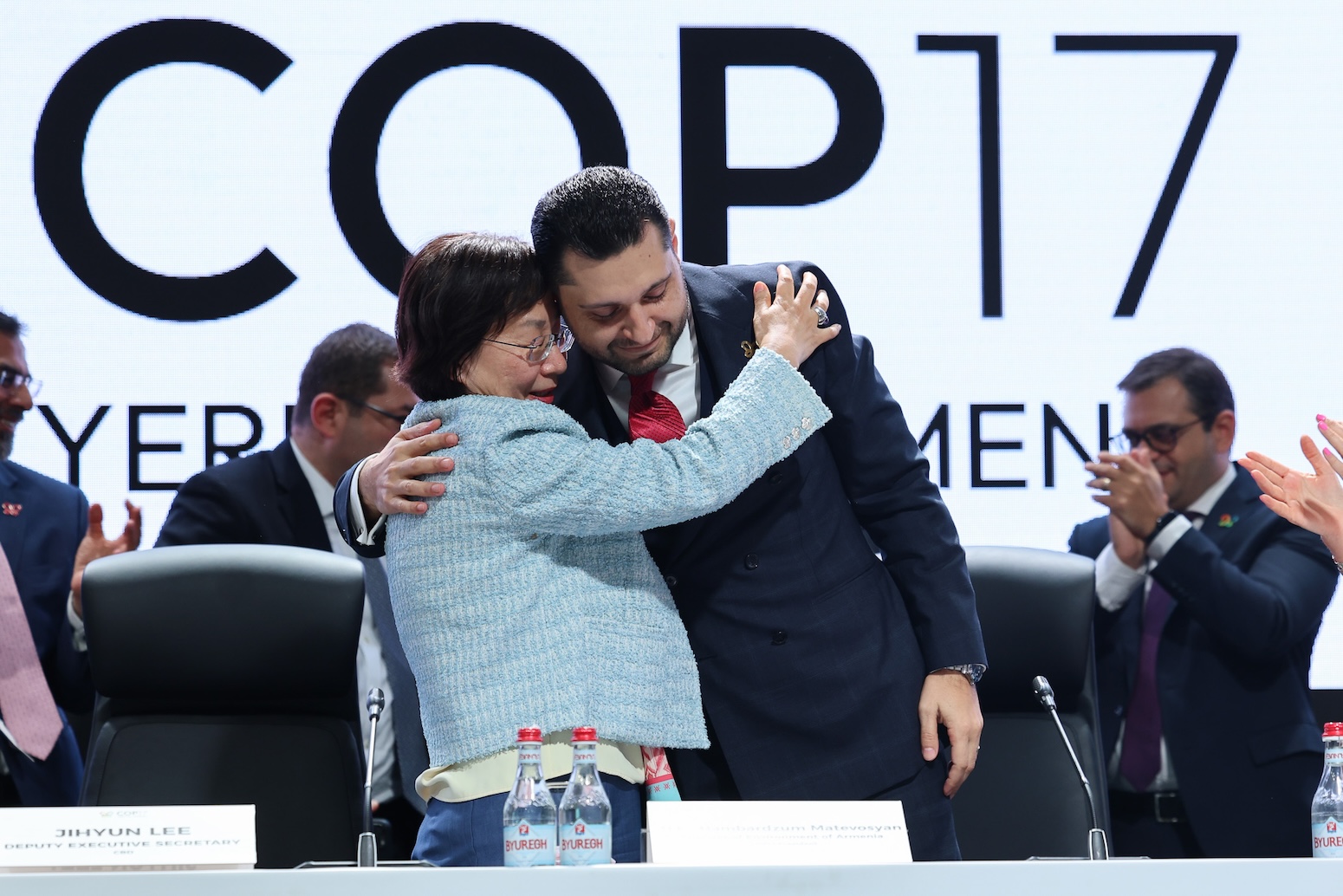
Countries completed the first global review of progress toward reversing nature loss by 2030 at COP17 biodiversity talks in Yerevan, Armenia. The review stated with "deep concern" that unless action is "rapidly accelerated", the goal to reverse nature loss and meet 23 targets by 2030 "will not be achieved".
Developed countries failed to meet commitments to raise "at least $20bn a year by 2025" for nature. Delegates pointed to falling aid levels and a sharp 27% decline in environmental funding for the 2026-30 period. The talks aimed to agree on how to mobilise resources to meet the Kunming-Montreal Global Biodiversity Framework's goals through 2030.
The most contested issue centered on expanding which countries pay to protect nature. Countries including Qatar, China, Saudi Arabia and India could be added to the list of donor nations, reversing Article 20 of the UN Convention on Biological Diversity, which states developed countries "shall provide new and additional financial resources" to developing countries.
By late October, eight options for expanding the contributor base had emerged. Christopher O'Sullivan, Ireland's nature minister representing the EU delegation, said "times have changed and there are new realities. We just simply want those new realities reflected." The EU declined to name which countries it would support adding.
Lim Li Ching from the Third World Network opposed the push, calling it "sheer hypocrisy" and stating that "any country could make a voluntary contribution". She told Carbon Brief the approach "does not take into account where historical and current responsibilities lie".
At the final compromise, countries agreed that non-donors wanting to contribute can "signal interest" through bilateral, confidential consultations before COP18 in 2028, which will be held in Quito, Ecuador. The text steered away from issuing criteria to expand the donor list, making clear no additions would occur without explicit consent from interested countries. The CBD secretariat "invites" countries keen to be on the list and assume developed country obligations.
Countries also deferred the institutional structure of a new permanent financial mechanism to protect nature after 2030 to COP18.