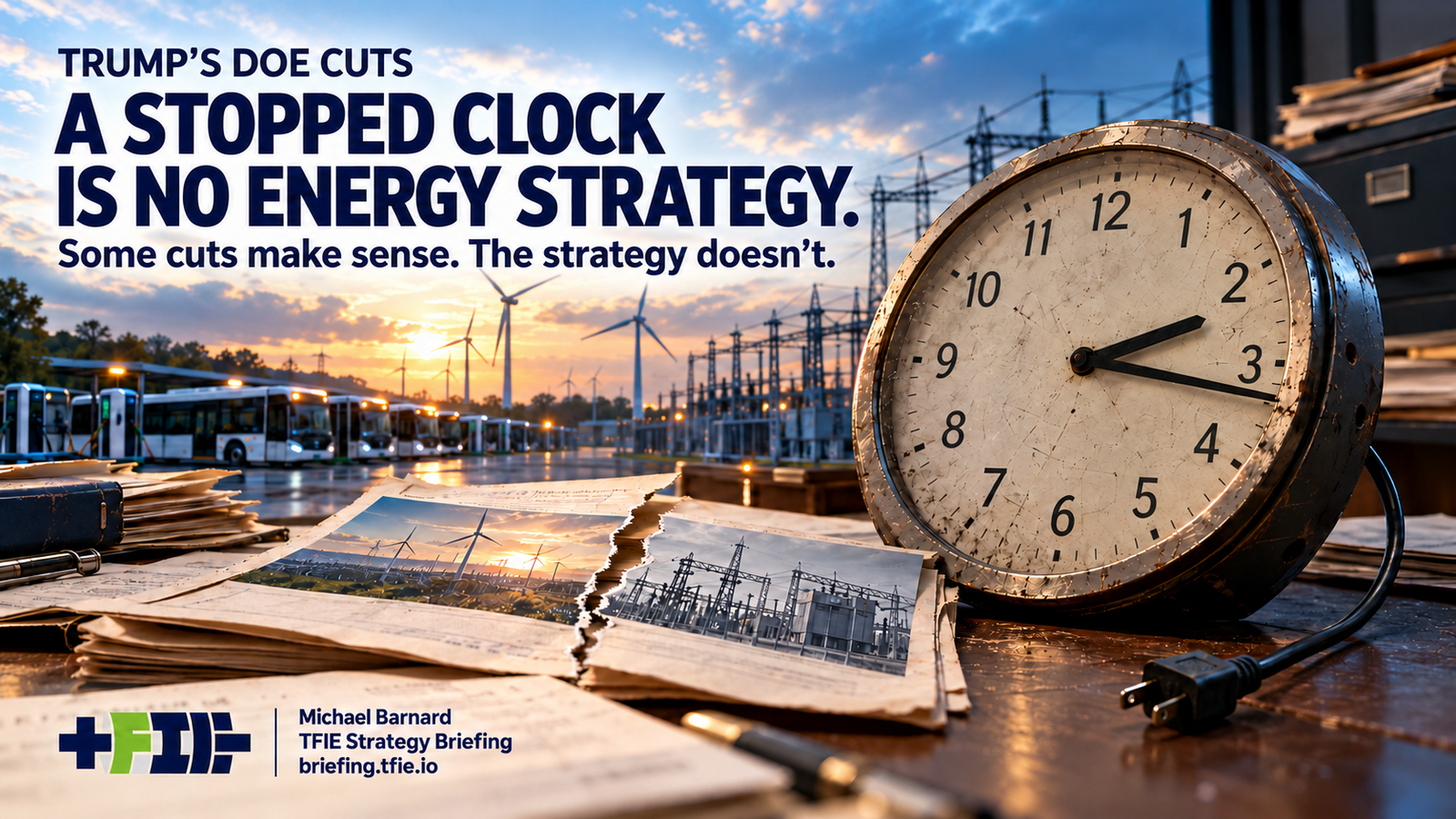
The Trump administration's Department of Energy budget proposal eliminates funding for research programs with indiscriminate scope, cutting both underperforming hydrogen initiatives and established electrification technologies that deliver measurable emissions reductions.
The budget request reflects a fundamental misalignment between eliminating genuinely weak bets and maintaining support for proven clean energy infrastructure. Hydrogen development programs, particularly those focused on production and storage methods without clear commercial pathways, represent legitimate candidates for budget reduction. Many hydrogen initiatives operate with undefined timelines and unproven scalability at competitive costs. Removing funding from these speculative ventures makes fiscal sense.
The problem emerges when the same budgetary approach eliminates programs already advancing grid decarbonization. Electrification technologies, including electric vehicle charging infrastructure, heat pump deployment, and grid modernization initiatives, operate on demonstrated trajectories toward deployment and cost reduction. These programs deliver measurable progress toward climate targets within defined timeframes. The Department of Energy's role in supporting these technologies through research grants, demonstration projects, and workforce development directly accelerates their market penetration.
The DOE budget cuts affect specific research categories. Programs supporting battery technology refinement, grid integration studies, and manufacturing capacity for electric vehicles face elimination despite their direct contribution to decarbonization goals. Heat pump research initiatives, which reduce building sector emissions, encounter the same budget reductions as unproven hydrogen electrolysis methods. This represents policy confusion rather than strategic prioritization.
Federal funding for energy research carries concrete impacts. DOE grants enable university research centers to develop next-generation battery chemistries. Demonstration projects in pilot communities test charging infrastructure designs before wider deployment. Manufacturing support programs help domestic production scale for electric vehicle components and heat pump systems. Each program element addresses specific technical or market barriers blocking broader adoption.
The budget proposal suggests ideological preference over technical assessment. Hydrogen receives attention as a long-term energy carrier despite current production methods relying heavily on fossil fuels and limited end-use applications. Electrification faces cuts despite electrified vehicles and heating systems operating commercially today with infrastructure scaling as the primary constraint, not technological viability.
Market signals alone prove insufficient to overcome infrastructure deployment barriers. Charging networks require upfront capital investment with distributed revenue streams. Heat pump adoption requires skilled installation workforces that take time to develop. Battery manufacturing capacity requires coordinated investment across multiple facilities. Federal research funding addresses these deployment obstacles directly.
The fiscal argument for cutting underperforming research holds validity. However, eliminating proven pathways alongside weak bets sacrifices near-term decarbonization gains for budget reduction. The Department of Energy research budget remains modest compared to broader federal spending. Complete elimination of electrification support programs represents policy reversal rather than cost optimization.
Clean energy transition timelines depend on maintaining funding for technologies approaching or achieving commercial deployment. Removing support at this stage delays emissions reductions by years compared to continuing research and demonstration investment. The electrification of transportation and buildings represents the highest-leverage pathway to meeting climate targets this decade. Budget reductions targeting these programs directly undermine decarbonization progress already underway.