# Most of the World's Shallow Coral Reefs Could Collapse in the Next 50 Years
The International Union for Conservation of Nature released a stark assessment: by 2075, 96 percent of the planet's 127 major shallow coral reef systems face functional collapse. The findings project a future where reefs no longer provide the ecological and economic services that 500 million people depend on for food, income, and coastal protection.
Shallow coral reefs occupy roughly 0.1 percent of the ocean floor yet support approximately 25 percent of all marine fish species. These ecosystems generate an estimated $375 billion annually through fisheries, tourism, and pharmaceuticals. The threatened collapse represents both an ecological crisis and an economic catastrophe for nations across the Pacific, Indian Ocean, Caribbean, and Southeast Asia.
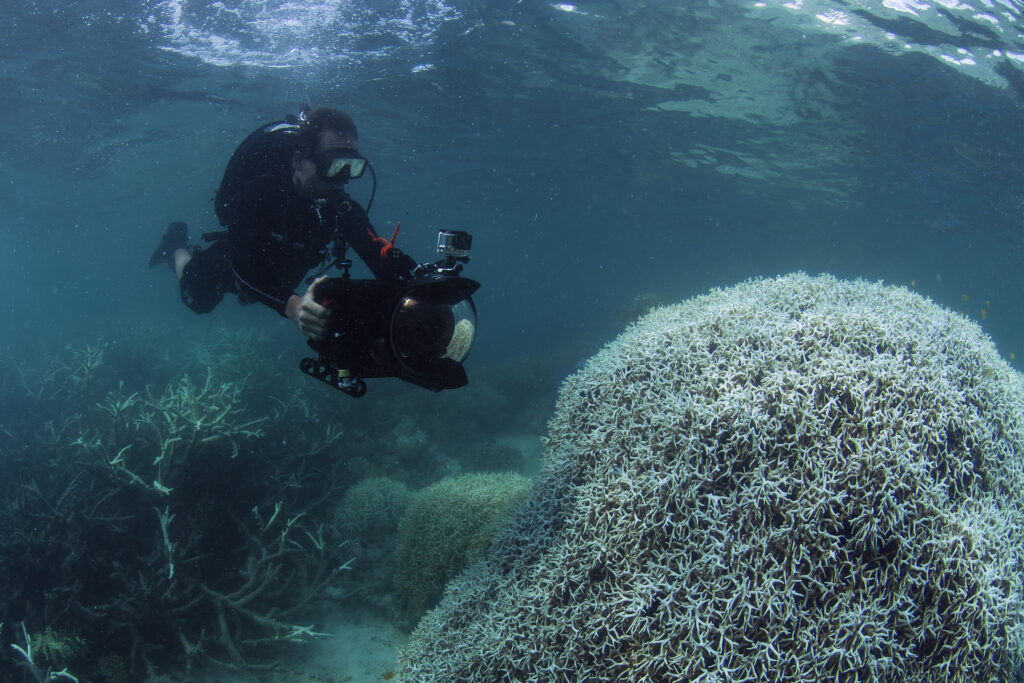
Temperature rise drives the primary threat. Coral bleaching occurs when water temperatures exceed the thermal tolerance of zooxanthellae, the symbiotic algae that give reefs their color and provide up to 90 percent of the energy corals need to survive. Ocean temperatures have already risen 1.1 degrees Celsius since preindustrial times. The IUCN assessment models scenarios where continued greenhouse gas emissions push warming to 2 degrees Celsius or higher by 2075, triggering repeated bleaching events that reefs cannot survive.
The 2016 and 2017 mass bleaching events killed approximately 50 percent of the Great Barrier Reef. More recent bleaching in 2020 and 2022 affected additional sections. Scientists track these events using satellite data and field surveys to measure live coral cover before and after thermal stress. Recovery between events requires five to ten years under ideal conditions. With bleaching events intensifying and occurring more frequently, many reefs lack time to rebuild.
Ocean acidification compounds temperature stress. Atmospheric carbon dioxide dissolves into seawater, lowering pH and reducing the availability of carbonate ions that corals use to build their skeletons. Laboratory experiments show that acidification reduces coral growth rates and weakens structural integrity even when temperatures remain stable.
Local stressors amplify climate impacts. Overfishing removes herbivorous fish that normally consume algae competing with corals. Coastal development increases sedimentation and nutrient runoff, promoting algal growth. Disease spreads more rapidly in degraded reefs. Pollution from plastics, chemicals, and oil introduces toxins. Reefs already experiencing these pressures show reduced thermal tolerance and slower recovery.
The IUCN assessment identifies only limited exceptions. Reefs in regions with strong upwelling currents that deliver cooler water, such as parts of the Coral Triangle and the Galápagos, retain moderate viability if emissions decline. Even under optimistic scenarios where warming stops at 1.5 degrees Celsius, roughly half of shallow coral reef systems remain at high risk.
Intervention pathways exist. Rapid emission reductions using renewable energy and electrification could limit warming. Marine protected areas that restrict fishing and pollution improve local reef resilience. Coral restoration projects, while labor-intensive, demonstrate that damaged reefs can recover with active management. Several nations have expanded marine reserves specifically to protect coral systems.
The timeline matters intensely. Every tenth of a degree Celsius of additional warming narrows the window for coral survival. Decisions made in the next five years about fossil fuel infrastructure and coastal development will determine whether future generations inherit functioning coral ecosystems or degraded structures incapable of supporting the species and communities that depend on them.