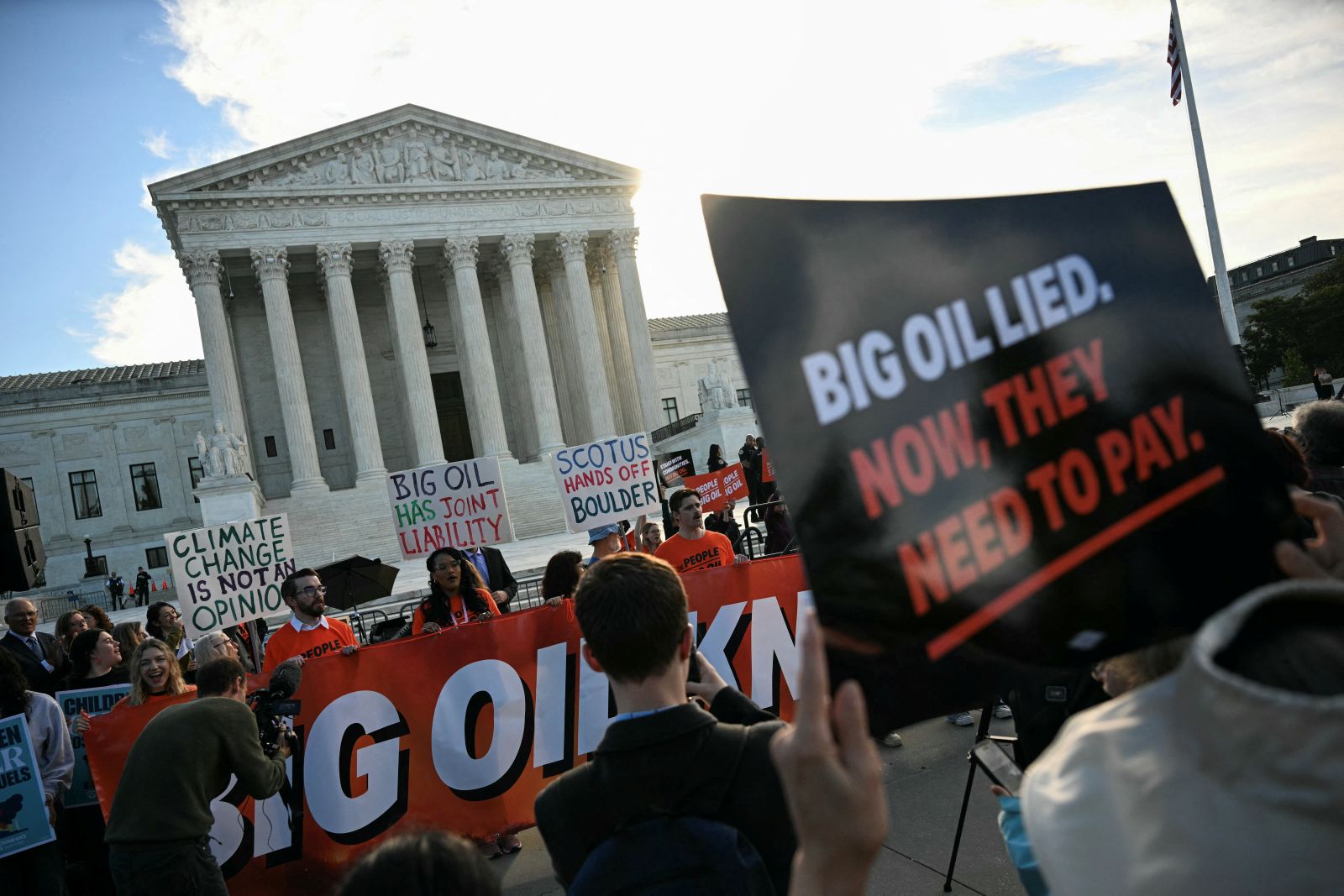
The Supreme Court is examining a Colorado lawsuit that seeks to hold Exxon Mobil and Suncor financially responsible for climate change damages. The case has the potential to influence dozens of similar efforts nationwide to make fossil fuel companies pay for climate-related harms.
The lawsuit represents one of several legal strategies being pursued to assign liability for climate impacts to energy producers. Colorado's action against the two major oil and gas companies tests whether states can successfully compel fossil fuel firms to cover damages from climate change.
The Supreme Court's ruling on this case carries implications beyond Colorado. According to Grist, the decision could either clear the path for or block numerous other attempts to extract financial accountability from fossil fuel companies. Multiple lawsuits and legal challenges are pending across the country, waiting to see how the nation's highest court resolves the question of who bears responsibility for paying climate costs.
The case involves fundamental questions about corporate liability, state power, and how the costs of climate change should be distributed. Legal experts have indicated that the Court's decision will establish precedent affecting future climate litigation. The outcome could determine whether states and municipalities can successfully use their courts to recover damages from energy companies, or whether such claims face legal barriers.
Fossil fuel companies have argued against liability for climate damages, contending that their product use and emissions are regulated by federal agencies and shaped by consumer choice. The case forces the Court to navigate competing legal theories about responsibility in a complex environmental and economic context.
The ruling remains pending. The Supreme Court's decision will likely reshape the landscape of climate accountability litigation in the United States.