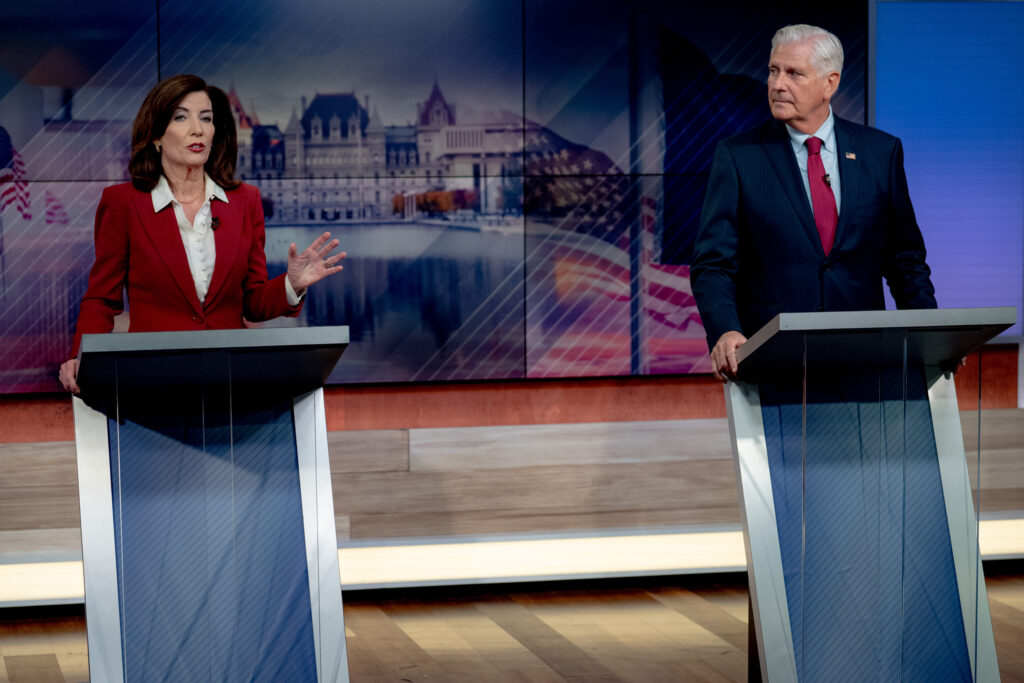
New York's gubernatorial candidates presented opposing strategies for addressing rising electricity costs during their only debate. Incumbent Gov. Kathy Hochul and Republican challenger Bruce Blakeman offered contrasting visions on energy policy as residential electricity bills climbed 10 percent from 2024 to 2025, exceeding the national average increase.
The debate highlighted a core tension in energy policy: balancing affordability with rising demand for electricity. Both candidates addressed the cost burden on New York residents, but their proposed solutions differed significantly based on their broader political philosophies. Hochul and Blakeman's competing approaches reflected fundamental disagreements over how the state should manage its energy infrastructure and pricing structures while accommodating future consumption needs.
The 10 percent increase in average residential electricity bills represents a substantial jump for households across New York. This surge outpaced national trends, making energy costs a particularly pressing issue for voters in the state during the gubernatorial race. The energy affordability challenge comes as electricity demand continues to rise, driven by factors including electrification efforts and population growth patterns.
The candidates' clash over energy policy underscored how environmental and economic concerns intersect in state campaigns. Energy affordability directly affects household budgets while also connecting to broader climate and sustainability goals. Both Hochul and Blakeman addressed constituent concerns about rising utility bills, recognizing that voters view energy costs as a critical issue affecting their financial stability.
Inside Climate News reported on the debate exchange, demonstrating how energy policy has become a central campaign issue in New York. The divergence between the candidates' positions reflects broader national debates over how states should balance environmental goals with economic concerns like affordability and competitiveness.