# After a Deadly Flood, What Does Climate Justice for Nepal Look Like?
Nepal confronts a hard question after a glacier collapse and catastrophic flooding killed dozens in August. The World Weather Attribution group, which investigates links between extreme weather and climate change, rapidly assessed the event and determined climate change played a measurable role in the disaster. That scientific finding collides with a deeper problem: Nepal contributes less than 0.1 percent of global greenhouse gas emissions yet faces some of the world's most severe climate impacts.
The glacier collapse triggered floods that swept through mountain valleys with little warning. Researchers mobilized quickly to quantify climate's fingerprint on the event, a technique that has grown faster and more reliable over the past decade. World Weather Attribution examined historical climate data, weather patterns, and glacial behavior to determine how much warming increased the likelihood or intensity of the disaster. Their conclusion added weight to what climate scientists already knew about Nepal's vulnerability.
Tanuja Pandey, a climate justice activist based in Nepal, articulated the core tension that the disaster exposed. Countries that industrialized on fossil fuels and continue to emit vast quantities of carbon dioxide bear responsibility for destabilizing the climate. Nepal and other least developed nations suffer the consequences without having caused them. This disparity sits at the heart of climate justice debates at international negotiations and in affected communities.
Nepal's geography amplifies its risk. The Himalayas experience warming at nearly twice the global average, a phenomenon called "elevation-dependent warming." Glaciers that feed major river systems retreat faster each year. Communities downstream depend on these glaciers for water and seasonal flow patterns that agriculture and hydropower require. As glaciers shrink, the hazard changes. Larger, unstable glacier lakes form. Sudden outburst floods become more common. Flash flooding during monsoons intensifies.
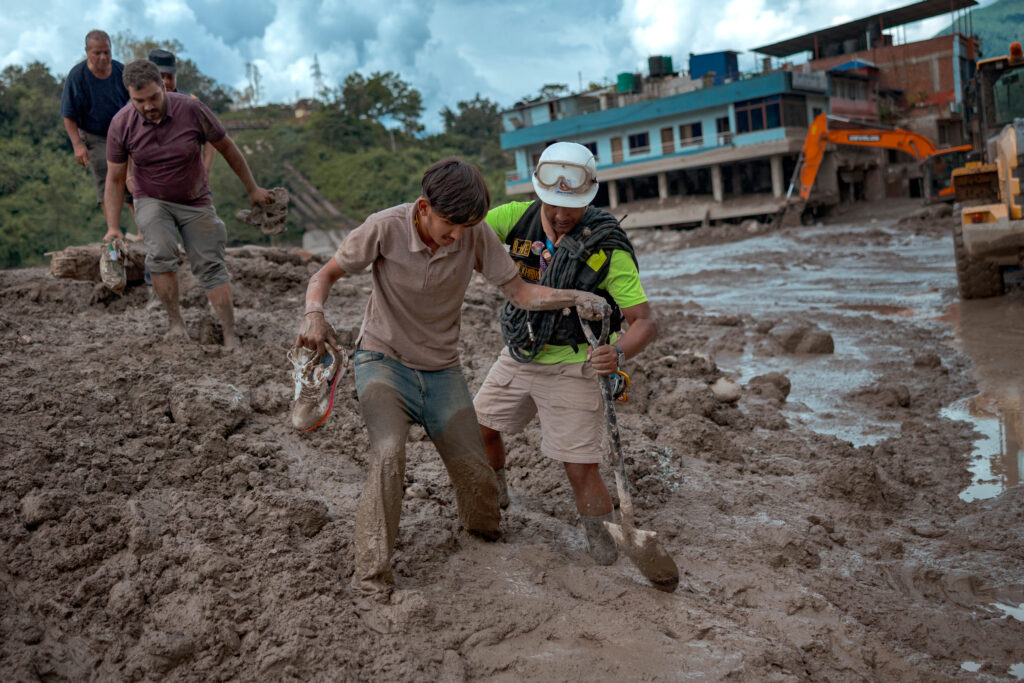
The August event killed at least 27 people and left others missing. Homes, roads, and bridges washed away. The economic toll compounded an already fragile situation. Nepal ranks among the poorest countries globally, with limited resources for disaster preparedness and recovery. Infrastructure built to withstand the climate of the past proves inadequate for the climate of the present.
Pandey and other activists push for wealthy nations to honor climate finance commitments. Developed countries pledged in 2009 to mobilize $100 billion annually to help poorer nations adapt to climate change and transition away from fossil fuels. That goal remains unmet. Nepal needs funds for early warning systems, glacial lake monitoring networks, ecosystem restoration, and managed retreat from the most dangerous zones. Without resources, communities remain exposed.
The World Weather Attribution assessment serves another purpose beyond assigning blame. It strengthens the scientific case for loss and damage compensation. Some nations argue that wealthy emitters should pay for climate impacts they cannot adapt away from. The legal and financial architecture for such payments remains underdeveloped. Climate justice advocates say that framework must shift quickly as extreme events become routine.
Nepal's experience illustrates how climate science and climate equity intersect. Attribution science confirms what the affected already know. The question now becomes whether wealthy nations will translate that knowledge into action and resources. Without them, more mountains will lose their glaciers, more valleys will flood, and more communities will bear costs they did not create.