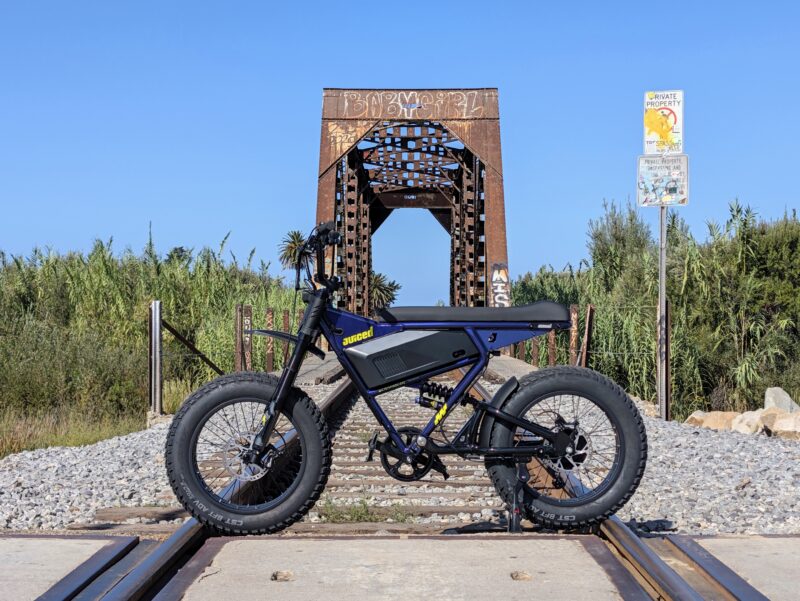
Juiced Bikes released the Scrambler electric bike in 2024, continuing the manufacturer's track record of producing high-powered, long-range electric bicycles that push regulatory boundaries in the United States market.
The Scrambler represents the company's ongoing commitment to durability and extended riding range. Juiced Bikes has built its reputation by manufacturing ebikes that often exceed the 750-watt motor limit the U.S. federal government establishes for standard electric bicycles, placing many of its models in the electric moped category instead. This positioning allows riders to access motors with substantially greater power output than conventional Class 3 ebikes, though it comes with different legal classifications and usage restrictions depending on state and local regulations.
The e-bike industry has fragmented into distinct categories over the past decade. Standard ebikes remain capped at 750 watts under federal law, yet many manufacturers now produce electric mopeds and motorized bicycles that operate with 1,000 to 2,000 watts of power. Juiced Bikes has consistently targeted the higher-powered segment, marketing bikes intended for riders seeking serious performance and carrying capacity rather than casual commuting. The Scrambler name itself signals rugged, off-road capability.
Testing high-performance ebikes presents distinct challenges for reviewers. Weight distribution, motor responsiveness, braking performance under load, and real-world range all matter substantially when evaluating machines that blur the line between bicycles and mopeds. Temperature conditions, riding style, and terrain dramatically affect battery performance. A bike advertised as offering 60 miles of range on flat pavement might deliver 40 miles in hilly terrain with aggressive acceleration patterns.
Juiced Bikes occupies a niche between traditional bicycle manufacturers and electric vehicle makers. The company sources components from multiple suppliers but assembles its own bikes domestically, which allows for quality control and customization. This manufacturing approach differs from companies that import complete bikes from overseas factories.
The broader significance of long-range ebikes involves transportation electrification. Personal electric vehicles reduce reliance on gasoline-powered automobiles for short trips, though most ebike trips remain under five miles. Riders of high-powered ebikes often substitute them for car trips on congested urban routes or for recreational riding on varied terrain. The environmental benefit depends on baseline transportation patterns. A commuter replacing a 20-mile round-trip car journey with an ebike generates far greater emissions reductions than a car owner using an ebike for recreational weekend rides.
Regulatory frameworks governing ebikes remain inconsistent across U.S. states and municipalities. Some jurisdictions allow electric mopeds on standard bike paths, while others restrict them to roads designated for motor vehicles. California classifies ebikes into three tiers based on motor power and top speed. New York applies different rules. This fragmented approach creates consumer confusion and limits market standardization.
CleanTechnica's testing of the Scrambler provides hands-on performance data for prospective buyers evaluating whether high-powered electric bicycles meet their transportation needs. Real-world testing uncovers practical issues that manufacturer specifications cannot capture, including charging time accuracy, weather performance, and long-term durability under actual riding conditions.