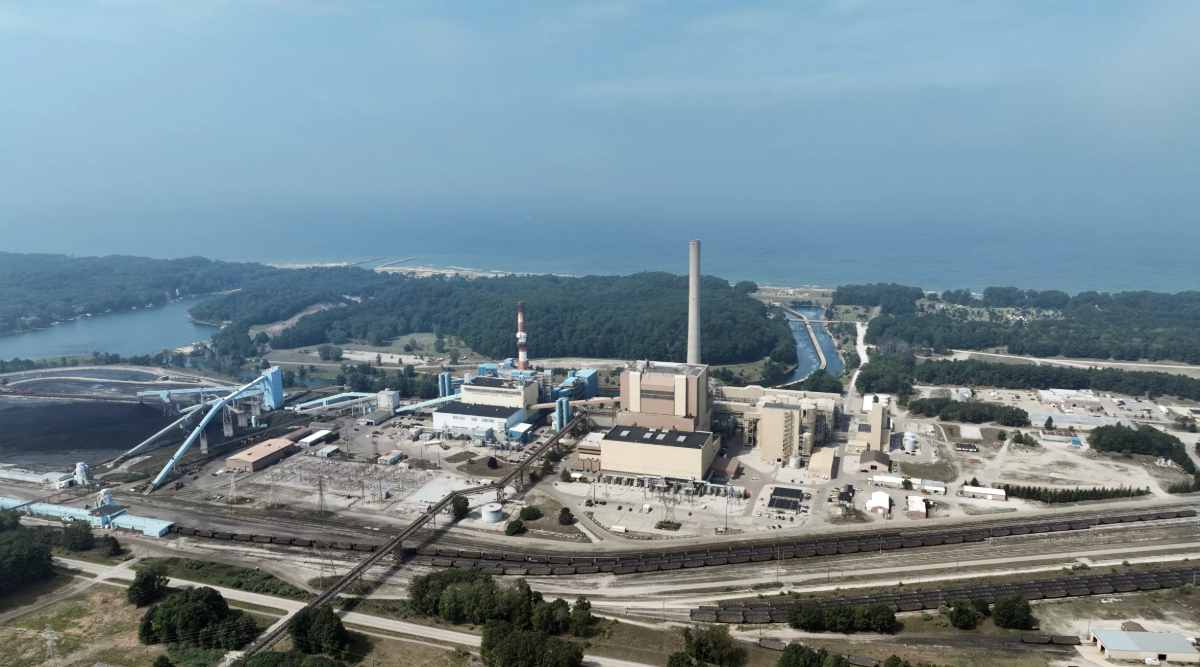
A federal district court has invalidated an emergency order that allowed the J.H. Campbell coal plant in West Olive, Michigan to continue operating beyond its original retirement timeline. The ruling removes a legal shield that had kept the aging facility generating power on Lake Michigan's shores.
The J.H. Campbell generating station began operations in 1962 and once supplied 1,420 megawatts of coal-fired electricity across three units. The plant had faced scheduled retirement as utilities nationwide shift away from coal generation due to economic pressures and environmental regulations. However, an emergency order granted by regulators permitted extended operation, citing grid reliability concerns.
The court determined the emergency order lacked sufficient legal justification. Judges found the reasoning behind the extension did not meet the threshold required to override the plant's decommissioning schedule or justify continued coal combustion when alternatives existed. This decision aligns with broader regulatory scrutiny of coal plant extensions, particularly in regions where renewable energy capacity has expanded.
Michigan's energy landscape has transformed substantially since Campbell's peak output years. Wind and solar installations now provide an alternative supply source, reducing the grid's dependence on legacy coal infrastructure. The state's utilities have invested in renewable generation and battery storage systems that provide the reliability justification regulators previously cited for coal plant extensions.
The Campbell facility's closure carries local implications. The plant employs workers and generates tax revenue for West Olive and surrounding communities. However, environmental advocates have emphasized the health costs associated with coal plant emissions. Particulate matter, sulfur dioxide, and nitrogen oxides from coal combustion contribute to respiratory disease, cardiovascular problems, and premature mortality. Proximity to Lake Michigan, a freshwater source serving millions, added urgency to environmental groups challenging the extension.
This case reflects a pattern emerging across the United States. Courts increasingly scrutinize emergency orders for coal plants when substantive renewable alternatives exist. The Federal Energy Regulatory Commission has faced legal challenges over assumptions built into reliability analyses that favor coal retention. Grid operators in other regions have similarly failed to demonstrate genuine need for continued coal operation when solar, wind, and storage capacity covers demand.
The ruling does not specify an immediate closure date, but it removes the legal mechanism that preserved Campbell's operating status. Consumers Energy, the plant's operator, must now work with state regulators and grid operators to establish a retirement timeline. Such timelines typically allow 18 to 36 months for decommissioning planning and workforce transition initiatives.
This decision contributes to the national coal fleet retirement trend. The U.S. has retired approximately 40 percent of its coal capacity since 2010, with utilities planning additional closures through 2030. Most remaining coal plants operate at reduced capacity factors, generating electricity only when prices spike or renewables underperform.
For Michigan specifically, the ruling accelerates the state's decarbonization pathway. Governor initiatives target 100 percent clean energy by 2040, with intermediate goals requiring increased renewable deployment. Campbell's closure frees utility investment capital for wind, solar, and grid modernization projects that serve long-term state climate targets.