# US Mineral Push in South America Raises Environmental Stakes
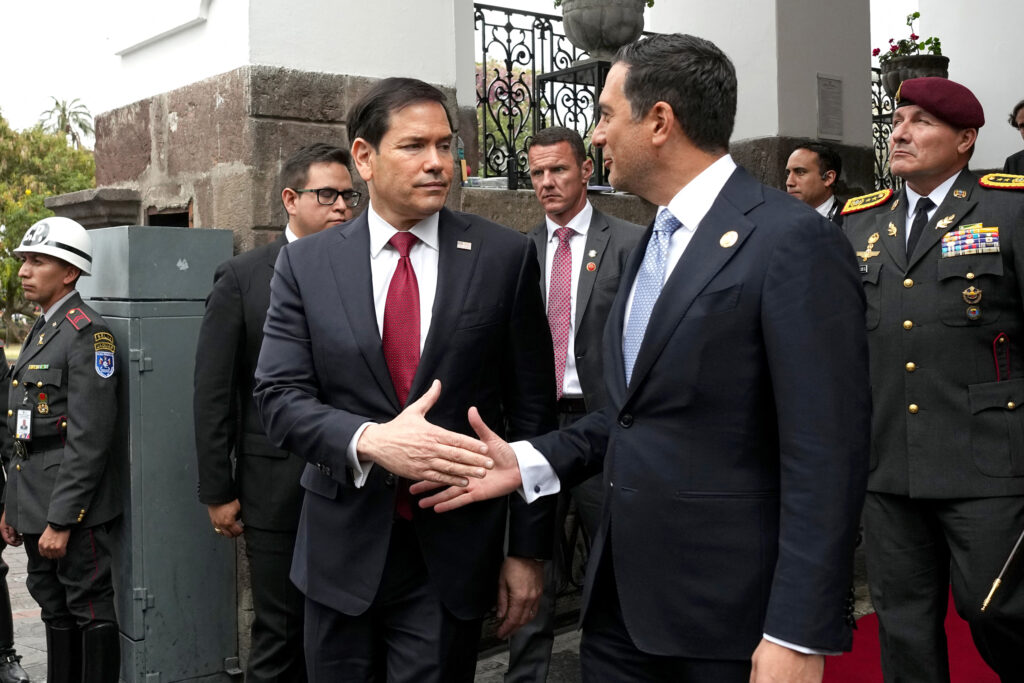
Secretary of State Marco Rubio arrived in South America this week with a direct request. The United States wants access to critical minerals from the region and an expanded military footprint. Colombia, Ecuador, and Peru have recently elected right-wing governments amenable to this strategy, leaders who campaigned on hard-line security agendas.
The timing matters. The Biden administration has already moved to secure supply chains for lithium, cobalt, nickel, and other metals essential to battery production and renewable energy infrastructure. South America holds vast deposits. Chile and Argentina possess roughly 58 percent of global lithium reserves. Peru ranks third. The continent also supplies significant cobalt from the Democratic Republic of Congo through regional trade networks.
But environmental defenders across the region face a familiar dilemma. Mining operations that extract these minerals destroy ecosystems, displace indigenous communities, and contaminate water supplies that millions depend on. Lithium extraction in the Atacama Desert consumes 65 percent of the region's water, leaving salt-crusted riverbeds where flamingos once fed. Nickel mining in Peru's northern forests has poisoned tributary systems and sparked violent conflicts between workers, companies, and indigenous groups.
The appeal for mining companies is straightforward. New right-wing governments in the region have signaled they will streamline environmental reviews and weaken labor protections. Colombia's new president, Gustavo Petro, initially opposed mining expansion but has faced pressure to approve new lithium projects. Ecuador's government has moved to allow mining in protected areas. Peru's instability has created openings for accelerated permitting.
The geopolitical calculus sits atop a climate paradox. The minerals Rubio seeks to extract are necessary for the global renewable energy transition. Solar panels, wind turbines, and electric vehicle batteries cannot exist without them. But the extraction process in South America carries enormous environmental and social costs borne almost entirely by local communities while profits flow to foreign investors and domestic elites.
Environmental organizations working in the region report increased pressure on activists. Land defenders documenting mining impacts face threats. Indigenous groups opposing new concessions report police responses that escalate tensions rather than protect their rights. The pattern repeats across Ecuador, Peru, and Colombia.
Rubio's visit signals the Trump administration views mineral access as a national security priority alongside traditional military and diplomatic concerns. This framing sidelines environmental impact assessments and indigenous land rights that previously held weight in US foreign policy discussions.
The international Interagency Working Group on Mining established under Biden required environmental and social due diligence for US-funded projects. No equivalent requirement exists for bilateral mineral trade negotiations. The US imports minimal processed minerals from South America currently, but tariffs on Chinese processing have made direct South American supply chains more attractive to American battery and electronics manufacturers.
Environmental defenders warn that accelerated mining without rigorous environmental review will lock South America into extractive development patterns that obstruct long-term sustainability. The region's water security, biodiversity, and indigenous territories hang in the balance. The minerals extracted over the next decade will power a global energy transition, but communities bearing extraction's costs will not benefit from the renewable energy economy those minerals create.