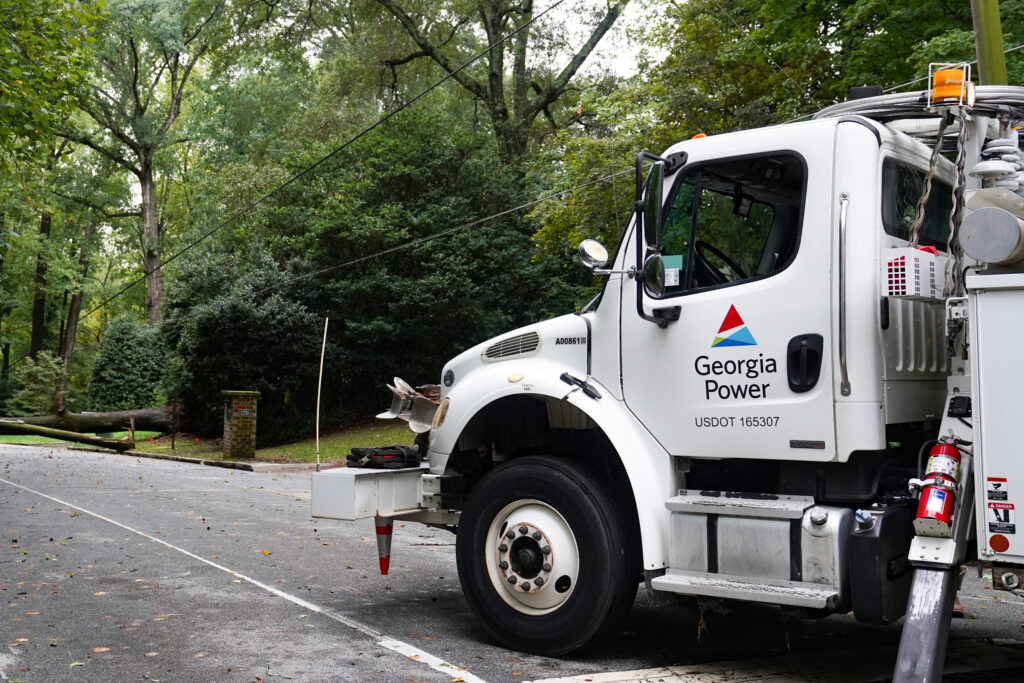
Georgia Power customers face mounting electricity bills as summer cooling demands surge, with low-income households bearing the heaviest burden from price increases tied to the utility's infrastructure expansion and fuel costs.
Donica Odell's experience reflects a growing crisis across Georgia. When Georgia Power disconnects service, interior temperatures spike rapidly in the humid subtropical climate. Odell described the sensation as "like you're boiling like crab legs," capturing the physical toll of losing air conditioning access during months when peak temperatures exceed 90 degrees Fahrenheit.
Georgia Power, which serves 2.6 million customers across the state, has raised rates multiple times in recent years. The utility company requested a 15.5 percent rate increase in 2023, approved in part by the Georgia Public Service Commission. The increases fund grid modernization, renewable energy integration, and coal and natural gas generation infrastructure. These costs flow directly to customer bills, with summer months recording the steepest charges due to peak demand for cooling.
Low-income households spend a disproportionate share of income on electricity. According to U.S. Energy Information Administration data, households earning less than 150 percent of the federal poverty line spend roughly 8.6 percent of income on energy, compared to 2.7 percent for all households. In Georgia, where summer temperatures drive relentless air conditioning use, this gap widens further.
Disconnections compound the problem. Georgia Power disconnected nearly 80,000 accounts in 2022, according to data from the Georgia Public Service Commission. The utility cites non-payment as the primary reason. Once disconnected, customers face reconnection fees ranging from $50 to $100, plus accrued debt. For families already struggling with utility costs, reconnection becomes economically unreachable.
Heat-related health risks intensify when cooling becomes inaccessible. The Centers for Disease Control and Prevention documented that extreme heat causes roughly 702 deaths annually in the United States. Heat exhaustion and heat stroke disproportionately affect elderly residents and those with chronic conditions. Prolonged exposure to indoor temperatures above 78 degrees Fahrenheit increases cardiovascular stress and worsens conditions like asthma and diabetes.
Georgia Power operates under regulatory oversight by the Public Service Commission, which balances utility profitability against consumer protection. The commission established a low-income bill assistance program, but funding remains limited. The Low Income Home Energy Assistance Program, administered through state and federal funds, helps qualifying households pay bills, yet demand consistently exceeds available resources.
Environmental factors also drive costs upward. Georgia experiences growing peak demand due to population growth and increased cooling needs linked to warming climate trends. Heat waves lasting multiple days force utilities to draw on expensive natural gas peaking plants. The state's energy mix remains heavily dependent on coal and natural gas, which generate emissions while exposing customers to fuel price volatility.
Advocacy groups call for expanded bill assistance, weatherization programs to reduce cooling demand, and rate structures that protect low-income households. Some propose mandatory disconnection moratoria during summer months, similar to protections in other states like California and New York.
The convergence of rising rates, increasing temperatures, and limited assistance programs creates a crisis where affordable cooling becomes unattainable for thousands of Georgia households. Without policy intervention, disconnections and heat-related hardship will likely accelerate as climate conditions intensify.