# Climate Science Clarifies What We Know About 2026 Himalayan Floods and Global Warming
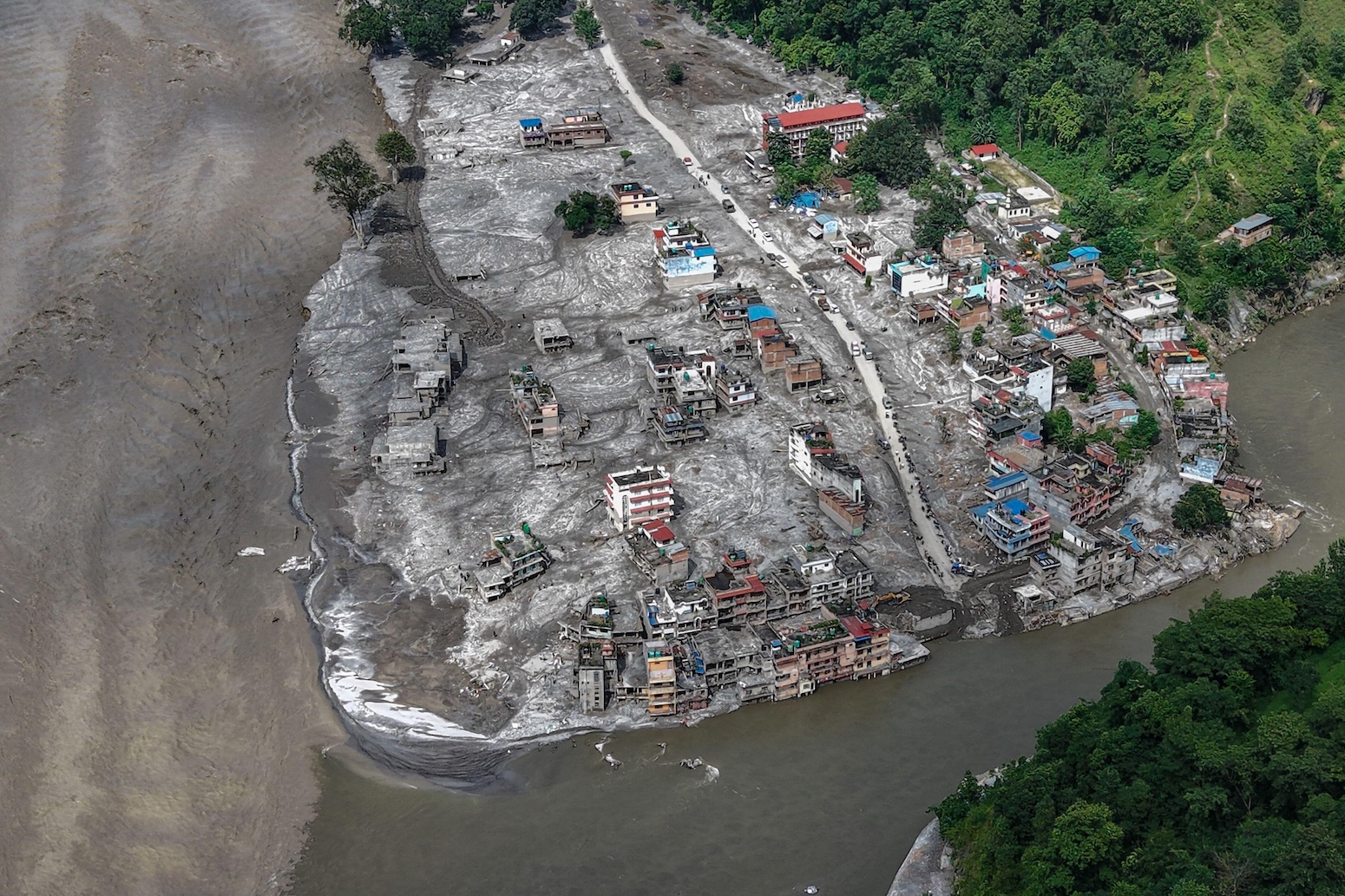
On August 26, 2026, catastrophic flash floods swept through the Nepal-China border region in the Himalayas, killing dozens and destroying infrastructure across high-altitude valleys. The disaster immediately raised a familiar question in climate science: Did global warming cause this? The answer, researchers say, is more nuanced than headlines typically allow.
Scientists at Carbon Brief and related institutions examined the flood event using the tools of extreme event attribution, a field that has matured considerably over the past decade. Attribution science can now identify with reasonable confidence whether specific weather extremes became more likely or more severe because of human-caused climate change. But this 2026 flood case reveals the field's real limitations when applied to singular, complex disasters.
What researchers can say with confidence: The Himalayan region is warming faster than the global average. Temperature increases across the Hindu Kush and Himalayan mountains have outpaced worldwide warming by roughly 50 percent over recent decades, a phenomenon sometimes called Himalayan amplification. This accelerated warming affects glacier mass balance, snowpack timing, and the total water available in mountain watersheds.
What remains harder to establish: Whether warmer conditions directly intensified the August 2026 floods. The event resulted from an unusual convergence of factors. Intense monsoon moisture collided with an upper-level atmospheric trough, triggering extreme rainfall across a narrow geographic band. Breaking down exactly how much climate change shifted the probability of that specific atmospheric configuration requires computer modeling that runs thousands of simulated versions of Earth's climate, both with and without human greenhouse gas emissions. These models have known biases in mountain regions, where topography complicates precipitation forecasting.
Attribution studies work best for temperature extremes, heat waves, and broad patterns. Single precipitation events in complex terrain present steeper challenges. Glacial outburst floods in particular involve multiple cascading mechanisms: glacier extent determines how much ice can melt; permafrost degradation alters slope stability; and localized weather patterns control actual water inputs.
Researchers emphasize what can be said about the broader context. Climate change has demonstrably increased the frequency of heavy rainfall events across South Asia. The Intergovernmental Panel on Climate Change confirmed in 2021 that extreme precipitation is intensifying over most land regions. For the Himalayan zone specifically, warming trends are shifting when and how much meltwater reaches rivers, destabilizing systems adapted to predictable seasonal flows.
The floods exposed a harder truth about climate attribution. Popular discourse demands simple causality: Did climate change cause this disaster? Scientists can only answer probabilistically and with caveats. They can say climate change changed the likelihood of certain conditions. They cannot easily say it caused one specific flood.
For policymakers and disaster-prone communities, this distinction matters. It shapes insurance models, infrastructure planning, and adaptation investment. Governments need to act on the certainty that climate change is loading the dice toward more extreme hydrometeorological events in mountain regions, even when scientists cannot pinpoint its role in any single catastrophe.