# Raitts Cave Reveals Scotland's Iron Age Architecture Beyond Legend
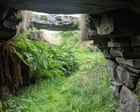
Raitts Cave near Lynchat in Inverness-shire sits at the intersection of mythology and archaeology, its dual nature reflecting how communities construct meaning around ancient structures. The site, known in Gaelic as An Uaimh Mhor or "the great cave," contains layers of story that range from folkloric invention to documented Iron Age construction.
The cave is not natural. It represents an engineered subterranean passage, deliberately shaped from stone and earth by Iron Age inhabitants, likely between roughly 800 and 500 BCE. This distinction matters. Local legend attributes its creation to giants, with female figures allegedly hollowing out earth and transporting soil in their aprons to the River Spey while males quarried massive stone slabs from surrounding hills. These narratives encode memory, but they obscure the actual human labor and architectural knowledge required to build such structures.
Iron Age Scotland hosted communities that constructed sophisticated underground structures across the Highlands and Borders. These souterrains or "earth houses" served practical purposes: food storage in their cool, stable chambers, refuge during conflict, or ceremonial functions within settlement hierarchies. Raitts Cave represents this building tradition, one that required understanding geology, water flow, structural stability, and labor organization.
The cave's cultural geography matters for contemporary conservation. In the Spey Valley ecosystem, such sites carry multiple values. They anchor local identity and tourism narratives. They preserve records of past land use and settlement patterns. They anchor ecological understanding. The valley itself remains ecologically active, with the River Spey supporting Atlantic salmon populations and riparian habitats that depend on floodplain connectivity and water quality.
Merryn Glover's column in the Guardian Environment section frames Raitts Cave within a broader question about how we read landscapes. Rural sites often accumulate both legendary and factual histories, creating tension between what people believe and what evidence demonstrates. This tension is not abstract. It shapes heritage designation, land management decisions, and community engagement with environmental stewardship.
The "stories" surrounding Raitts Cave have real consequences. If sites are dismissed as purely legendary, they may receive less archaeological attention and protection. If they become over-romanticized, tourism pressure can damage fragile contexts. The cave sits in a field, exposed to agricultural practices, weather, and increasingly to visitor impact as heritage tourism grows in the Scottish Highlands.
Understanding Iron Age construction techniques also illuminates past environmental relationships. These communities shaped their landscape deliberately. They knew soil behavior, stone properties, water movement. They managed forests for timber and materials. They maintained agricultural systems. This knowledge represents an older form of ecological literacy that contemporary conservation science increasingly recognizes as sophisticated.
The Spey Valley itself connects this archaeology to current environmental concerns. The river system faces pressures from land use change, climate shifts affecting salmon runs, and hydroelectric development. How communities relate to deep history at sites like Raitts Cave can influence contemporary choices about land use and environmental management.
Legends and facts need not compete. Both encode information. Legends preserve memory through narrative form. Archaeological evidence reveals material practices. Together, they create fuller understanding of how humans inhabited and shaped the Scottish Highlands across millennia. That understanding becomes relevant as communities navigate decisions about land, water, and heritage in a changing climate.