# Climate Warming Threatens Nepal with Escalating Glacial Hazards
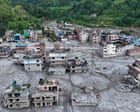
A catastrophic rockfall and ice collapse in Nepal's Langtang national park, located 60 kilometers north of Kathmandu, killed dozens and displaced hundreds last week. The disaster unfolded at 8:37am local time when a massive section of rock and ice detached from a mountainside, plummeting 1,200 meters into the valley below. The impact unleashed a destructive torrent of mud and water that swept through populated areas downstream.
Scientists studying the Himalayan region have connected this incident directly to accelerating climate change in the mountain chain. Rising temperatures are destabilizing glaciers and permafrost across Nepal and the broader Himalayan range, fundamentally altering the physical stability of slopes that have remained relatively static for centuries.
The Langtang region sits at the intersection of climate vulnerability and population density. Thousands of residents, trekkers, and mountaineers depend on these valleys. The area draws international tourism, with the Langtang Valley trek among Nepal's most popular routes. The collapse therefore exposed not just a geological hazard but a cascading human crisis.
Himalayan glaciers have retreated measurably over recent decades. Research from Nepal's Department of Hydrology and Meteorology documents accelerating melt rates since the 1990s, coinciding with atmospheric temperature increases of 0.5 degrees Celsius per decade across high mountain regions. This warming occurs at roughly double the global average rate, a phenomenon known as high-mountain amplification. Warmer air temperatures weaken the bonding between ice masses and bedrock. Thawing permafrost that cements rock faces together loses cohesion. Both processes increase the likelihood of sudden catastrophic failures like the Langtang event.
Researchers warn that similar hazards threaten other Himalayan valleys. Glacial Lake Outburst Floods (GLOFs) represent an additional threat. As glaciers retreat, they leave behind proglacial lakes. Unstable moraine dams containing these lakes can fail suddenly, releasing enormous volumes of water that devastate downstream communities. Nepal experienced a notable GLOF in 1985 when the Dig Tsho glacial lake burst, destroying a hydropower project and killing at least five people.
The challenge for Nepal stems partly from inadequate monitoring infrastructure. The country operates relatively few high-altitude weather stations compared to the scale of the Himalayan chain. Detailed mapping of unstable slopes remains incomplete. Early warning systems exist for some hazards but lack comprehensive coverage across vulnerable valleys.
Nepal's Ministry of Forests and Environment has begun implementing glacier monitoring programs and hazard mapping initiatives, though funding constraints limit scope. The World Bank and bilateral donors support some work, but capacity remains strained.
Climate projections from the Intergovernmental Panel on Climate Change predict continued warming across Asia's high mountains through 2100. Even under moderate emissions scenarios, additional glacier loss of 30-50 percent remains unavoidable. This trajectory guarantees increased frequency of rockfalls, avalanches, and GLOFs affecting Himalayan communities.
The Langtang disaster illustrates how climate change operates not as a distant abstraction but as an immediate physical threat reshaping mountain terrain. Rescue operations continue as survivors shelter in temporary camps. The challenge ahead extends beyond emergency response to fundamental questions about settlement patterns, infrastructure design, and adaptation in warming mountain regions where communities have lived for generations.