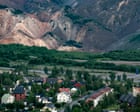
Sweden's deputy prime minister is targeting Indigenous Sami reindeer herders to clear the way for rare-earth mineral extraction, escalating a conflict that pits energy transition needs against Indigenous land rights.
In late April and May, Energy Minister Ebba Busch delivered speeches and published articles dismissing Sami grazing rights on ancestral lands. Busch framed reindeer herding as economically insignificant despite affecting vast territories. The timing coincided with Sweden's national election campaign, signaling that mining access ranks higher than Indigenous sovereignty in the governing coalition's priorities.
The Gabna Sami community faces the immediate threat of losing traditional migration routes essential to their herding practices. These routes, maintained across generations, follow seasonal patterns tied to pasture availability and animal welfare. Industrial mining operations would fragment these corridors, making pastoral livelihoods unsustainable. The Sami have stewarded these lands for centuries, developing ecological knowledge that sustains both their communities and regional biodiversity.
Åsa Larsson Blind, a Swedish-Sami politician, identifies Busch's public campaign as a watershed moment. The deputy prime minister's rhetoric represents a departure from diplomatic disputes toward overt political hostility against Indigenous rights. This shift reflects pressure from Sweden's far-right Sweden Democrats party, whose anti-immigration platform extends to opposing Sami land claims. The coalition government, which includes Busch's Moderate Party, depends on far-right parliamentary support, creating incentives to marginalize Sami interests.
Sweden holds vast deposits of rare-earth elements, materials critical for renewable energy technologies like wind turbines and electric vehicle batteries. The European Union has prioritized reducing dependence on Chinese rare-earth processing. Sweden's mineral wealth positions it as strategically valuable to European energy transition goals. However, most viable mining sites overlap with Sami herding territories in the north.
International law complicates Sweden's position. The country ratified the International Labour Organization's Indigenous and Tribal Peoples Convention 169, which guarantees Indigenous communities consultation rights and protection of traditional lands. Sweden's Constitution also recognizes Sami rights as an ethnic minority. Yet enforcement mechanisms remain weak, and political pressure consistently favors resource extraction over compliance.
The conflict reflects a global pattern where climate solutions displace Indigenous communities. Renewable energy development, critical for decarbonization, frequently requires land currently used by Indigenous peoples. Wind farms, hydroelectric dams, and mining operations create competing claims on territories with overlapping ecological and cultural value.
Sami herding communities argue that sustainable reindeer husbandry itself provides climate benefits. Herds maintain grassland ecosystems that store carbon. Industrial development destroys these carbon sinks while eliminating Indigenous livelihoods and cultural continuity.
The Swedish government faces a choice between genuine climate leadership and performative environmentalism. True climate action requires protecting both carbon sinks and the communities managing them. Using energy transition goals to justify displacing Indigenous peoples treats renewable energy expansion as a priority above all other values, including justice and ecological integrity.
Sweden's approach will likely influence other Nordic and European governments weighing similar conflicts. The message being sent is clear: if a government can frame mineral extraction as essential to climate goals, Indigenous rights become expendable.