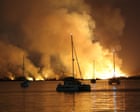
The World Meteorological Organization warned that climate-driven wildfires and heatwaves are erasing years of air quality progress achieved through emissions controls on vehicles and factories.
A new WMO report documents how extreme weather is creating a feedback loop that degrades air quality faster than pollution-reduction strategies can compensate. Regions that cut conventional air pollutants through regulation now face overwhelming smoke exposure from expanding wildfire seasons. Simultaneously, rising temperatures intensify ground-level ozone formation, a secondary pollutant that forms when heat activates nitrogen oxides and volatile organic compounds already in the atmosphere.
This represents a stark inversion of environmental policy success. Many cities in North America, Europe, and parts of Asia spent decades implementing stricter emission standards, catalytic converters, and industrial regulations. Those measures delivered measurable improvements through the 1990s and 2000s. Particulate matter and sulfur dioxide concentrations fell. Children born in the 2010s breathed cleaner air than their grandparents.
Climate change now reverses that trajectory. Wildfire seasons extend across more months and burn larger acreage. The 2023 Canadian wildfire season burned 18.1 million hectares. Smoke from these fires crossed continental borders, degrading air quality in the United States and beyond. Similar patterns emerged in Australia, Mediterranean countries, and Indonesia, where haze from biomass burning regularly produced air quality indexes exceeding 300 (hazardous).
Ground-level ozone compounds the problem. Unlike beneficial stratospheric ozone, ground-level ozone forms on hot days when sunlight interacts with pollutants in stagnant air masses. Heatwaves create ideal conditions: stagnant air, intense solar radiation, and elevated temperatures. A 2022 study in Environmental Research Letters found that ozone pollution increases nonlinearly with temperature, meaning each degree of warming produces disproportionately larger ozone spikes.
Health consequences are immediate. Wildfire smoke contains fine particulates (PM2.5) that penetrate deep into lung tissue. Ozone irritates airways and reduces lung function. The American Lung Association links ground-level ozone to asthma attacks, bronchitis, and reduced life expectancy. Children, elderly people, and those with respiratory disease face highest risk.
The WMO report underscores how climate adaptation and air quality policy have diverged. Nations invested in fleet electrification and industrial scrubbers without simultaneously addressing wildfire management or heat resilience. Those emission reductions remain valid, but their health benefits erode when wildfire seasons and heatwaves impose parallel pollution spikes.
Some regions attempt integrated approaches. California's Air Resources Board now coordinates wildfire smoke forecasting with ozone monitoring. The European Union's revised air quality directives for 2030 acknowledge wildfire smoke as a baseline stressor. Australia increased prescribed burn programs to reduce catastrophic wildfire fuel loads.
The WMO findings demand policy acceleration on multiple fronts. Carbon emissions cuts remain foundational to slowing atmospheric warming. Simultaneously, wildfire prevention, heat preparedness, and air quality monitoring require real-time coordination. Cities cannot rely solely on yesterday's pollution controls to protect public health in a rapidly warming climate.