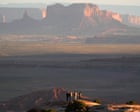
Patagonia, the outdoor apparel company known for its environmental advocacy, filed a lawsuit this week challenging President Donald Trump's sweeping reduction of two Utah national monuments. The company joins conservation groups and tribal nations contesting an executive order that strips nearly 3 million acres of federal protection from Bears Ears and Grand Staircase-Escalante.
Trump's July proclamation reduced both monuments by approximately 90 percent. The president framed the cuts as enabling productive use of public lands and accessing critical minerals deemed essential for national security and economic development. The reduction opens roughly 2.8 million acres to oil and gas leasing, mining permits, and other extractive industries.
Bears Ears and Grand Staircase-Escalante hold profound cultural significance for Indigenous tribes including the Navajo Nation, Ute Mountain Ute Tribe, and Hopi Nation. The monuments were established through presidential action in 2016 under the Antiquities Act, which empowers presidents to designate federal lands as protected areas. The sites contain archaeological resources, sacred ceremonial grounds, and paleontological formations spanning millions of years.
Patagonia's lawsuit positions the company alongside environmental organizations already challenging the reductions in federal court. The company's involvement carries weight within conservation circles. Patagonia has long tied its business model to environmental protection, donating 1 percent of annual sales to grassroots environmental groups and maintaining a vocal public stance on climate and land conservation issues.
Trump's proclamations claimed the monuments contained rare earth elements and other minerals essential for manufacturing batteries, semiconductors, and defense systems. Interior Department officials argued that extracting these resources domestically reduces reliance on foreign supply chains. This rationale invokes national security considerations that courts have historically found compelling in public lands disputes.
Legal challenges rest on several grounds. Opponents argue Trump exceeded constitutional authority under the Antiquities Act, which allows presidents to set aside land but does not clearly authorize subsequent presidents to substantially reduce designations. The Clinton and Obama administrations expanded monument protections; Trump claimed authority to reverse those expansions.
Tribal nations emphasize that monument status carried legal obligations to consult with Indigenous communities on land management decisions. Reducing protection status, they contend, violates those consultation requirements and the American Indian Religious Freedom Act Amendments protecting Native access to sacred sites for religious purposes.
Environmental groups highlight baseline ecological values at stake. Both monuments shelter threatened species including California condors and desert bighorn sheep. Their desert and high-plateau ecosystems support vegetation adapted to arid conditions and represent distinct ecological provinces. Opening protected lands to oil infrastructure and mining operations fragments habitat and introduces direct industrial disturbance.
The litigation enters federal district court in Utah, where judges will weigh competing interpretations of presidential authority, statutory obligations to Indigenous peoples, and environmental law standards. Similar legal battles followed Trump's first-term monument reductions, with mixed appellate outcomes establishing no clear precedent.
Patagonia's lawsuit adds commercial voice to tribal and conservation arguments. The company operates in outdoor recreation industries dependent on landscape preservation and attracts consumer bases valuing environmental stewardship. Its participation signals that business interests increasingly align with conservation opposition to extractive development on public lands.