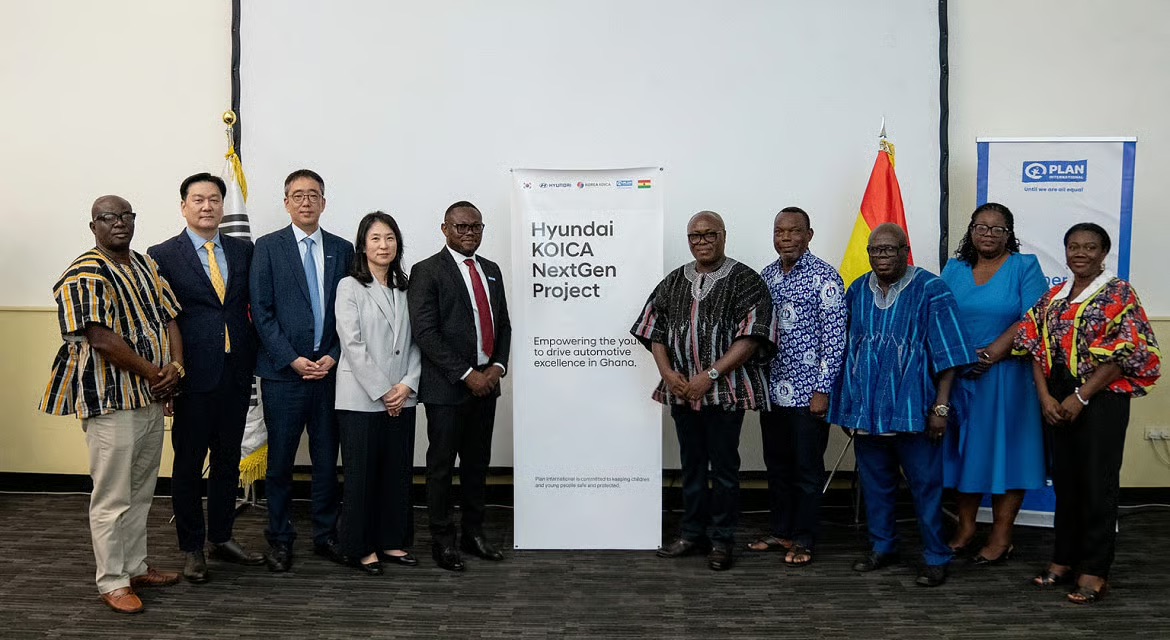
Hyundai Motor and South Korea's development agency KOICA have launched a joint training initiative called "Hyundai-KOICA NextGen" to build automotive expertise in Ghana. The program represents a partnership between corporate investment and official development assistance, combining Hyundai's technical resources with KOICA's Inclusive Business Solution framework.
The two organizations will jointly fund the initiative with KRW 5 billion (approximately $3.8 million USD). The program targets Ghana's automotive sector, aiming to train skilled technicians and strengthen the country's workforce development infrastructure. This approach aligns with KOICA's strategy of linking corporate capabilities directly to development aid projects rather than treating them as separate efforts.
Ghana's automotive sector remains underdeveloped relative to the country's economic growth. The nation imports most vehicles and vehicle components, creating limited local employment in manufacturing and maintenance. Training programs addressing this gap address both immediate skills shortages and long-term economic diversification. A skilled technician workforce supports vehicle maintenance, repair services, and eventual domestic manufacturing capacity.
Hyundai has expanded its African operations over the past decade, establishing assembly plants in Kenya and South Africa. Ghana represents a potential market for vehicle sales and service expansion. By investing in local technical training, Hyundai gains access to a pipeline of qualified workers while building brand loyalty and market infrastructure. KOICA benefits by demonstrating how private sector partnerships accelerate development outcomes beyond traditional aid models.
The NextGen program will likely operate through vocational training centers, potentially partnering with existing Ghanaian technical institutes. Curriculum typically covers engine maintenance, electrical systems, diagnostic procedures, and modern vehicle technologies. Training duration varies but commonly spans six months to two years depending on specialization level. Graduates enter employment with automotive service centers, dealerships, or manufacturing facilities.
KOICA's Inclusive Business Solution framework has supported similar initiatives across Africa and Asia. The model addresses a persistent development challenge: skills training alone fails without employer demand and job placement pathways. By embedding corporate partners like Hyundai directly into program design, IBS ensures training aligns with actual labor market needs. Hyundai gains workforce recruitment benefits; trainees gain employment prospects; Ghana gains tax revenue and reduced unemployment.
This initiative occurs within Ghana's broader industrialization strategy. The government has prioritized automotive assembly as a growth sector, offering tax incentives for vehicle manufacturing investments. Supporting skills development complements these policies by removing labor constraints that typically hinder manufacturing expansion. Regional competitors including Nigeria and Côte d'Ivoire have made similar workforce investments.
The partnership reflects shifting development paradigms where bilateral donors increasingly collaborate with private corporations to achieve aid objectives. Rather than funding generic training programs with uncertain employment outcomes, KOICA pairs resources with Hyundai's operational expertise and hiring commitments. This model has gained traction across East Africa and West Africa, where Korean companies have established significant commercial presence.
Success metrics for NextGen will likely include trainee graduation rates, employment placement percentages, and retention in automotive roles after 12 months. Hyundai will track how many graduates it hires for its Ghanaian operations and service networks. KOICA will measure economic impact through wage gains for trainees and tax contributions from participating employers.
The program launches as Ghana navigates post-pandemic economic recovery and workforce disruptions. Technical unemployment remains high despite growing vehicle ownership rates. Training initiatives addressing this mismatch generate both immediate employment gains and long-term productivity improvements for Ghana's economy.