# Farmed Salmon's Nutritional Decline Raises Questions About Industrial Aquaculture
The nutritional profile of farmed salmon has deteriorated over recent decades, according to emerging research, challenging decades of public health guidance that promoted the fish as a cornerstone of healthy eating. This finding arrives as farmed salmon now comprises nearly 70 percent of global salmon consumption, making the aquaculture industry one of the world's fastest-growing food production sectors.
The shift reflects a fundamental tension in modern food production. Public health agencies worldwide recommended increased salmon consumption for its omega-3 fatty acids and other nutrients linked to heart health and cognitive function. That messaging worked. Global salmon demand surged, and the aquaculture industry expanded to meet it. Yet the very methods used to scale production at industrial speed may have compromised the nutritional benefits consumers sought in the first place.
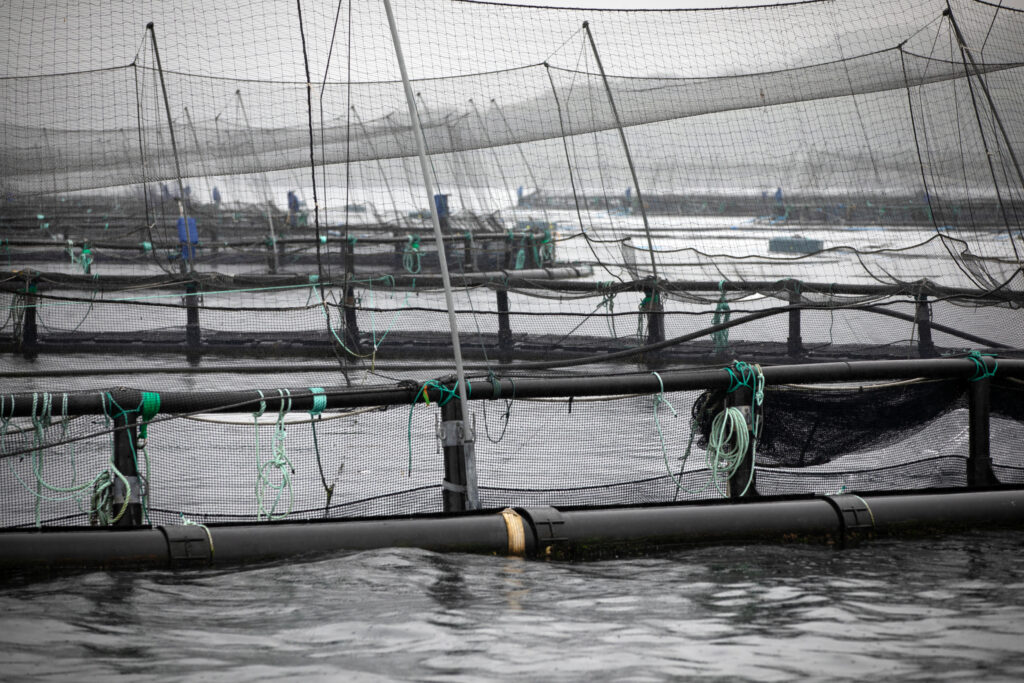
Research comparing farmed salmon across time periods shows declining concentrations of beneficial compounds including omega-3 fatty acids, vitamin D, and selenium. The causes trace directly to farming practices. Farmed salmon eat processed pellets derived from wild fish meal and vegetable oils, rather than the natural diet of wild salmon, which consume smaller fish rich in marine micronutrients. Selective breeding for rapid growth and feed efficiency has prioritized commercial metrics over nutritional density. The confined conditions of pen farming also alter the fish's muscle composition and metabolic processes compared to wild populations that migrate thousands of miles and face natural stressors.
The Inside Climate News reporting highlights a paradox in industrial food systems. Aquaculture was promoted as a sustainable alternative to overfishing wild salmon stocks, which faced genuine depletion pressures. That rationale remains valid from a conservation standpoint. Wild salmon populations in the Atlantic and parts of the Pacific remain threatened. Farming prevented the complete collapse of commercial salmon fisheries.
Yet farming introduced new problems. Farmed salmon operations generate significant pollution, releasing excess nitrogen and phosphorus into surrounding waters, creating dead zones near production sites. Fish farms frequently escape into wild populations, breeding with native stocks and introducing disease and parasites. The production of fish meal for feed still depends on wild fish catches, shifting rather than eliminating pressure on ocean ecosystems.
The nutritional decline also reflects the economics of commodity production. Farmed salmon operations compete on price and volume. Cost reductions drive down feed quality and production time. A farmed salmon reaches market weight in roughly 18 months compared to the three to four years required for wild salmon to reach similar size. That acceleration requires different genetics, different feed formulations, and different growing conditions. Each optimization for profit margins moved the product further from its wild equivalent.
For consumers, the implications are complicated. Farmed salmon remains more nutritious than many alternative proteins, but the marketing claim that eating farmed salmon provides equivalent health benefits to wild salmon no longer holds. The decline in omega-3 content is measurable. Some nutritionists now recommend supplementing farmed salmon consumption with other omega-3 sources, including algae-based supplements, to achieve the health outcomes once promised by salmon alone.
This research matters beyond individual dietary choices. It exposes how industrial agriculture prioritizes yield and cost over nutritional quality. As global population grows and land scarcity increases, aquaculture will almost certainly expand. Understanding the nutritional consequences of current farming methods provides essential data for regulators and producers considering reforms to feed formulations, breeding practices, and production timelines that could restore some nutritional value without sacrificing the conservation benefits of farmed production.