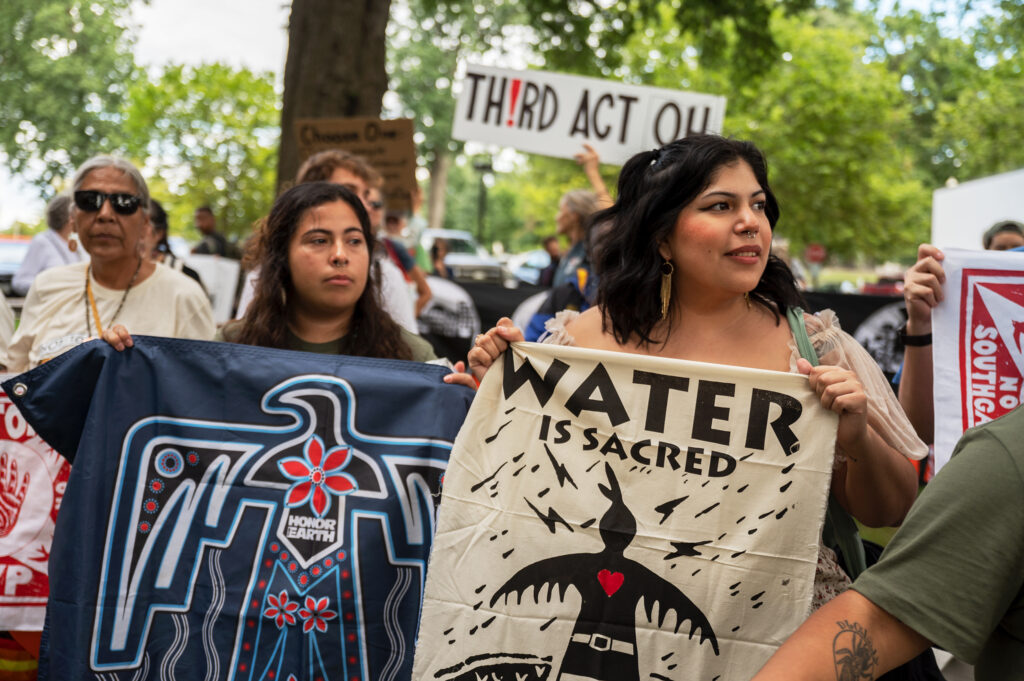
The Trump administration released revised Clean Water Act regulations in fall that fundamentally reshape authority over energy infrastructure approvals across the United States. The new language, governing how the Environmental Protection Agency interprets its power under Section 401 of the Clean Water Act, strips states of longstanding veto authority over pipelines, liquefied natural gas terminals, hydroelectric dams, and other major projects affecting waterways.
The administration framed the shift as returning power to states and tribes by acknowledging their local knowledge. In practice, the rules eliminate a critical leverage point states used to block or condition approval of energy infrastructure. Section 401 historically required federal licenses for water-affecting projects to receive state certification that they would not violate water quality standards. States wielded this certification process to demand environmental conditions, mitigation measures, or outright rejection of proposed developments.
The reinterpretation narrows what projects fall under state review and compresses timelines for state action. Under previous EPA guidance, states could evaluate whether a project would degrade water quality, harm fisheries, or damage coastal ecosystems. The revised rules tighten the definition of what constitutes a reviewable "water quality-related certification," excluding projects that the EPA determines have only indirect or cumulative impacts on waters.
This shift carries direct consequences for ongoing energy battles. New York State sought to block the Constitution Pipeline, a natural gas line crossing the Hudson River, through the Section 401 process. Minnesota challenged Enbridge's Line 3 replacement project. West Coast states conditioned approval of liquefied natural gas export facilities on climate and environmental safeguards. All such state actions now face legal and procedural constraints under the revised framework.
The rule change targets a mechanism that has proven effective in recent years. Between 2016 and 2021, states used Section 401 authority to deny or impose strict conditions on at least 40 energy and infrastructure projects. Environmental groups documented that state certification decisions delayed or redirected billions in investment toward renewable energy alternatives.
Tribal governments lose equally. Many tribes exercise Section 401 authority over projects on or near reservations and in traditional territories. The reinterpreted rules compress the comment and decision window to 12 months, eliminating extensions that tribes historically used to conduct thorough environmental review and consultation with members.
The EPA did not finalize new regulations through the standard Administrative Procedure Act rulemaking process, where public comment and formal agency response are required. Instead, the administration released interpretive guidance that the agency claims does not constitute binding regulation, though it carries practical weight in how EPA staff process state and tribal certifications.
Legal challenges from environmental groups and coastal states are expected. Litigants will argue the interpretation exceeds EPA authority and conflicts with the Clean Water Act's text, which explicitly preserves state certification rights without temporal or substantive limits. The Biden administration, through reversals of Trump-era policies, had restored robust state authority. The new framework represents a second reversal in the pendulum swing over federal-state power.
Energy companies have signaled approval. Pipeline operators and liquefied natural gas developers view the changes as reducing permitting timelines and regulatory uncertainty that previously stalled projects for years.