# Montana Firefighters Use Controlled Burns to Stop Advance of Summer Wildfires
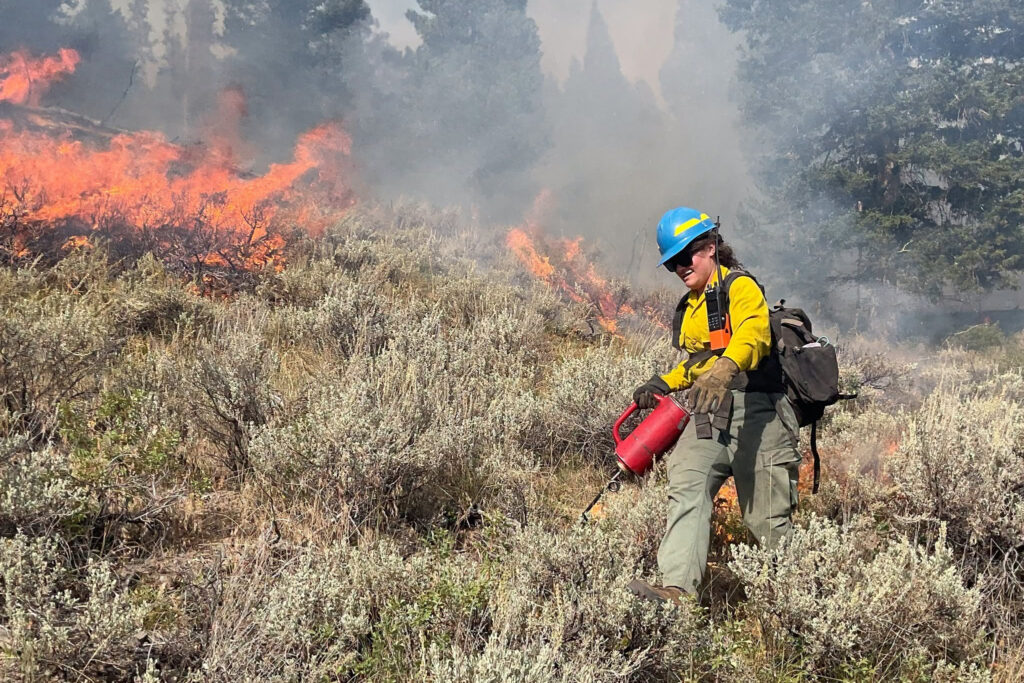
Firefighters in southwest Montana have begun strategic prescribed burns around two active wildfires to slow their spread through terrain too steep and densely forested for conventional containment tactics. The Bobcat Lakes Fire ignited July 31 near Wise River, with the Sand Creek Fire following a day later near Wisdom. Crews now deploy controlled fire as a defensive tool, intentionally burning vegetation in advance of the wildfire perimeter to eliminate fuel and disrupt the fires' momentum.
This approach reflects a shift in how land management agencies respond to large wildfires in challenging topography. When terrain becomes too steep or timbered for ground crews to work safely, or when weather and fire behavior make direct attack impossible, strategically timed burns become the most effective containment option. Firefighters burn a buffer zone ahead of the wildfire's expected path, creating what fire managers call a "cold trail" that the main fire encounters with minimal fuel to consume.
The two Montana fires erupted during peak fire season, when heat and low humidity accelerate spread rates across the region. Southwest Montana's landscape of dense conifer forests and extreme slopes creates conditions where wildfires can move rapidly while crews face serious safety hazards. Traditional suppression work relies on cutting firebreaks, clearing vegetation, and water drops from aircraft. In areas with slopes exceeding 40 percent grade and thick timber stands, these methods become impractical or ineffective.
Prescribed burns require precise timing and weather conditions. Crews monitor wind speed, direction, humidity, and temperature to ensure the controlled fire burns at manageable intensity without escaping containment lines. Burn windows in active fire zones narrow quickly as conditions change. Success depends on coordinating multiple crews across terrain where communication remains challenging and evacuation routes limited.
The strategy carries inherent risks. Escaped prescribed burns have caused significant damage in the past. However, land management agencies argue the danger of an uncontrolled wildfire advancing through this terrain outweighs the risks of a carefully managed defensive burn. Fire behavior analysts study slope angle, vegetation type, and fuel moisture to predict how the controlled fire will behave and where it will stop.
Montana has experienced escalating wildfire activity over the past two decades. Climate-driven changes have extended fire seasons, reduced snowpack, and dried forest fuels earlier in summer. Data from the National Interagency Fire Center shows average burned acreage across the western United States has nearly doubled since the 1990s. In response, agencies increasingly embrace prescribed burning and strategic fuel reduction, though capacity remains limited.
The Bobcat Lakes and Sand Creek fires represent routine challenges facing fire managers across Montana, Idaho, and neighboring states. As wildfires grow larger and arrive earlier each year, the use of controlled burns in active fire zones will likely expand. Firefighters view these burns not as a new tactic but as a refined application of proven fire science. The steep terrain near Wise River and Wisdom offers few alternatives. Either crews burn strategically now, or the wildfires will burn uncontrolled later, affecting larger areas and threatening communities downslope.